The Soil Improvement Service Most Homeowners Have Never Heard Of
Most top dressing projects address one of these:
A lawn on compacted clay soil that needs structural soil improvement
Surface irregularities (small dips, bumps, low spots) that need smoothing out
A new construction lawn where the builder soil is poor quality
An older lawn where the topsoil has been worn away over decades
A property where reducing chemical inputs is a goal and soil biology needs improvement
A high-value lawn where the homeowner is investing in long-term turf quality
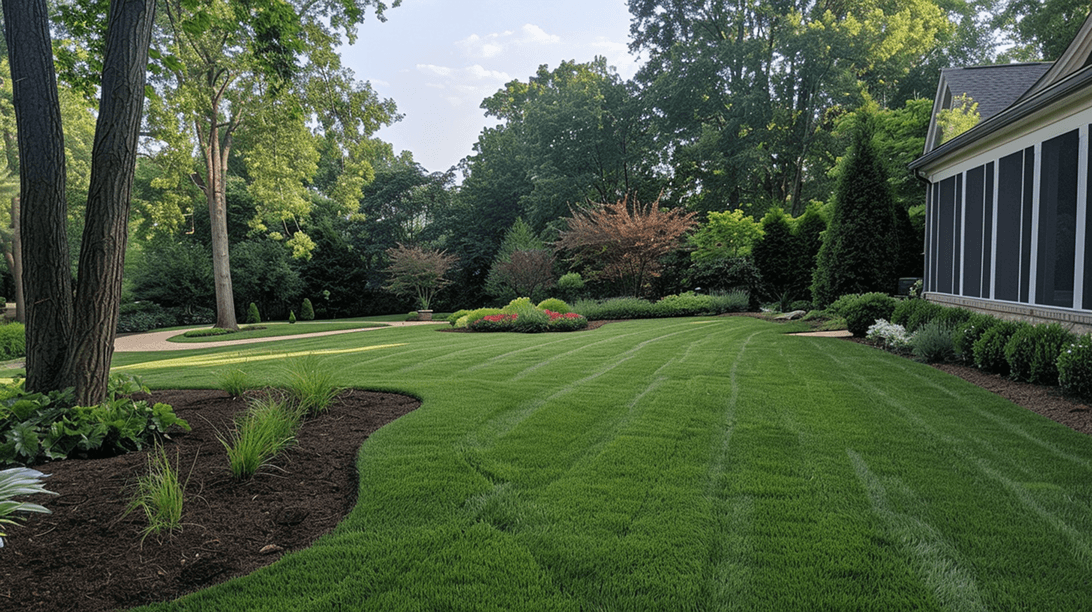
Top dressing isn't an annual service for most properties, but it's one of the highest-impact investments for properties willing to think in 3 to 5 year improvement cycles.
What's On This Page
What Top Dressing Does for Clay Soil
Materials We Use
When Top Dressing Pairs With Other Services
Our Process
FAQs
What Top Dressing Does for Clay Soil
Soil Improvement Through Surface Application
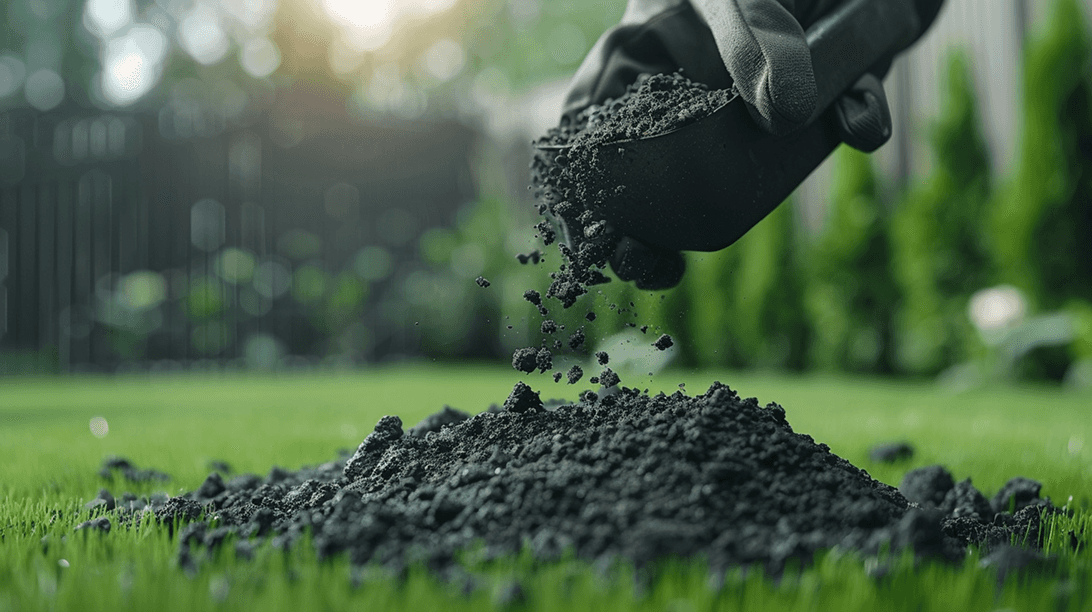
Top dressing works by gradually mixing high-quality organic material into the existing soil. The thin layer applied to the surface gets watered in over time, worked in by mowing and foot traffic, and eventually integrated into the soil structure.
What good top dressing does:
Adds organic matter to the soil. Clay soil in Lincoln typically has 1 to 2 percent organic matter content. Healthy garden soil has 5 percent or more. Each top dressing application adds organic matter that gradually raises the soil's organic content.
Supports microbial activity. Healthy soil is alive with microorganisms (bacteria, fungi, protozoa, micro-arthropods) that break down organic matter, cycle nutrients, and support plant health. Top dressing with compost introduces and feeds these microorganisms.
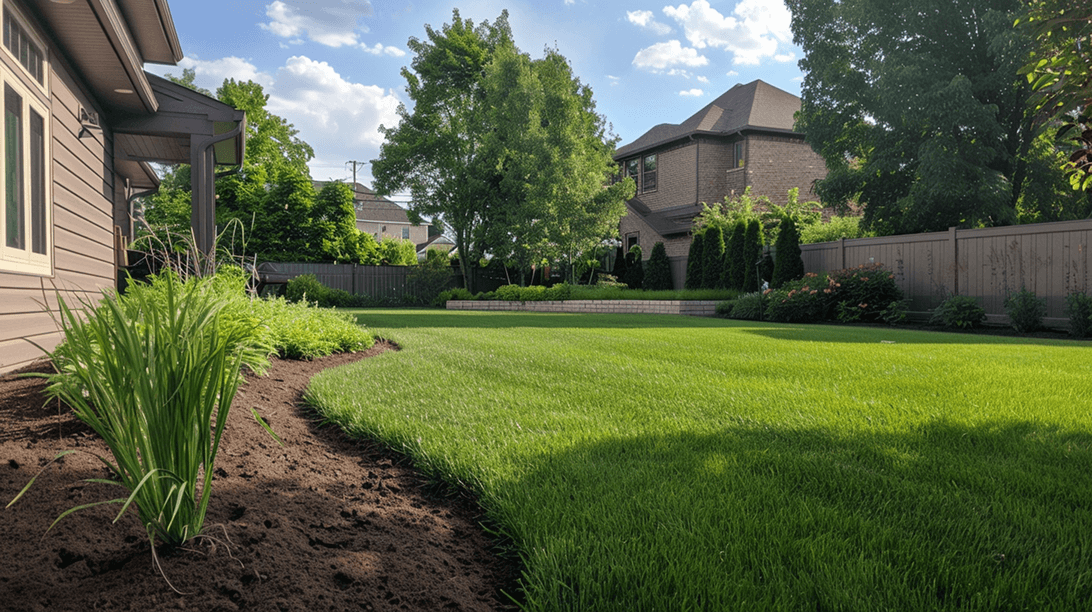
Improves soil structure. Organic matter improves clay's drainage and aeration. Over time, top dressed lawns develop a more crumbly, friable soil structure rather than the dense compacted clay that most Lincoln lawns sit on.
Levels surface irregularities. Small dips, low spots, and surface unevenness get filled in by the top dressing layer. The lawn becomes physically smoother over time.
Reduces fertilizer requirements. Healthier soil with active microbial activity cycles nutrients better. Lawns with improved soil require less synthetic fertilizer to achieve the same color and density.
Increases drought tolerance. Improved soil holds water better and longer. Lawns on top dressed soil survive dry spells with less supplemental watering.
Materials We Use
The Material Selection
Different top dressing materials produce different results. Quality matters more than almost any other factor.
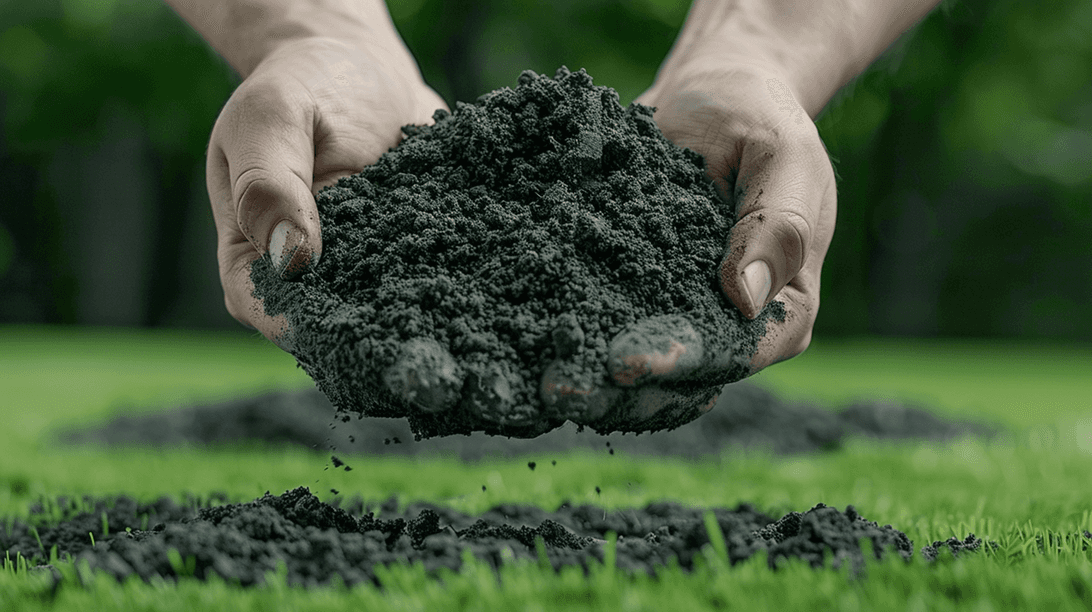
Compost (our default for most properties). Mature, screened, well-aged compost from regional commercial composting operations. Adds maximum organic matter and microbial activity. Slightly darker color than topsoil. The most beneficial material for soil improvement. We use locally sourced compost when possible.
Quality screened topsoil. Sandy loam topsoil from regional sources. Less organic matter than compost but more structural soil. Good for properties needing to level surface irregularities or build up areas where soil has eroded.
Compost and sand blends. For severely compacted properties, a 50/50 compost/sand blend adds both organic matter and structural improvement. Sand particles improve drainage in heavy clay.
Quality screened sand. Coarse construction sand applied alone for very specific situations (heavy compaction with no organic matter need, golf-style turf renovation). Rarely the right call for residential properties.
What we avoid:
Cheap "topsoil" from big-box stores. Often contains construction debris, weed seeds, or simply pulverized clay. Doesn't improve soil and can introduce problems.
Manure (unaged). Smells terrible, can burn grass, and may contain pathogens. Aged composted manure is fine; fresh manure is not.
Peat moss alone. Too acidic, dries hydrophobic when it dries out, and doesn't provide the microbial benefits of compost.
When Top Dressing Pairs With Other Services
Maximum Impact Through Combination
Top dressing is rarely done in isolation. The biggest impact comes from pairing it with other services that prepare the soil to receive and benefit from the material.
Top dressing plus aeration. The aeration holes provide direct channels for the top dressing material to reach the soil profile. Top dressing applied immediately after aeration produces dramatically faster soil integration than top dressing alone. This is our most common pairing.
Top dressing plus dethatching. Severely thatched lawns benefit from top dressing immediately after dethatching. The compost feeds the microorganisms that decompose remaining thatch, accelerating the recovery.
Top dressing plus overseeding. When overseeding new grass, a thin layer of top dressing over the seed protects the seed from drying out and improves germination rates. The top dressing also adds nutrients to support seedling establishment.
Top dressing plus fall lawn renovation. The "fall reset" combines aeration, dethatching if needed, overseeding, top dressing, and starter fertilizer in a single integrated visit. The maximum-impact lawn renovation approach.
For ongoing properties: Top dressing every 2 to 3 years as part of the fall aeration visit produces compounding soil improvement over time. After 5 to 10 years of consistent top dressing, the soil quality is dramatically different than nearby unimproved lawns.
Our Process
How a Moku Top Dressing Visit Runs
Step 1: Walk the property and assess. Identify any surface irregularities, areas with worst soil quality, and overall lawn condition. Determine the right material and depth for the property.
Step 2: Quote and material selection. Quote includes the material, delivery, application labor, and any pairings (aeration, overseeding, etc.). Confirm material choice based on goals.
Step 3: Pre-mow the lawn short. The lawn is mowed shorter than normal (2.5 to 3 inches) so the top dressing can settle through the grass to the soil surface.
Step 4: Aerate first if pairing. If aeration is part of the visit, aeration happens before top dressing. The aeration holes will receive the top dressing material.
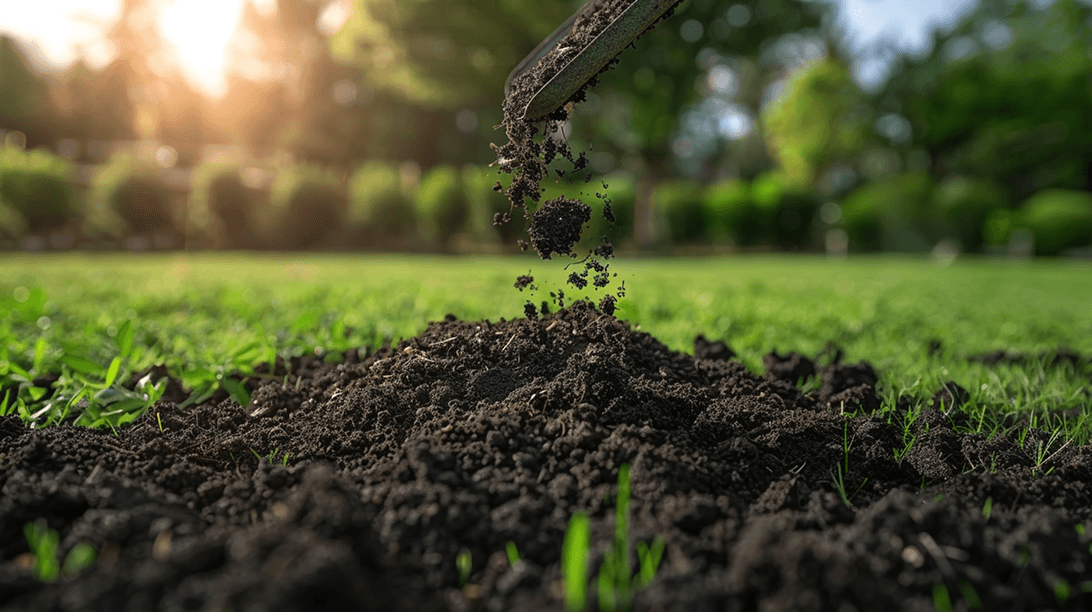
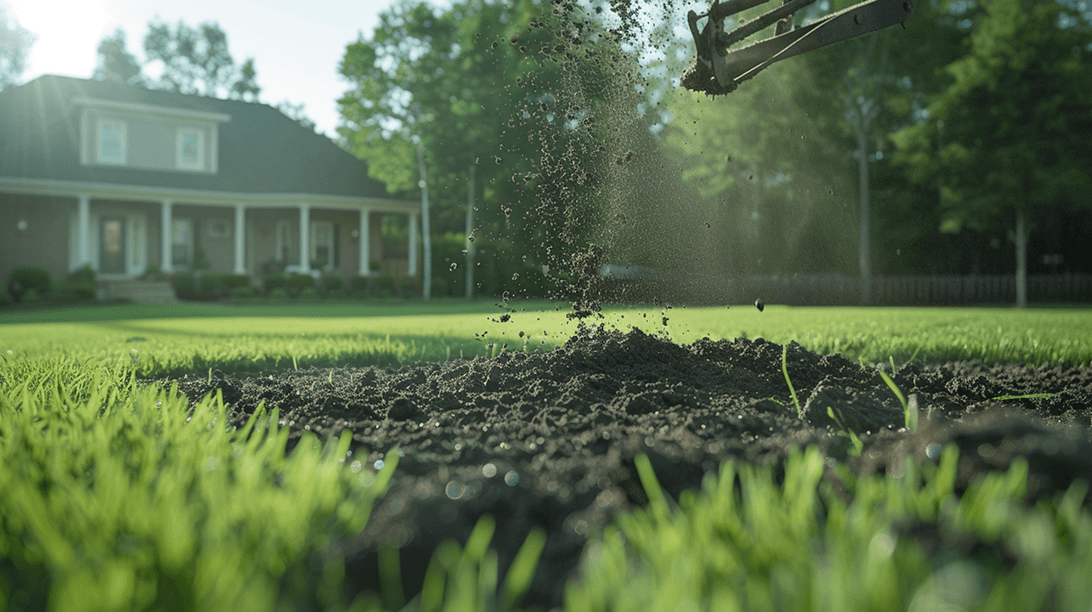
Step 5: Apply top dressing. Material delivered by bulk truck and spread either by hand (small properties) or by mechanical spreader (larger lawns). Application depth typically 1/4 to 1/2 inch.
Step 6: Drag or rake. The top dressing material is dragged or raked to work it down through the grass blades and into the soil surface. The grass should be visible through the top dressing after this step.
Step 7: Water in. Heavy initial watering helps the top dressing settle and begin integrating into the soil.
Step 8: Follow-up at 6 to 8 weeks. Visual check to confirm integration. Sometimes a second light application is recommended for severely compacted properties.