The Service Most Lawn Companies Get Mostly Right
A homeowner who doesn't have time to mow themselves and wants reliable service
A property where the homeowner has physical limitations or no longer wants to do the labor
A property where mowing quality has declined under a previous contractor
A new construction or renovation where the homeowner wants professional management from day one
A property where the lawn is part of significant curb appeal and consistency matters
A property with complex terrain (slopes, beds, fine detail) that benefits from professional equipment
A rental property or second home where the owner can't be present for regular maintenance
The right mowing service is mostly invisible: the lawn just looks good every week, the crew shows up reliably, and you don't have to think about it.
What's On This Page
Why Most Mowing Services Underdeliver
What's Included in a Mowing Visit
Mowing Schedules and Equipment
Our Process
FAQs
Why Most Mowing Services Underdeliver
The Quiet Differences That Add Up
Drive through any Lincoln neighborhood and you'll see lawns at every level of mowing quality. Most look fine. A few look exceptional. A few look bad. The difference between fine and exceptional isn't about equipment or money. It's about the small decisions that get made on every visit.
Mowing height. Lincoln's clay soil and hot summer temperatures favor cool-season grasses kept at 3 to 4 inches. Most lawn services cut at 2 to 2.5 inches because shorter grass is easier to maintain visually between visits. The shorter cut stresses the grass, dries out faster, allows weed pressure, and leads to thinning over time. We cut at the right height for the season, not the height that's easiest for us.
Blade sharpness. A dull blade tears grass blades rather than cutting them cleanly. Torn grass tips turn brown within hours, which is why some lawns look slightly off-color after mowing. We sharpen blades every week or every other lawn, depending on use. The grass actually gets cut, not bludgeoned.
Mulching vs bagging. Mulching (returning clippings to the lawn) returns nutrients and supports soil health. Bagging (removing clippings) gives a cleaner immediate appearance but removes nutrients over time. Most properties benefit from mulching for most of the season, with occasional bagging for high-visibility events or when growth has gotten ahead. We make this decision deliberately, not on autopilot.
Frequency relative to growth. Mowing more than 1/3 of the leaf blade in a single cut stresses the lawn. In peak growth periods, this might require more frequent visits. In slow-growth periods, less frequent visits are actually better. The right cadence shifts with the season. Many services cut on a rigid weekly schedule regardless of actual need, which means too frequent in slow periods and not frequent enough during peak.
Cutting patterns. Mowing in the same direction every week causes the grass to lean and creates wear patterns. We alternate patterns each visit (north-south one week, east-west the next, diagonal occasionally) to keep the grass standing upright.
Edge work. A mowing visit without edge work along walkways, beds, and hardscape looks unfinished. The edge work takes 10 to 15 minutes per visit but accounts for half the visual quality.
The accumulated result:
A property mowed properly week after week looks dramatically better than a property mowed on autopilot. The difference shows up most in late summer (when stressed lawns thin out and properly maintained lawns hold) and in year-over-year comparison (where lawns under good service get better, not worse).
What's Included in a Mowing Visit
Standard Visit Scope
Every regular mowing visit includes the same baseline scope. Some properties have add-ons or custom requests, but this is what gets done at every standard visit.
Mowing. Full lawn cut at the appropriate height for the season. Cut pattern alternated each visit. Sharp blades, clean cuts.
Trimming. String-trim along fence lines, around trees, along beds, around hardscape, and any other areas the mower can't reach. The detail work that finishes the lawn.
Edging. Cleanup edging along walkways, driveways, and patio edges. Power edger for hard surfaces. String trimmer for bed edges (though we recommend separate bed edging visits for the deep cuts that really last).
Blowing. All hardscape (sidewalks, driveways, patios) blown clear of clippings and debris. Doors and entries blown clean. Some properties also want lawn-to-lawn blow-back of stragglers.
Visual inspection. Quick walk through the lawn looking for issues (pest damage, disease, irrigation problems, weed pressure, anything new). Reported to the homeowner if anything significant.
Cleanup. Trash or debris on the lawn picked up. The lawn left in better condition than we found it.
Add-ons available:
Bagging instead of mulching (extra cost for hauling)
Trash removal from the property
Spot weed pulling during the visit
Sprinkler head check for clients with irrigation
Pet waste pickup before mowing (yes, we do this if requested)
What's not included:
Fertilization or weed control applications (separate program)
Aeration, dethatching, or overseeding (separate services)
Bed maintenance, mulching, pruning (separate services)
Tree work
Snow removal (separate seasonal service)
Mowing Schedules and Equipment
How We Schedule and What We Use
Weekly schedule (April through October). The default for most residential properties. Weekly mowing keeps growth at the right height for the season and prevents the over-cut problem (removing more than 1/3 of the leaf in a single mow).
Biweekly schedule. Some properties (slower-growing varieties, larger lots, lower-maintenance preferences) work fine on biweekly mowing. We adjust the cut height slightly to compensate for the longer interval.
Shoulder season adjustments. April mowing typically starts every 10 to 14 days as the lawn wakes up. October mowing tapers similarly. We don't bill for visits that aren't needed, and we don't skip visits the lawn needs.
Holiday and weather adjustments. Heavy rain pushes service to the next dry day. Holiday weeks may shift to a day before or after the regular slot. Storm damage may require extra visits beyond the regular schedule.
Our equipment:
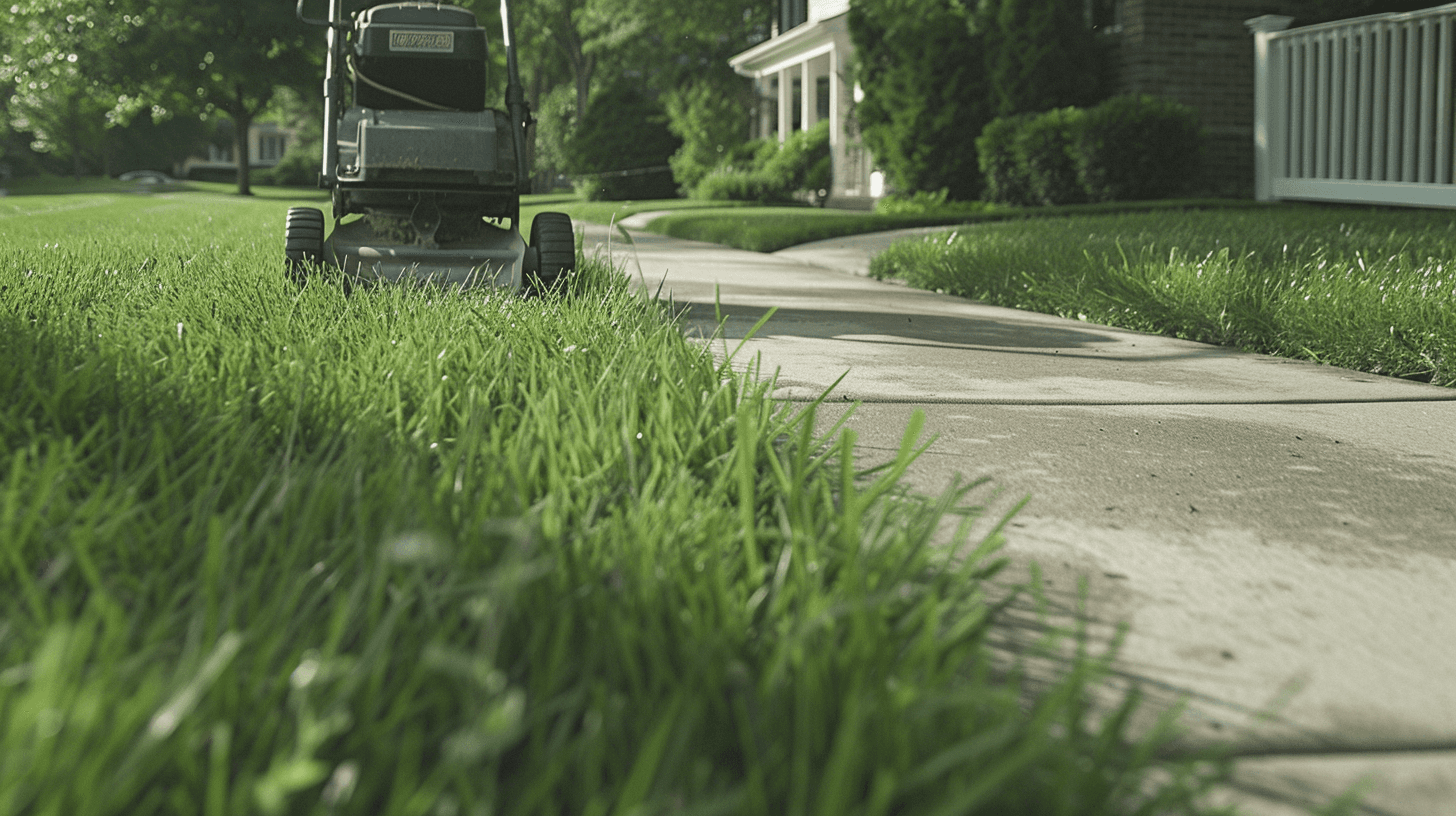
Zero-turn mowers (commercial-grade). For larger lawns and faster cuts on simple lot shapes. Tight turning radius, professional cut quality, faster routes.
Stand-on mowers and walk-behinds. For complex lot shapes, smaller lawns, and detail work where larger machines can't operate.
Push mowers (for tight spots). Hand-pushed mowers for the spaces where ride-on or stand-on equipment doesn't fit. Front yards with garden beds, side yards with tight access, etc.
Battery-powered tools. String trimmers, edgers, and blowers are increasingly battery-powered. Quieter for homeowners and neighbors, no fuel handling, less maintenance for us, and equal performance to gas tools for residential work.
Bagging attachments. Available for clients who want bagged service. Most clients prefer mulching for the soil benefits, but bagging is available.
The schedule is consistent. Same crew, same route, same day of the week. Predictability matters in mowing more than almost any other service.
Our Process
How Mowing Service Works With Moku
Step 1: Initial walkthrough. Walk the property to identify any obstacles, access points, gate codes, sprinkler heads to avoid, areas with special instructions (pet boundaries, kids' play areas, gardens to mow around).
Step 2: Quote and schedule. Quote includes visit cadence, baseline scope, and any add-ons. Schedule sets the recurring day of the week.
Step 3: First visit. Crew arrives, completes the standard scope, takes any notes for the route file (sprinkler locations, gate codes, problem areas).
Step 4: Recurring visits. Same crew, same day, same scope every week (or biweekly). Issues observed are flagged in a brief follow-up if significant.
Step 5: End-of-season transition. Final mowing visit folds into fall cleanup work. Transition to snow service for clients who do both.