The Detail That Separates Cared-For Yards From Average Ones
Grass that's grown into landscape beds, blurring the line between lawn and bed
Bed edges that have gotten wavy or ill-defined over multiple seasons
A new property where bed lines need to be established from scratch
Spring cleanup when winter has obscured every edge on the property
A property prep before sale where curb appeal matters most
Mulch beds where the edge has flattened and mulch is spilling into the lawn
Tree wells where grass has crept across the mulch ring
The work is fast, the result is dramatic, and it pairs with almost every other landscape service we do.
What's On This Page
Why Bed Edges Make a Property Look Cared-For
How We Cut Bed Edges
Edging Frequency and Pairing With Other Services
Our Process
FAQs
Why Bed Edges Make a Property Look Cared-For
The Visual Power of a Clean Edge
Bed edging is one of those landscape details where the labor cost is tiny relative to the visual impact. A few hours of work transforms a property's appearance more dramatically than almost any other quick service. The reason has to do with how the eye reads a landscape.
When you look at a yard, the eye looks for definition. Where does the lawn end? Where do the beds begin? Where is the structure of the design? A property with crisp edges answers these questions clearly. The eye reads "this is the lawn, this is the bed, this is the tree well, this is the foundation planting." Each zone is clearly defined.
A property without defined edges blurs all of those answers. The lawn fades into the beds. The beds bleed into the foundation. The tree wells disappear into the surrounding turf. The eye can't tell where anything starts or stops, and the brain reads the whole property as "unfinished" or "neglected" even if the actual plants and turf are in good shape.
What edging actually does:
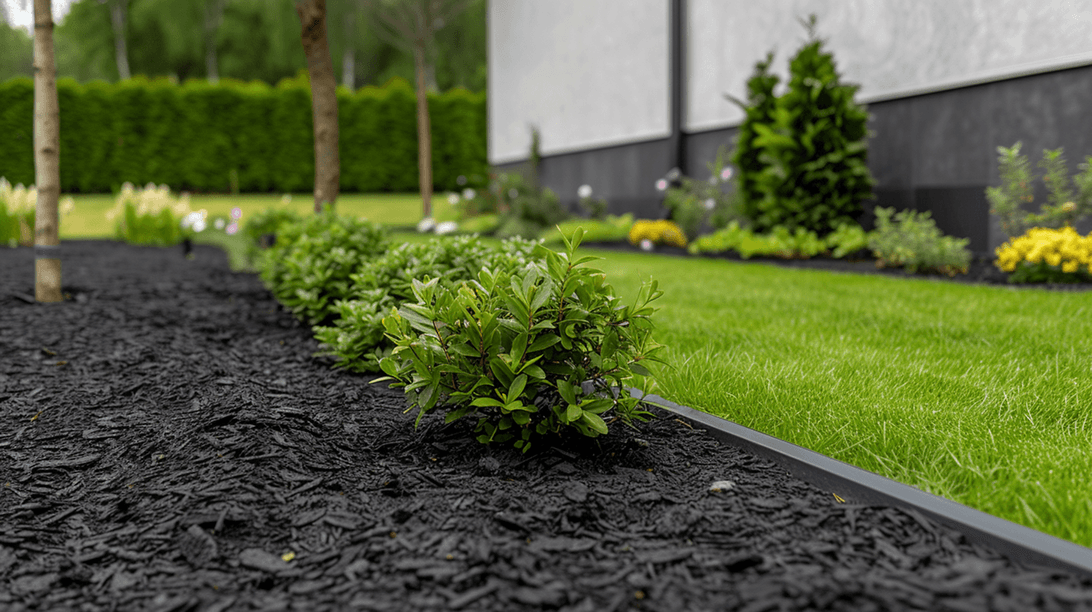
Physical containment. Cuts a clean trench at the bed line that stops lawn grass from sending runners into the bed. Without this trench, grass invades every bed every season.
Mulch retention. Holds mulch and bed material from washing out into the lawn during rain. Especially important on sloped beds.
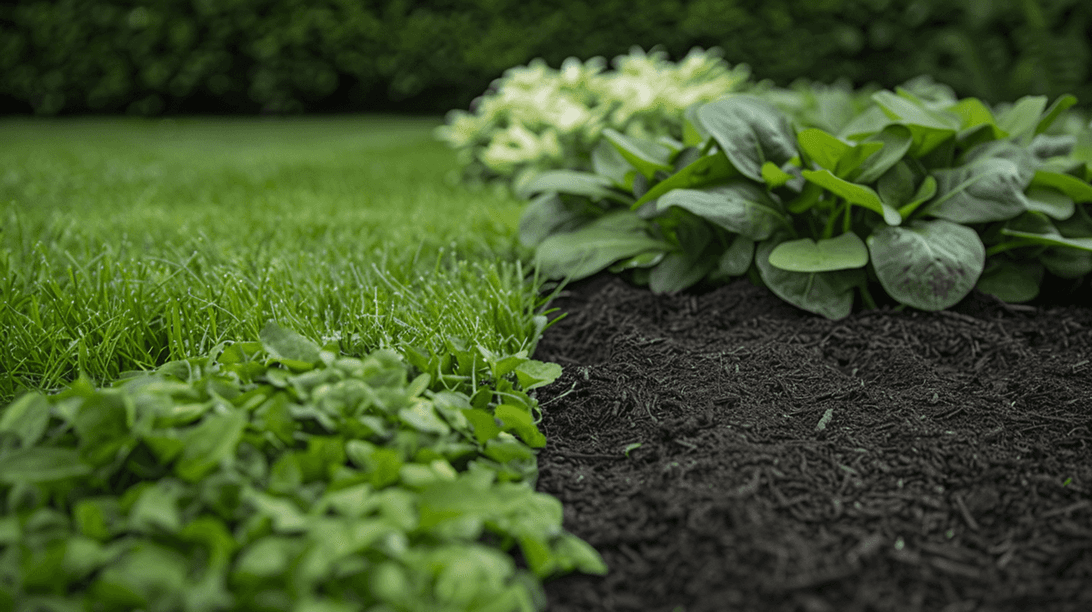
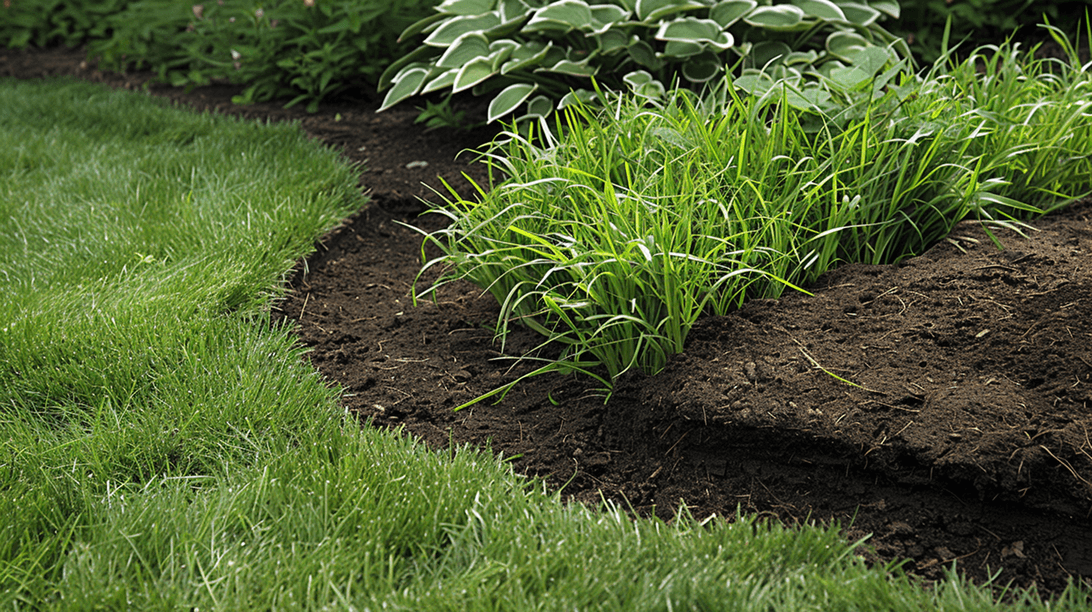
Visual definition. Creates the crisp line that the eye reads as "deliberate design."
Easy mowing line. Gives the mower a clear edge to work to without having to be careful about the bed.
When we edge a property, we're doing all four jobs at once. The result is a yard that looks dramatically better walking away than walking up, even though the change is subtle.
How We Cut Bed Edges
Tools and Technique
Bed edging is mostly a tool and technique question. The right equipment cuts a clean trench in one pass. The wrong equipment (or no equipment) leaves a ragged line that won't hold for long.
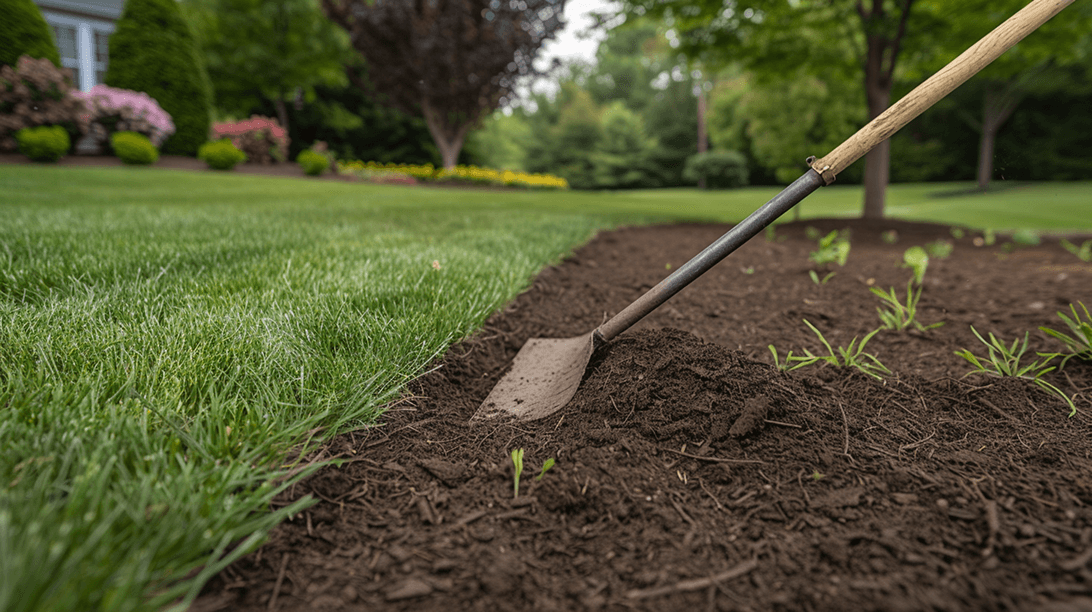
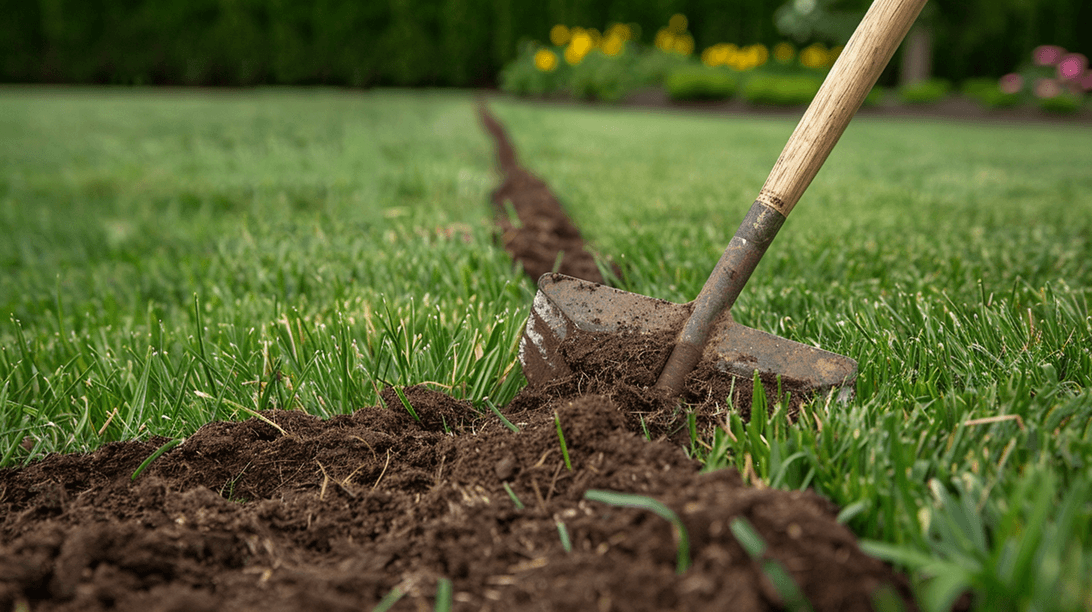
Power edger. A walk-behind power edger with a steel blade is the workhorse for any meaningful edging project. Cuts a clean vertical trench 3 to 4 inches deep at the bed line. Faster, cleaner, and more consistent than any hand tool.
Spade and half-moon edger. Hand tools for detail work, tight curves, and small bed lines. Slower than a power edger but useful where the power tool can't fit.
String trimmer. Used after the main edging cut for refining the line, cleaning up any stragglers, and finishing detail along walks and hardscape. Not a replacement for proper edging.
The technique that actually matters:
Cut to soil depth (3 to 4 inches), not just lawn depth. A shallow edge gets re-invaded by grass within weeks. A deep edge holds for the full season.
Cut vertically, not at an angle. A vertical wall holds the line crisply. An angled cut starts to round over and disappears.
Clean out the trench. Loose soil and grass clippings get cleared from the trench so the line is sharp and visible.
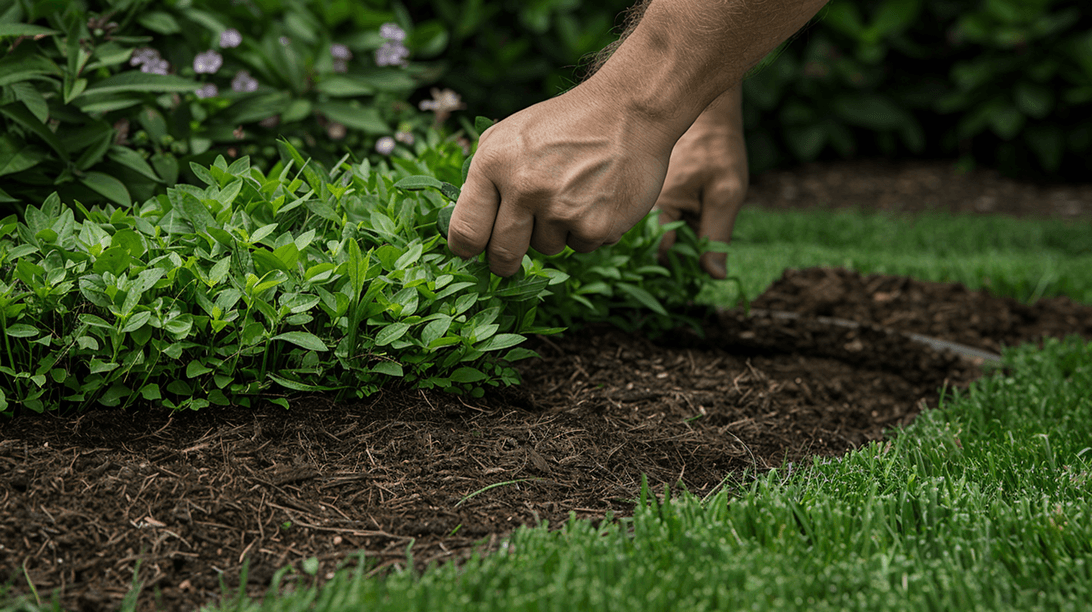
Pull the edge back to a true bed line. Most edging projects also reshape the bed line slightly. If it's gotten wavy, we re-establish a clean curve or straight line during the cut.
Re-cut, don't just trim. Many "edging" jobs are actually just string-trimming along an existing line. We cut a new edge each time, even if it's just a deeper version of the existing one. This is what holds the line for the season.
Permanent edging vs cut edging. Some clients install permanent edging (steel, aluminum, paver) and only need light maintenance cuts. Others use cut edging exclusively, where the trench itself is the edge with no installed material. Both work. Permanent edging needs less maintenance over time but higher upfront cost. We do both and can convert between them.
Edging Frequency and Pairing With Other Services
When to Edge and What to Pair It With
The right edging cadence depends on the property and goals.
Spring re-cut. The most important edging of the year. After winter, every bed line needs to be re-established. We do this as part of spring cleanup or as a standalone visit. This is the cut that sets up the whole growing season.
Mid-season touch-up. A second cut around midsummer (June or July) to re-establish edges that have softened during peak growing season. Optional but recommended for high-visibility properties.
Pre-mulch refresh. When we're installing fresh mulch, we always re-edge first. The mulch goes against a clean line and the whole project looks twice as finished.
Pre-event or pre-sale. One-time edging visits before a property listing, event, or important visitor. Often the single highest-ROI service we offer for "make my property look better fast" requests.
Fall cleanup edge cut. A final cut as part of fall cleanup to send the property into winter looking sharp.
What pairs with edging:
Mulch refresh (we edge, then mulch goes down against the fresh edge)
Bed cleanout and weeding (cleaning out the beds, then defining the line)
Spring or fall cleanup (edging is a standard part of the seasonal cleanup scope)
Hardscape installation (we re-edge surrounding beds after hardscape work)
Property prep for sale (one of the highest-impact pre-listing services)
For ongoing maintenance clients, we fold edging into the recurring schedule. Most properties get edged 2 to 3 times per year as part of seasonal maintenance.
Our Process
How a Moku Bed Edging Visit Runs
Step 1: Walk the property and identify the bed lines. Catalog every bed, tree well, walkway edge, and bed-to-lawn transition. Identify any bed lines that need reshaping (re-curving, straightening, or extending) while we're at it.
Step 2: Re-establish or reshape lines. Mark any bed lines that are being changed. For pure maintenance cuts, the existing line holds.
Step 3: Cut the edges. Power edger for main runs. Hand tools for tight curves and detail work. Cut deep (3 to 4 inches) for a line that lasts.
Step 4: Clean out the trench. Remove loose soil, grass clippings, and any debris from the cut. The trench should be clean and visible.
Step 5: Walk and inspect. Confirm every edge is sharp and consistent. Clean up any disturbed mulch, top off where needed, and walk the property with you. Most residential edging visits take 1 to 3 hours depending on linear footage.