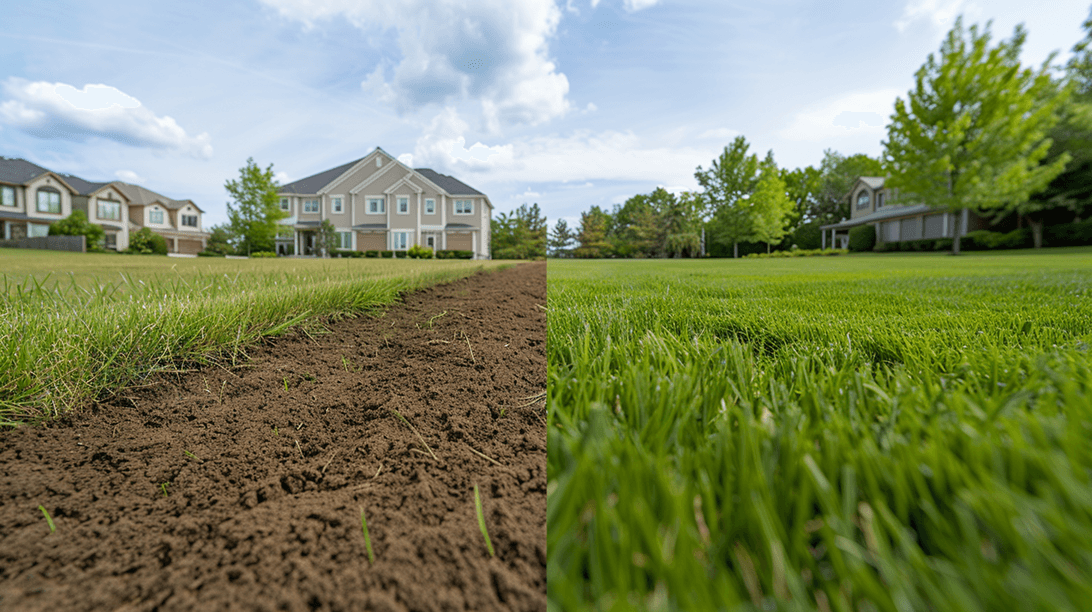
The Bare-Spot and Thin-Lawn Solution
Thin or sparse lawn coverage despite regular fertilization and watering
Bare spots from pet damage, foot traffic, or summer dieback
An older lawn where the original grass variety is no longer holding up
A lawn that lost ground during a hot or dry summer
A property with visible weed pressure indicating turf weakness
A new homeowner wanting to upgrade existing turf without full sod replacement
An ongoing program client where annual overseeding is part of long-term turf improvement
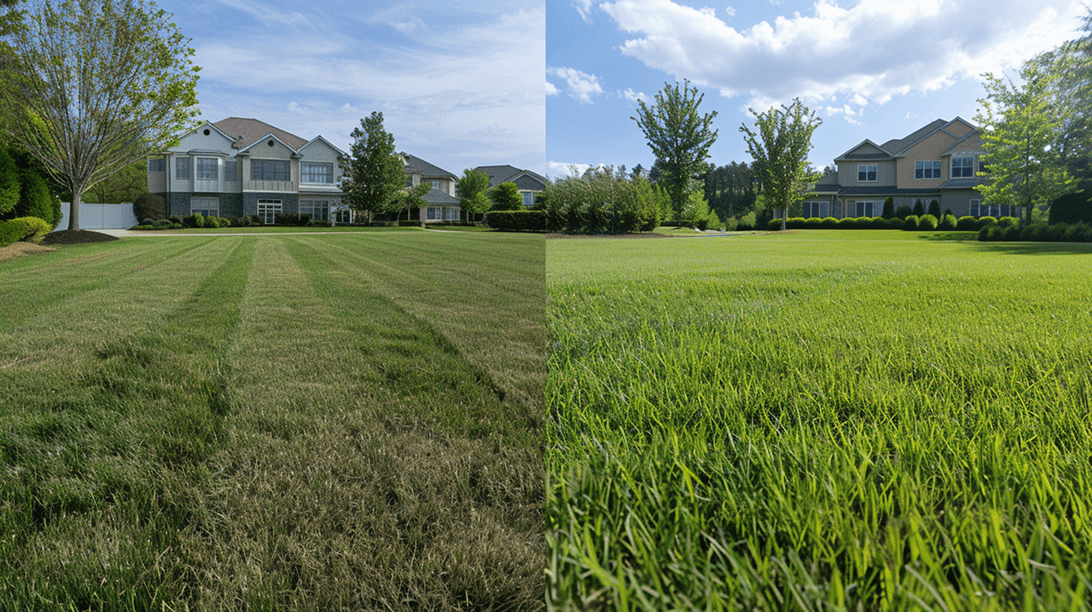
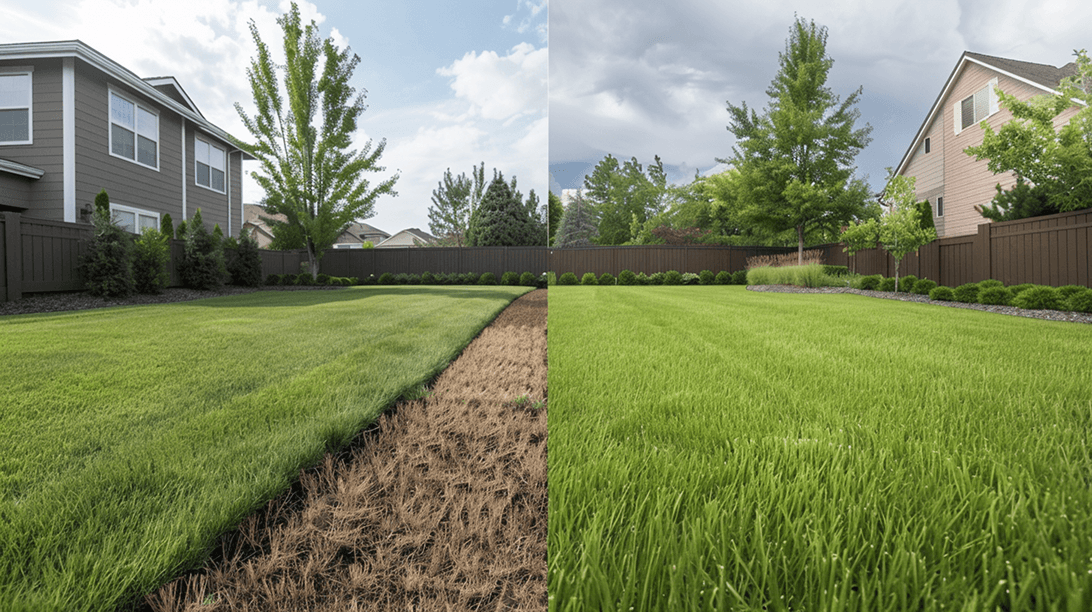
Overseeding paired with aeration is the highest-leverage lawn service for most Lincoln properties. One season of treatment produces dramatic change. Three seasons of consistent treatment transforms the lawn.
What's On This Page
Why Lawns Thin Out Over Time
Why Overseeding Works (When Done Right)
Seed Varieties for Lincoln
Our Process
FAQs
Why Lawns Thin Out Over Time
The Slow Decline of Untouched Lawns
A lawn is a community of individual grass plants. Each plant has a lifespan. As old plants die, new ones need to fill the space, or the lawn slowly thins out.
What kills grass plants over time:
Heat stress. Lincoln summers regularly hit 90+ F with prolonged dry stretches. Cool-season grasses (tall fescue, Kentucky bluegrass) struggle in heat. Weaker plants die during hot summers. A bad summer can kill 10 to 20 percent of a lawn's plants.
Drought. Even with irrigation, dry stretches stress the grass. Plants with shallow roots (typical in compacted clay) die first. Drought kills selectively, leaving the strongest plants behind but creating thin patches.
Compaction and root limitation. Plants in compacted soil have weak root systems and die faster. The thin patches that result are usually in the highest-traffic areas.
Pet damage. Urine spots kill grass in concentrated patches. Without active overseeding, these spots become permanent bare patches that fill in with weeds.
Foot traffic and use patterns. Worn paths from kids running to the play area, from the back door to the garage, from the patio to the grill, all develop into thin or bare lines.
Age and variety decline. Grass varieties have lifespans. The variety installed when the lawn was new may not be the variety that thrives now. Modern grass varieties are significantly more disease-resistant, drought-tolerant, and heat-resistant than older varieties.
What overseeding does:
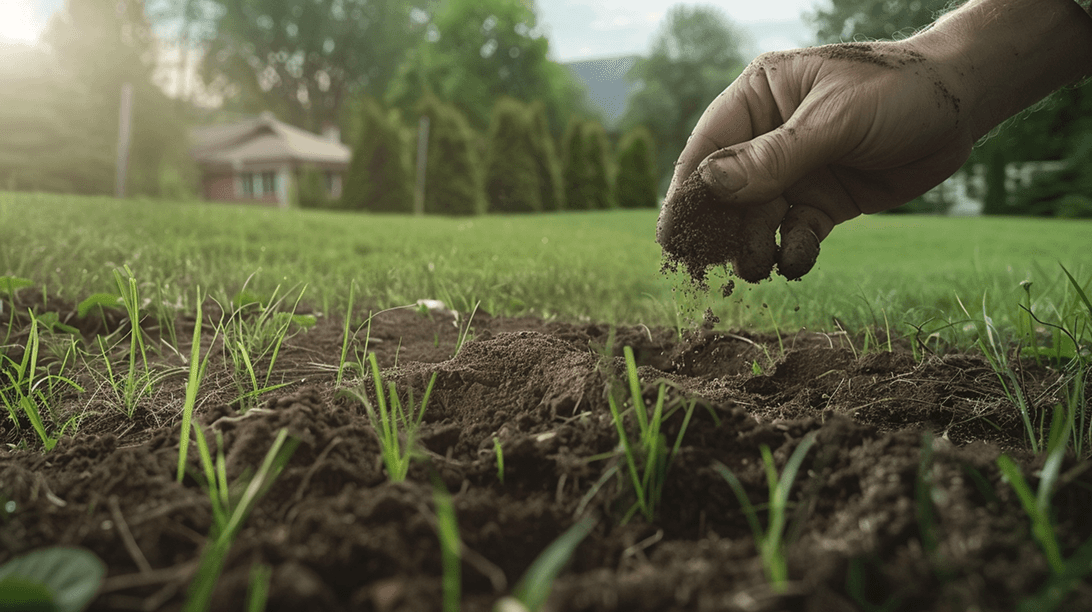
Overseeding adds new grass plants to the existing lawn. The new seedlings germinate, establish, and become permanent residents of the lawn community. Over multiple seasons of consistent overseeding, the lawn shifts from older varieties to newer ones, fills in thin spots, and develops the density that makes weeds unable to compete.
The key insight: A thick lawn is the best weed control there is. Weeds need open soil and sunlight to germinate. A dense lawn with no open soil and no sunlight reaching the ground prevents almost all weed germination. Overseeding to thicken the lawn is therefore also one of the most effective long-term weed management strategies.
Why Overseeding Works (When Done Right)
The Seed-to-Soil Contact Problem
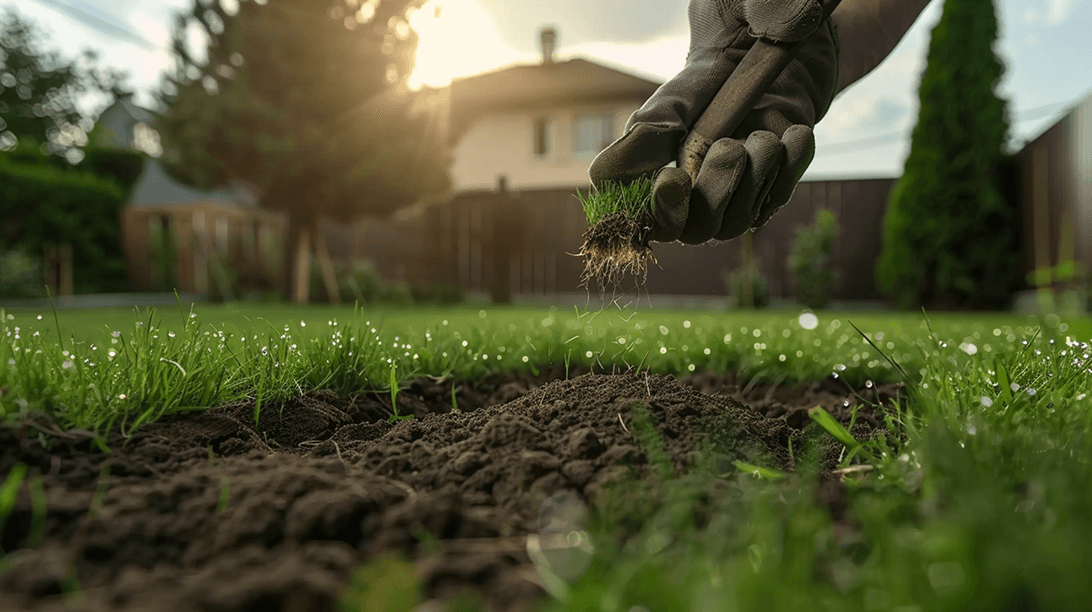
Most DIY overseeding fails because of one issue: seed-to-soil contact. Grass seed needs direct contact with bare soil to germinate. Seed thrown on top of existing turf, on top of thatch, or on top of compacted soil mostly dries out, gets eaten by birds, or fails to germinate.
What makes overseeding work:
Aeration immediately before overseeding. The aeration holes are the perfect seed bed. Each hole has exposed soil, moisture retention, and protection from surface drying. Seed dropped into the holes has dramatically higher germination rates than seed thrown on the surface.
Right seed at right rate. Different grass varieties have different ideal seeding rates (measured in pounds per 1,000 square feet). Too little seed and the lawn doesn't thicken. Too much seed and the seedlings compete with each other and many die. Professional overseeding uses calibrated spreaders set to the correct rate for the variety.
Starter fertilizer. New seedlings need easily accessible phosphorus for root development. A starter fertilizer applied at seeding rate supports germination and early growth.
Consistent watering. Overseed lawn needs consistent moisture for 14 to 21 days. Light, frequent watering (twice a day for short durations) keeps the seed bed moist without washing seed away. Heavier watering kicks in after germination.
No herbicide during establishment. Pre-emergent herbicides applied within 60 to 90 days of overseeding will prevent grass seed germination too. Timing the overseeding around the rest of the lawn care program matters.
Timing. Cool-season grass seed germinates best at soil temperatures between 50 and 65 F. Fall (mid-September to mid-October in Lincoln) provides these conditions plus the most favorable growing window before winter.
Why professional overseeding outperforms DIY:
The combination of aeration, calibrated seeding rate, starter fertilizer, and consistent watering instructions produces germination rates 5 to 10 times higher than DIY overseeding (throwing seed on the surface). Per dollar of seed cost, the actual usable result is dramatically different.
Seed Varieties for Lincoln
What We Use and Why
The grass variety used for overseeding determines the lawn's long-term performance. Different varieties have different strengths, and the right choice depends on the existing lawn and the property's conditions.
Tall fescue (turf-type, modern varieties). Our default for most Lincoln overseeding. Modern tall fescue cultivars (varieties like Rhambler, Mustang, Bullseye, Falcon) are dramatically more disease-resistant, heat-tolerant, and drought-tolerant than older varieties. Deep rooting, good color, holds up to traffic. Best all-around grass for Lincoln residential lawns.
Kentucky bluegrass (modern varieties). Beautiful fine-textured grass that spreads laterally through rhizomes. Right for high-irrigation, high-care lawns. Less drought-tolerant than fescue but produces the classic emerald green lawn aesthetic. Slow to germinate (21 to 28 days) compared to fescue (10 to 14 days).
Bluegrass-fescue blends. Combines the durability of fescue with the spreading habit of bluegrass. Our most-common overseeding mix for properties wanting the best of both. Self-repairing through bluegrass spread plus deep-rooted resilience from fescue.
Perennial ryegrass. Fast germination (5 to 7 days) and quick establishment. Used in blends for quick coverage on bare spots, often mixed with slower-germinating fescue or bluegrass. Lower long-term durability than the others.
For specific problems:
Dense shade overseeding uses fine fescue blends (chewings fescue, hard fescue, red fescue) that handle low light better than the standard tall fescue.
Drought-prone areas use tall fescue exclusively, with deep-rooted modern varieties.
Athletic-use lawns use perennial ryegrass mixed with tall fescue for quick recovery from wear.
What we don't use:
Annual ryegrass. Grows fast for a few weeks then dies. Used by less-scrupulous services as cheap "filler" that looks like germination on day 10 and disappears by day 90.
Generic "contractor mix" seed. Bulk-bag seed from big-box stores. Often contains older varieties, weed seed contamination, and unstated species. Cheap but produces inconsistent results.
Coated seed for residential use. Marketing-driven product that doesn't outperform uncoated seed when properly installed. We use clean, certified seed from regional suppliers.
Our Process
How a Moku Overseeding Visit Runs
Step 1: Walk the property and assess. Identify thin areas, bare patches, and overall density. Discuss any specific goals (filling shaded spots, repairing pet damage, transitioning to a new variety) and confirm the right seed selection.
Step 2: Coordinate with aeration. Overseeding is almost always paired with aeration on the same visit. The aeration holes are the ideal seed bed.
Step 3: Apply starter fertilizer. Starter formulation (higher phosphorus) applied before or during seeding to support germination.
Step 4: Spread the seed. Calibrated broadcast spreader at the correct rate for the chosen variety. Multiple passes in cross-hatched directions for even coverage. Bare patches get hand-seeded at a higher rate.
Step 5: Drag or rake. Light dragging of the surface helps seeds settle into the aeration holes. On smaller properties, we hand-rake for the same effect.
Step 6: Watering instructions. Detailed instructions left for the homeowner: light, frequent watering for 14 to 21 days, then transitioning to heavier, less-frequent watering once germinated. Watering schedule is the make-or-break factor in establishment success.
Step 7: Follow-up. Check-in at 3 weeks and 6 weeks to confirm establishment and identify any spots needing supplemental seeding.