The Corrective Service for Suffocated Lawns
A spongy or bouncy feeling when you walk on the lawn
Visible brown layer of dead material at the base of the grass blades
Water that beads up and runs off rather than soaking into the lawn
Fertilizer or weed treatments that don't seem to work as well as they should
Patches of dead or yellowing grass with no obvious cause
A lawn that gets disease patches (brown patch, dollar spot) repeatedly
An older lawn that has never been dethatched
A lawn that has been mowed short for years (which accelerates thatch buildup)
Dethatching is not an annual service for most properties. It's a corrective service applied when thatch has built up to the point of causing problems.
What's On This Page
What Thatch Is and Why It Builds Up
How Dethatching Actually Works
When Dethatching Is the Right Move (and When It Isn't)
Our Process
FAQs
What Thatch Is and Why It Builds Up
Thatch: The Hidden Layer
Thatch is a tight intermingled layer of living and dead grass stems, roots, and other organic matter. It sits between the green grass you see on top and the actual soil underneath. Some thatch is normal and beneficial: a thin layer (under 1/2 inch) cushions the soil, retains moisture, and protects the crowns of grass plants.
The problem is when thatch accumulates faster than it decomposes. When the layer exceeds 1/2 to 3/4 inch, it transitions from beneficial to harmful.
What causes thatch buildup:
Aggressive nitrogen fertilization. Heavy nitrogen feeds growth above ground but doesn't proportionally support the soil microbes that decompose thatch. Lawns on heavy fertilizer programs build thatch faster.
Compacted soil. When soil is compacted (as it is on most Lincoln clay properties), the microbes that decompose organic matter can't function well. Thatch builds up because there's nothing breaking it down.
Cool weather and drought stress. When soil is cold or dry, decomposition slows. Lincoln's hot dry summers and cold winters both reduce microbial activity in soil.
Cutting too short. Mowing at 2 inches or below causes the grass to compensate with more horizontal stem growth, which then dies and becomes thatch.
Improper watering. Frequent shallow watering encourages shallow root systems and more thatch-forming horizontal growth.
Pesticide use. Some chemical applications kill beneficial soil organisms along with their target pests. Less microbial activity means less thatch decomposition.
What thatch does to a lawn when it gets thick:
Water repellency. Thick thatch becomes hydrophobic and sheds water rather than absorbing it. Water beads up and runs off, leading to brown patches even with adequate rainfall or irrigation.
Fertilizer barrier. Fertilizer applied to a thatched lawn sits on top of the thatch instead of reaching the soil. Fertilization becomes far less effective.
Oxygen restriction. Thick thatch prevents oxygen exchange between soil and atmosphere. Soil microbes (the ones that would otherwise decompose the thatch) can't function. The problem becomes self-reinforcing.
Disease incubator. The warm, moist, low-oxygen environment in thick thatch is perfect for fungal diseases. Brown patch, dollar spot, and other lawn diseases thrive in heavily thatched lawns.
Crown elevation. Grass plants grow new crowns in the thatch layer above the soil. These crowns are more vulnerable to heat, cold, and drought than soil-level crowns.
The end result is a lawn that looks bad despite regular care. The treatments aren't working because they can't get through the thatch.
How Dethatching Actually Works
The Mechanical Removal Process
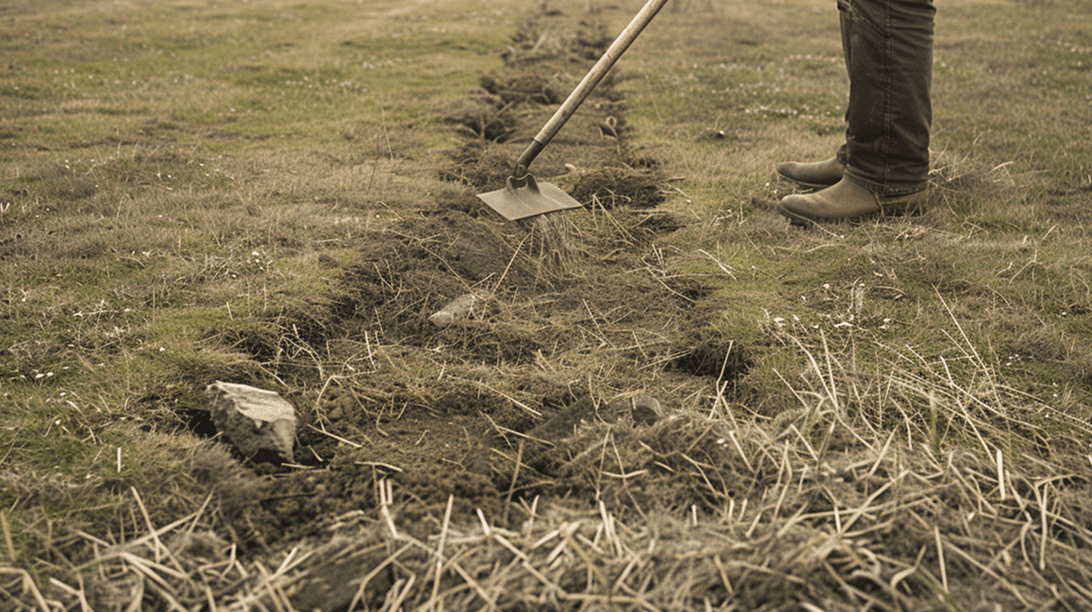
Dethatching is a physical process. A specialized machine called a power dethatcher (also called a power rake or vertical mower) has vertically rotating steel blades that slice through the thatch layer and lift it to the surface. The machine doesn't cut the grass; it cuts through the thatch underneath while leaving the live grass largely intact.
What happens during dethatching:
The machine passes over the lawn in a regular pattern. Multiple passes in different directions are needed for thorough thatch removal. A single pass removes some thatch. Multiple cross-hatched passes remove most of it.
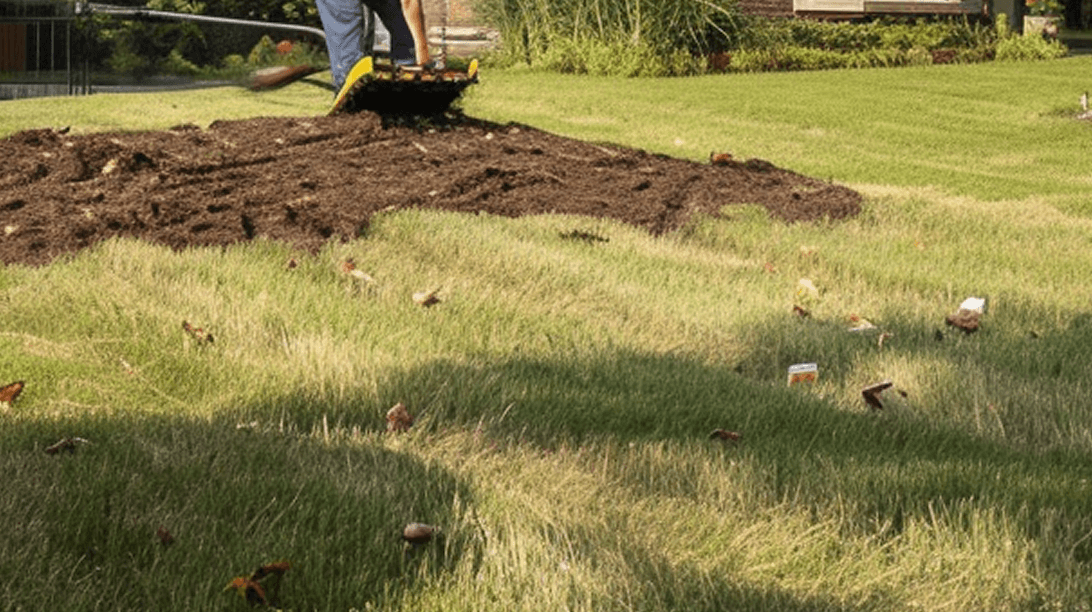
Thatch gets pulled to the surface. Loose pieces of thatch accumulate on top of the lawn in significant quantity. Most homeowners are shocked at how much material comes up.
The lawn looks scraped and raw afterward. Dethatched lawns look bad for the first 1 to 2 weeks. Visible scraping marks, scattered debris, and exposed soil are normal. The lawn recovers and looks better than before within 3 to 4 weeks.
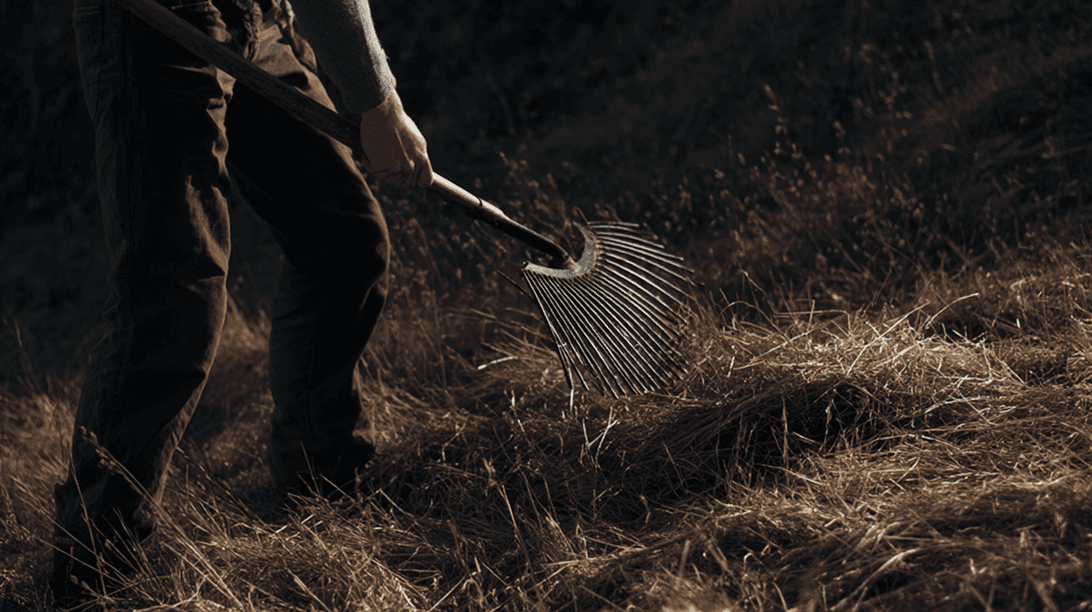
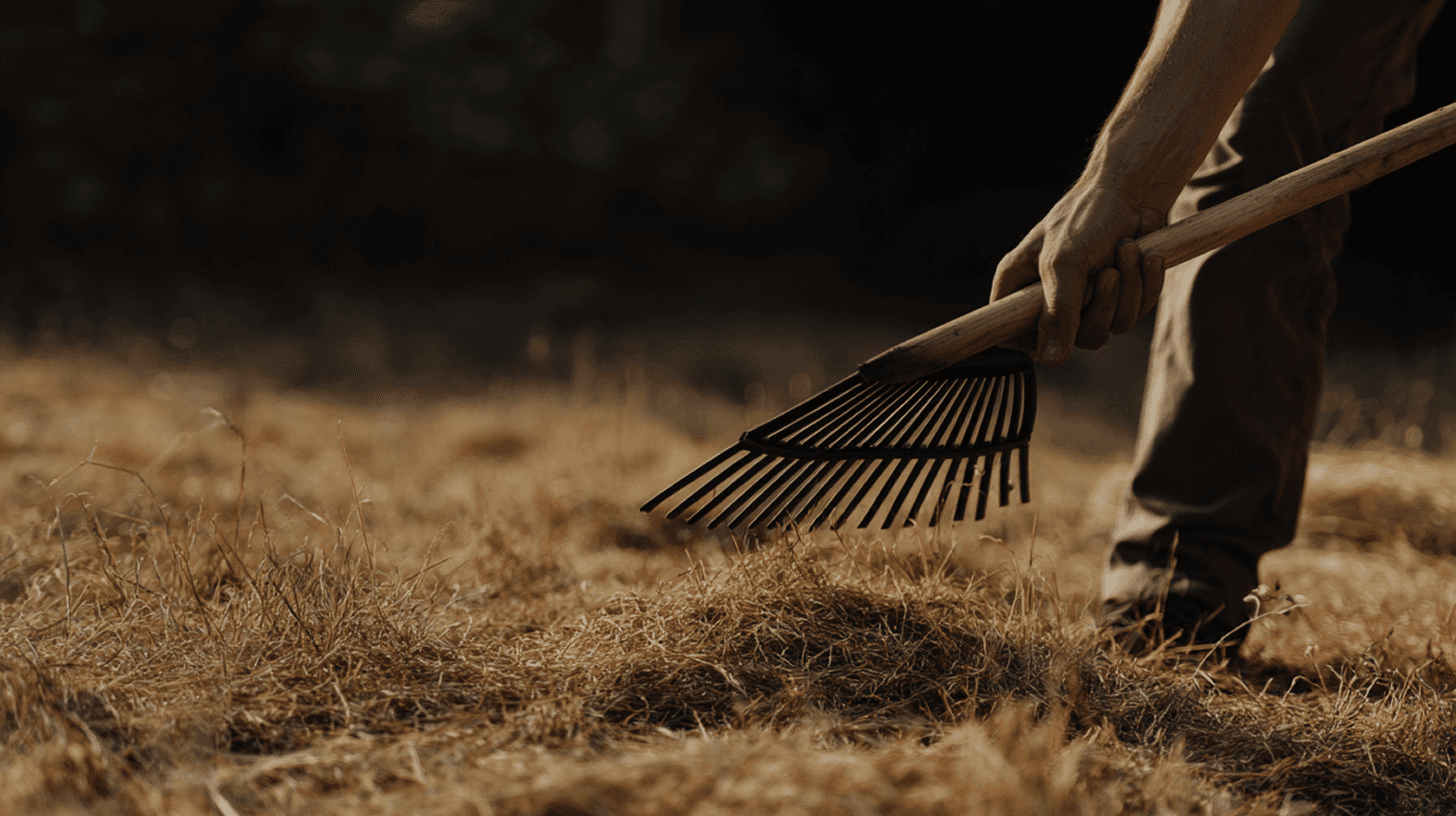
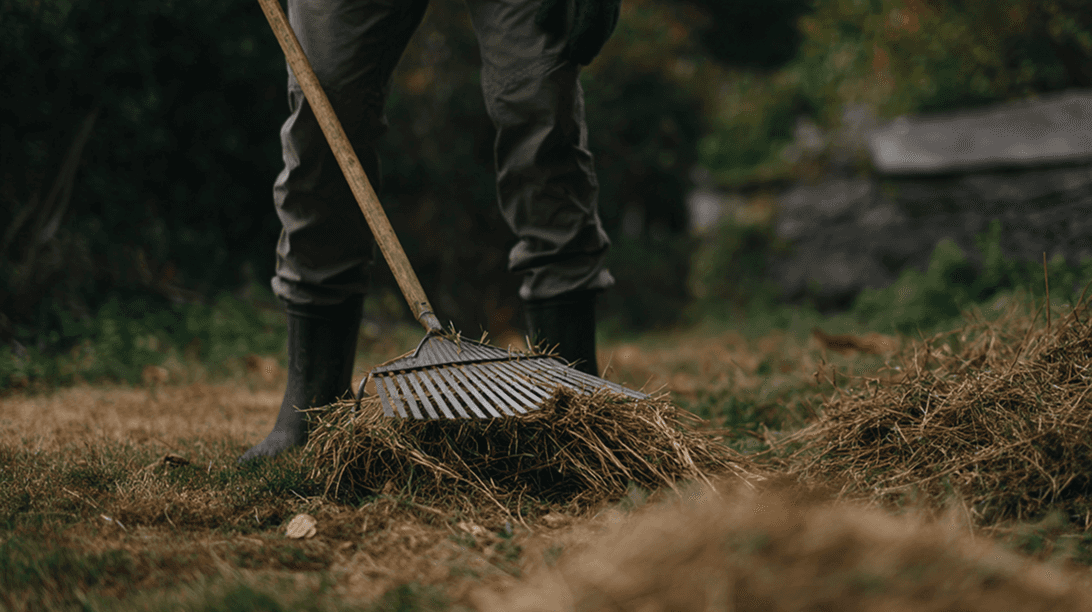
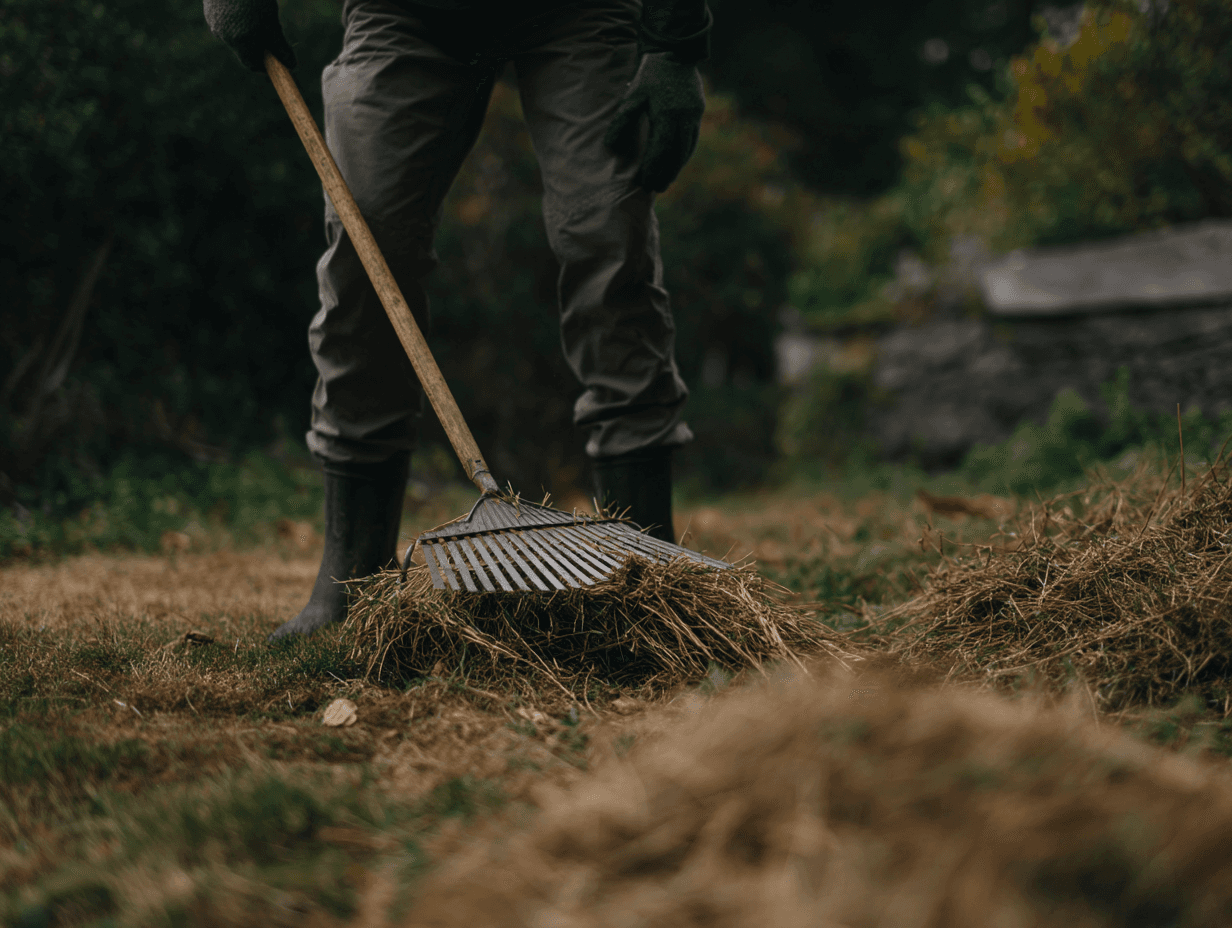
Thatch debris is collected and removed. We rake up the loose thatch (sometimes mowing it up if conditions are right) and haul it away. Severe thatch removal can generate cubic yards of material per residential property.
Pairing with other services:
Dethatching plus overseeding. The dethatched lawn provides excellent seed-to-soil contact for new grass seed. We overseed immediately after dethatching for properties needing to thicken thin areas.
Dethatching plus top dressing. Light compost top dressing after dethatching feeds the microbes that decompose any remaining thatch and supports lawn recovery.
Dethatching plus aeration. For severely compacted, severely thatched lawns, we sometimes dethatch first and aerate in the same visit. Together they reset the lawn's structural condition.
Spring vs fall dethatching:
Spring (April-May). Best for cool-season lawns. The lawn has active growth and recovers fast. We typically overseed in the same visit.
Fall (early September). Acceptable for cool-season lawns. Less recovery time before winter but still adequate. Often paired with aeration and overseeding as part of fall lawn renovation.
Summer. Wrong time. Dethatching during heat stress damages the lawn.
Winter. Frozen ground prevents effective dethatching.
When Dethatching Is the Right Move (and When It Isn't)
Diagnosing the Need for Dethatching
Dethatching is a significant service that stresses the lawn. We don't recommend it unless it's actually needed. Some lawns benefit dramatically. Others don't need it at all.
Test for thatch depth. Cut a small wedge from your lawn (3 to 4 inches across, 3 to 4 inches deep). Look at the layer between the green grass and the soil. If the brown thatch layer is:
Less than 1/4 inch: No dethatching needed. Continue normal lawn care.
1/4 to 1/2 inch: Thatch is at the upper end of healthy. Aeration and proper mowing height should prevent further buildup. No dethatching needed.
1/2 to 1 inch: Significant thatch buildup. Consider dethatching, especially if other problems (water absorption, disease, dead patches) are visible.
More than 1 inch: Severe thatch buildup. Dethatching strongly recommended. Lawn problems will continue without it.
Other indicators that suggest dethatching:
Spongy or bouncy feeling when walking on the lawn
Water beading up or running off rather than absorbing
Persistent brown patches that don't respond to fertilization
Recurring fungal disease (brown patch, dollar spot, summer patch)
Fertilization that doesn't produce the expected response
Lawn that looked great years ago but has slowly declined
When NOT to dethatch:
Healthy lawn with normal thatch. Don't dethatch a lawn just because you've heard of the service. Dethatching a lawn without significant thatch is unnecessary stress.
Severely stressed lawn. A lawn already failing from drought, disease, or other major issues shouldn't be dethatched until the underlying problem is solved.
Newly sodded or seeded lawn. New lawns shouldn't be dethatched in the first 1 to 2 years.
Wrong time of year. Summer heat or winter cold are bad times to dethatch.
Once thatch is removed, prevention matters. Most lawns need dethatching only every 3 to 5 years if they're being maintained properly. Annual dethatching is excessive and stresses the lawn unnecessarily. We help diagnose whether dethatching is the right call before the project.
Our Process
How a Moku Dethatching Visit Runs
Step 1: Walk the property and assess. Pull a thatch sample and measure depth. Confirm dethatching is appropriate before committing to the work.
Step 2: Schedule for right conditions. Dethatching needs cool weather, moist (not wet) soil, and active growing conditions. We schedule for the right window.
Step 3: Pre-mow short. Lawn mowed to a lower-than-normal height (1.5 to 2 inches) before dethatching. The shorter cut lets the dethatcher reach the thatch layer effectively.
Step 4: Dethatch the property. Multiple passes with the power dethatcher in cross-hatched directions. The machine's vertical blades slice through the thatch and pull it to the surface.
Step 5: Remove the debris. Rake up loose thatch, mow over to collect remaining debris, or vacuum the lawn (depending on volume). Haul away all collected thatch.
Step 6: Pair with overseeding and top dressing if needed. Overseeding goes in immediately while the lawn is still freshly opened. Light top dressing can support recovery.
Step 7: Watering and recovery instructions. Detailed instructions for the recovery period. Heavy watering for 2 weeks supports lawn recovery and overseeding establishment. Mowing height stays at 3 to 4 inches for the next year to prevent thatch rebuilding.