Why Most DIY Lawn Care Doesn't Work
Most fertilization and weed control clients are looking to solve:
A lawn full of dandelions, clover, crabgrass, or other visible weeds
Patchy or thin turf that doesn't fill in despite regular mowing
A lawn that looks yellow or pale rather than deep green
Bare spots that won't establish grass on their own
A previous DIY effort that worked but is hard to maintain consistently
A new home where the homeowner wants professional turf management from day one
A property where the lawn is a visible asset and amateur results aren't acceptable
The goal isn't a perfect lawn (impossible without inputs that damage other things). The goal is a thick, healthy, weed-free lawn that looks great year after year and continues improving with each season of consistent care.
What's On This Page
Why DIY Weed and Feed Falls Short
The Annual Application Schedule
Pet-Safe and Application Considerations
Our Process
FAQs
Why DIY Weed and Feed Falls Short
The Limits of the Big-Box Approach
Walk through the lawn care aisle at any big-box store and you'll see dozens of products promising green grass and weed control. Most of them work to some degree, but the way they're typically used by homeowners produces uneven results.
The problem with "weed and feed" combo products:
A combination product (typically pre-emergent crabgrass control plus nitrogen fertilizer in one bag) tries to do two different jobs that have different optimal timing.
Pre-emergent crabgrass control works only when applied before soil temperatures consistently exceed 50 to 55 degrees F (which is mid-April in Lincoln in a normal year). Applied after that window, it doesn't work because the crabgrass has already germinated.
Fertilizer is most effective when applied at multiple times during the season, with formulations that vary by season (high nitrogen in spring and fall, lower nitrogen in summer, high potassium in late fall).
Combining the two means the pre-emergent gets applied late (when the homeowner finally gets around to it, often May) and the fertilizer gets applied at the wrong rate at the wrong time of year. Both jobs underperform.
The problem with single-application "broadleaf" controls:
Broadleaf weed killers (the granular or spray products that target dandelions, clover, etc.) work best when applied during active weed growth and on weeds that are not yet flowering. Applied once in mid-summer (the typical homeowner timing), they hit fewer weeds and don't address the cycle of new weed germination.
What actually works:
A professional lawn program uses 4 to 6 separate applications per year, each one timed to a specific job that can only be done at that point. Pre-emergent in early spring (before soil hits 50 F). Broadleaf control in mid-spring (after weeds are actively growing but before they flower). Summer fertilization with the right formulation for heat stress. Late-summer fertilization to support recovery from summer stress. Fall pre-emergent for winter annual weeds. Fall winterizer fertilizer that builds root reserves for next spring's green-up. Grub control in mid-June for properties with grub history.
Six applications. Each one with a specific job. Together they produce a lawn that's thicker, greener, more weed-free, and more resilient than anything achievable with combination products.
The cost difference:
A 4 to 6 application professional program costs more than buying products at the store. The cost difference is meaningful but not extreme. The result difference is dramatic, especially over multiple seasons. Properties on professional programs for 2 to 3 years look noticeably different than DIY properties, and the gap continues to grow.
The Annual Application Schedule
Six Visits, Six Different Jobs
Our standard residential program is 6 applications per year, timed by soil temperature and growth stage rather than rigid calendar dates. Here's the plan:
Application 1: Early Spring (Mid-March to Early April). Pre-emergent crabgrass control plus light early-season fertilizer. Applied before soil temperatures consistently exceed 50 F. The pre-emergent creates a barrier that prevents crabgrass seeds from germinating. The fertilizer supports root activity as the lawn wakes up. This application is the foundation of crabgrass control for the entire season.
Application 2: Late Spring (Mid-May). Broadleaf weed control plus second fertilizer application. Targets dandelions, clover, plantain, and other broadleaf weeds during active growth. Fertilizer supports active spring growth and deep green color. This is the application that visibly removes weeds, and the lawn looks dramatically better within 7 to 14 days.
Application 3: Early Summer (Late June). Summer fertilizer plus grub control where applicable. Fertilizer formulation shifts to support the lawn through heat stress (lower nitrogen, higher potassium). Grub control applied to properties with grub history or visible adult beetle activity (typically June Bugs in Lincoln).
Application 4: Late Summer (Mid-August). Late-summer fertilizer plus spot broadleaf control. Light fertilization to support recovery from summer stress. Targeted broadleaf treatment on any weeds that have appeared during summer.
Application 5: Early Fall (Late September to Early October). Heavy fall fertilizer plus fall pre-emergent. The most important fertilization visit of the year. Fall is when cool-season grasses do their biggest root development, and proper fall fertilization sets up next spring's green-up. The pre-emergent targets winter annual weeds (chickweed, henbit) before they germinate.
Application 6: Late Fall (Mid to Late November). Winterizer fertilizer. High-potassium formulation that supports root reserves through winter and primes the lawn for explosive spring green-up. The visit most homeowners skip and the one that makes the biggest difference in next year's lawn.
Between visits: Targeted spot treatments for any specific weed problems or pest issues. Disease monitoring during humid summer stretches. Soil test recommendations every 2 to 3 years.
Pet-Safe and Application Considerations
What's Applied and How
A common homeowner concern with professional lawn programs is product safety. Here's the honest answer:
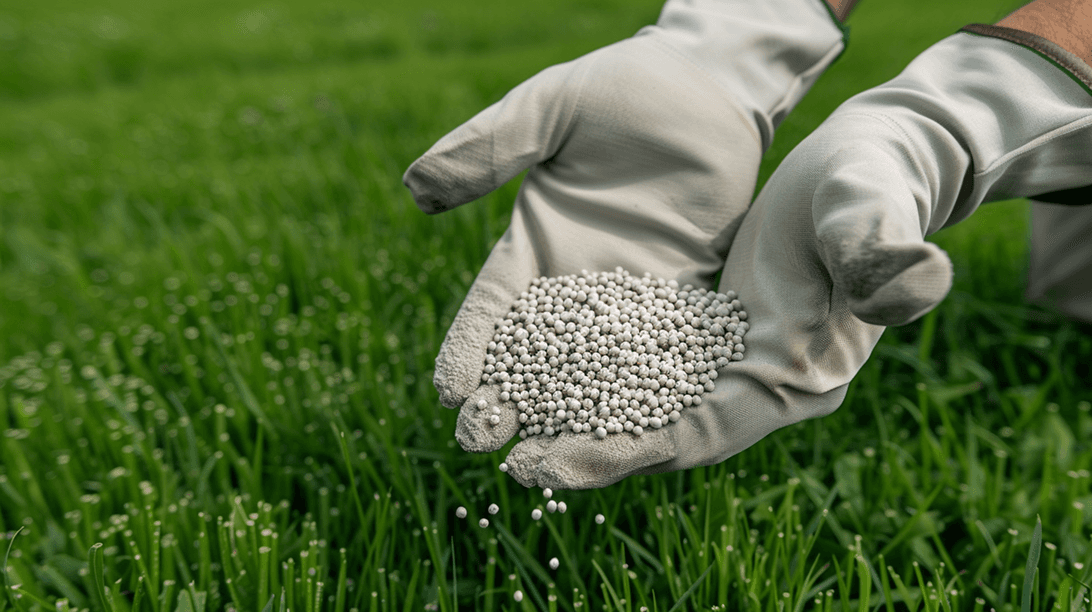
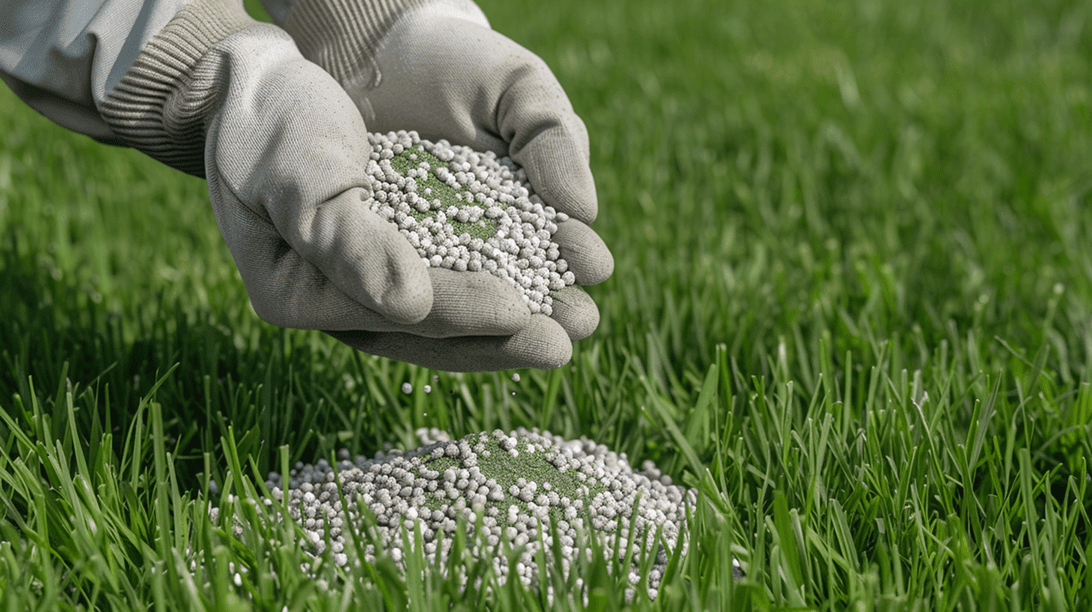
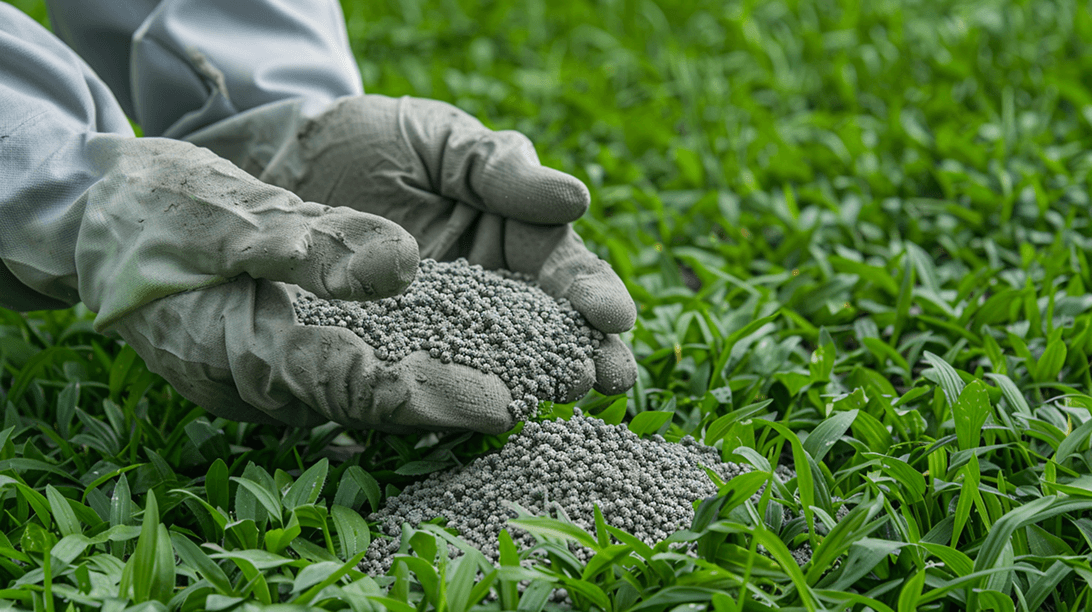
Standard products are pet-safe within a few hours of application. Once granular products have been watered in (by irrigation, rain, or homeowner watering) and liquid products have dried, the lawn is safe for pets, kids, and tenants. The re-entry interval (REI) is clearly marked on every product label and we follow these standards strictly.
Most products we use are common-use professional products. Glyphosate (Roundup) is not used in lawn programs (only spot-use in non-lawn areas if requested). Common professional products include 2,4-D for broadleaf control, prodiamine or pendimethalin for pre-emergent, and various nitrogen-phosphorus-potassium fertilizers from major manufacturers. All products are licensed for the use and applied at label rates.
For sensitive sites, we offer:
Organic-only programs. Using compost-derived fertilizers, corn gluten meal for pre-emergent, and mechanical weed pulling instead of herbicides. Slower results, higher cost, but no synthetic products on the property. Right for daycares, schools, properties with chemical sensitivities, or organic-by-choice homeowners.
Reduced-risk programs. Using selective products with lower toxicity ratings, avoiding broadcast applications in favor of spot treatments, and minimizing total chemical inputs. Middle-ground option.
Standard programs. What most properties get. Professional products applied at label rates with proper timing.
Communication on application days:
We give 24-hour notice before any application. Properties with sensitive considerations (pet schedules, kids' play patterns, well-water proximity) are flagged in our system. Application days include posted notices on the property if required by license terms.
Our Process
How a Moku Fertilization & Weed Control Program Runs
Step 1: Walk the property and assess. Initial visit to evaluate current turf condition, identify visible weed pressure, note any irrigation considerations, and discuss the homeowner's goals.
Step 2: Quote and program design. Quote includes all 6 visits, products, applications, and any program-specific considerations. Most clients sign annual contracts that auto-renew with end-of-year review.
Step 3: Execute visits on appropriate timing. Schedule shifts based on soil temperature, weather, and growth stage. Communication sent before each visit with timing window.
Step 4: Document and follow up. Every visit produces a service record. Any property-specific observations are reported to the homeowner.
Step 5: Annual review and adjustment. End-of-season summary showing what was applied, observed results, and any adjustments for next year. Soil testing recommendations every 2 to 3 years.