Wet Yards Are More Common in Lincoln Than You'd Think
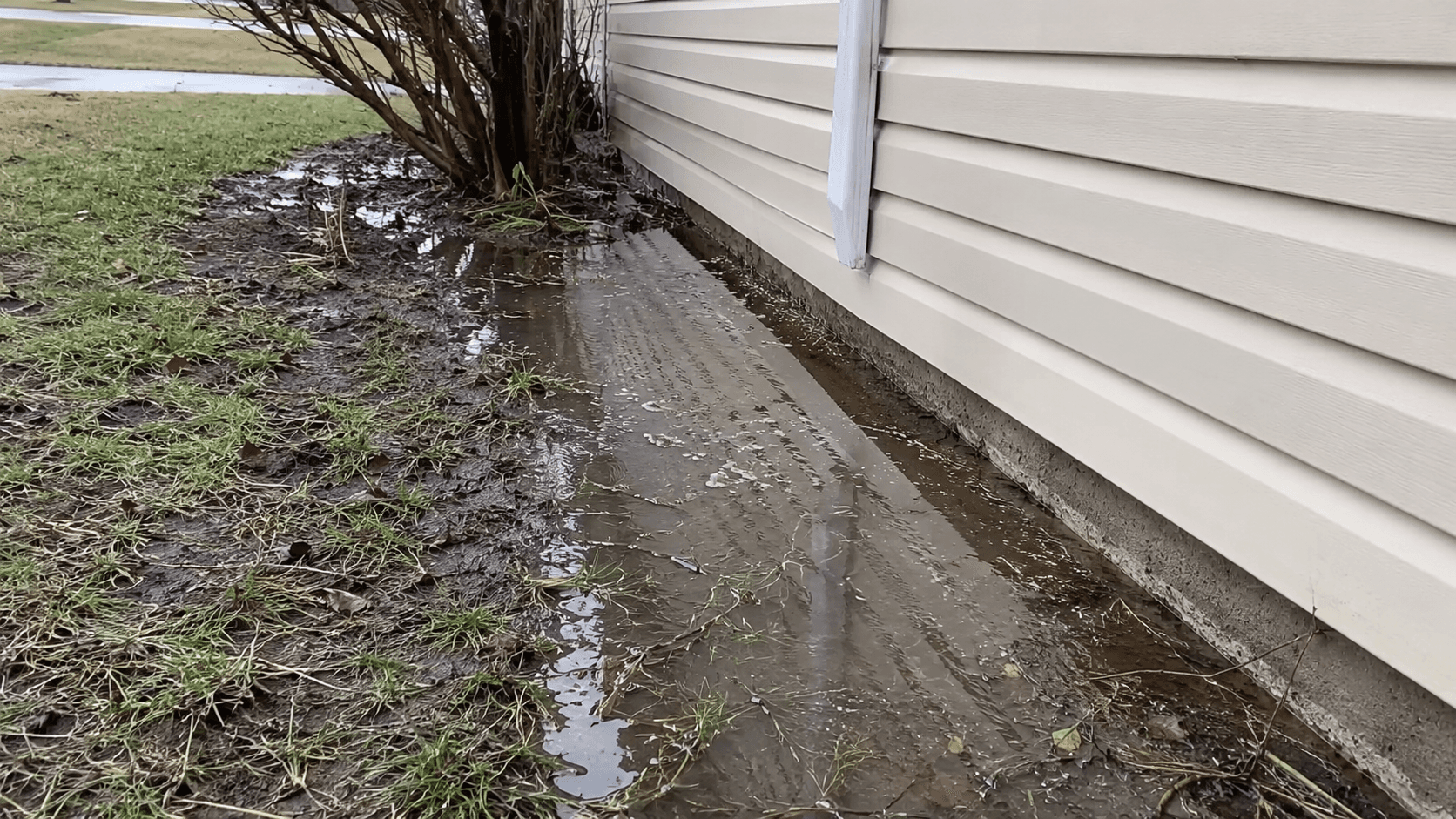
Water pooling in the lawn for hours or days after rain
Downspouts dumping straight onto soil right next to the foundation
Low spots that turn into mud pits and kill the grass
Erosion cutting into landscape beds, mulch, and along sidewalks
Muddy, unusable areas where kids and pets used to play
Poor grading around patios, fences, and driveways that traps water against hardscape
None of these fix themselves. They tend to get worse year over year as soil compacts, mulch washes out, and water finds the path of least resistance which is usually the wrong path.
What's On This Page
Drainage Problems We Solve
Why Your Yard Holds Water in the First Place
Most drainage problems come down to one thing: water is moving across your property without a clear path to a safe place to go. In Lincoln, three local factors make this worse than it would be in sandier or hillier parts of the country.
Heavy clay soil
Most of Lancaster County sits on dense, slow-draining clay. When it rains hard, the top inch or two saturates fast and the rest of the water has nowhere to soak in. It runs across the surface until it hits something, usually a low spot, a foundation, or a neighbor's yard.
Flat or near-flat lots
A lot of Lincoln neighborhoods, especially newer subdivisions on the south and east sides of town, were built on land that doesn't have natural slope. Without intentional grading, water just sits.
Downspouts that end too close to the house
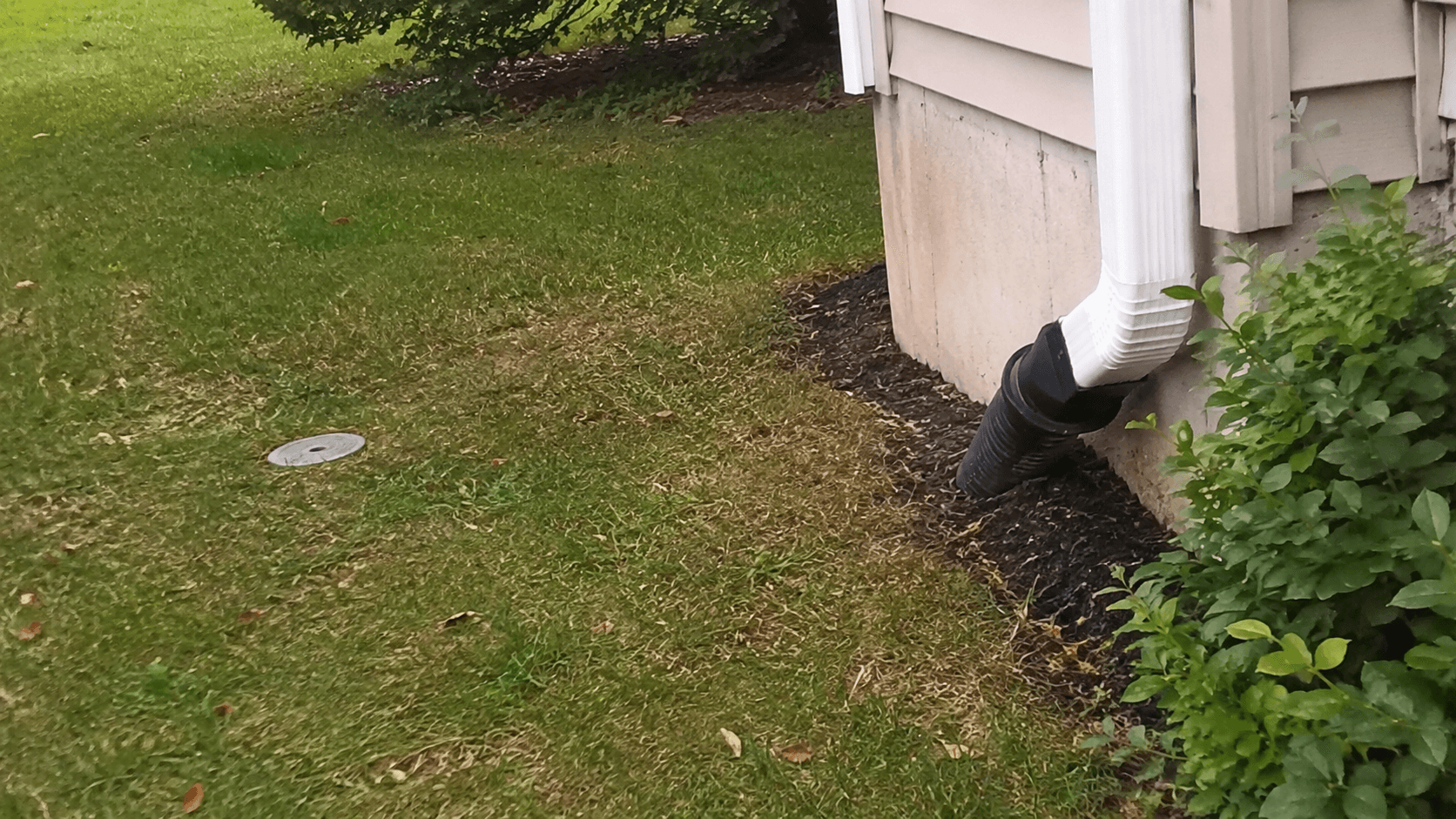
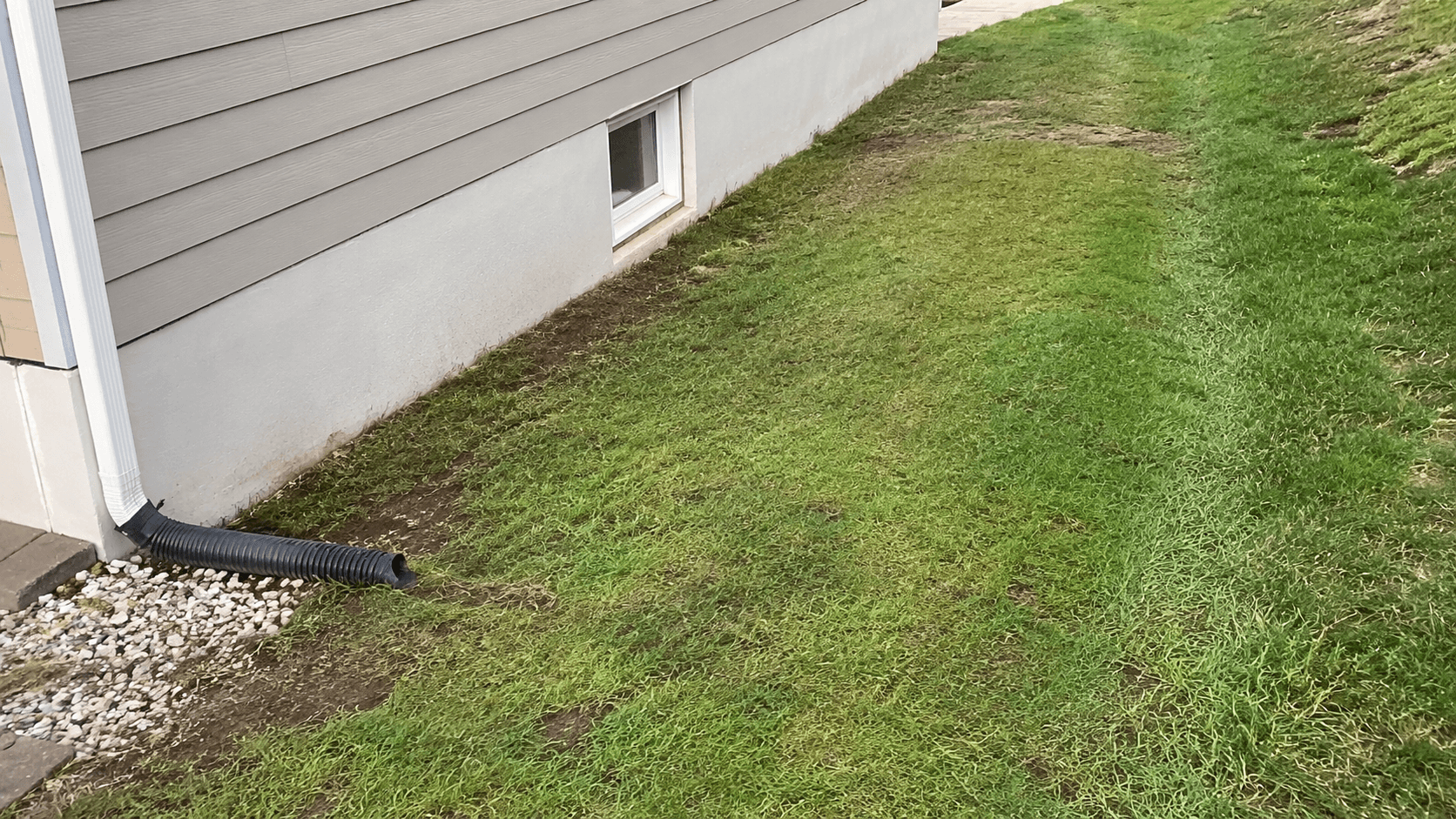
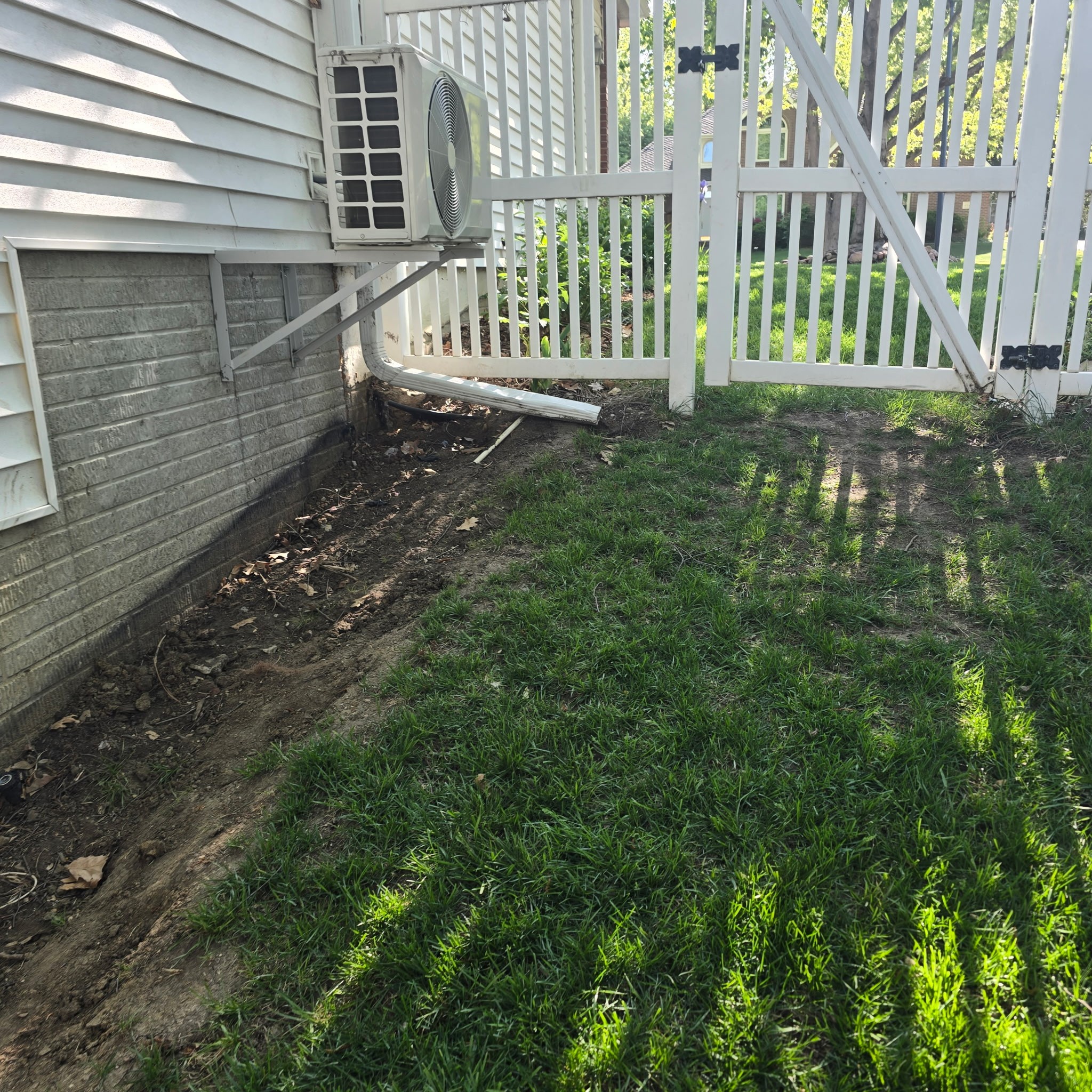
Standard builder downspouts often dump within a foot or two of the foundation. Multiply that by four or six downspouts during a heavy storm and you've got hundreds of gallons hitting the soil right next to your basement.
When you put those three things together, you get the symptoms most homeowners actually call us about: wet basements, dying grass in the same spot every spring, mulch washing into the driveway, and that one corner of the yard that's never dry.
How Yard Drainage Works
The Basic Idea Behind a Working Drainage System
A well-designed drainage system does three jobs in order:
Catch the water before it spreads at the downspout, at the low spot, or at the edge of a hardscape.
Move the water through pipe, swale, or graded channel to a place where it won't cause damage.
Release the water somewhere it can either soak in slowly or flow safely off the property.
That third step is the one most DIY drainage attempts skip. Burying a French drain that exits into the same low spot you started with doesn't fix anything. It just hides the problem underground. Real drainage work has to think about where the water ends up.
Drainage Solution Options
Solutions We Use on Lincoln Properties
Every yard is different, so most projects use a combination of these. Here's what each one does and when it's the right call.
Yard Grading & Swales
Reshaping the soil so water flows away from the house and toward a safe outlet. A swale is a shallow, intentionally graded channel that moves surface water without needing pipe. Grading is almost always the foundation of a drainage project. If the slope is wrong, no amount of drain pipe will fully solve it. Best for: Foundation runoff, low spots, redirecting water away from patios and fences.
French Drains
A perforated pipe set in gravel and wrapped in filter fabric, buried below the surface. Water seeps in along the length of the pipe and gets carried to a discharge point.
Despite the name, a French drain isn't always the right answer, it's specifically for catching subsurface water along a long stretch. When there's nowhere good to send the water, we'll sometimes run a French drain with angered holes punched down through it, or terminate it into a dry well. Both let the water dissipate into deeper soil instead of needing an above-ground outlet. Best for: Soggy strips along foundations, retaining walls, or property lines where water keeps showing up.
Downspout Extensions
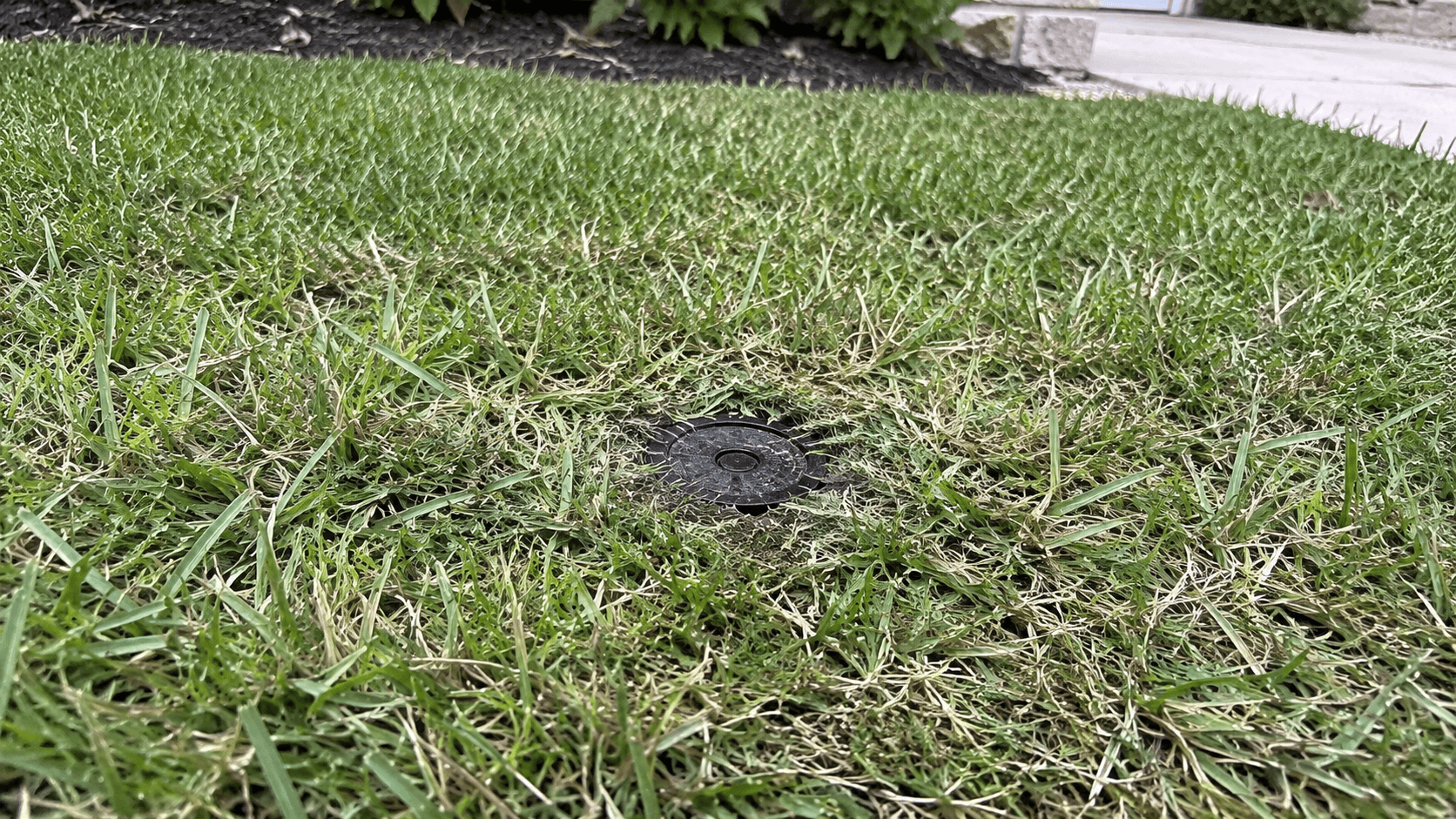
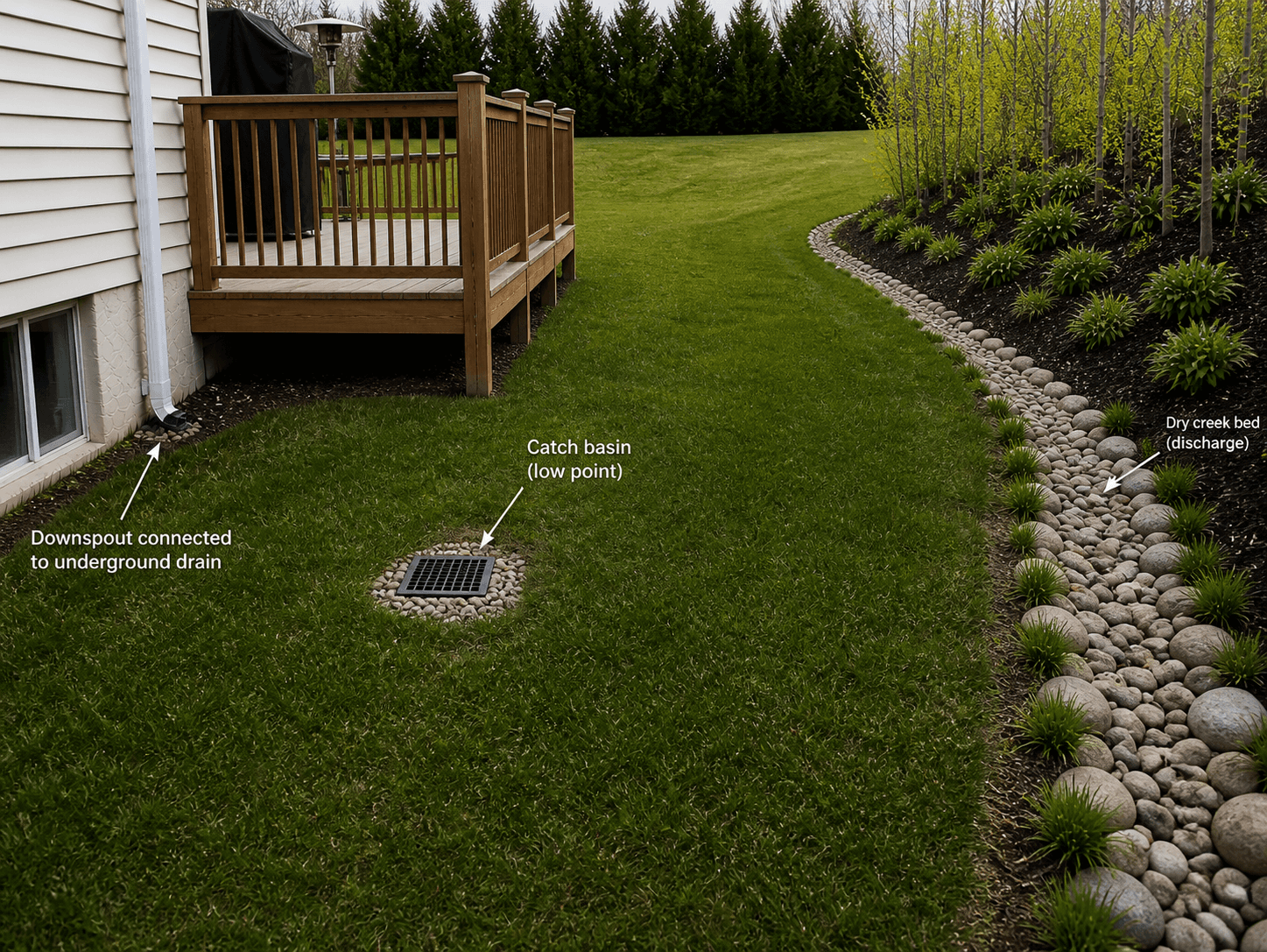
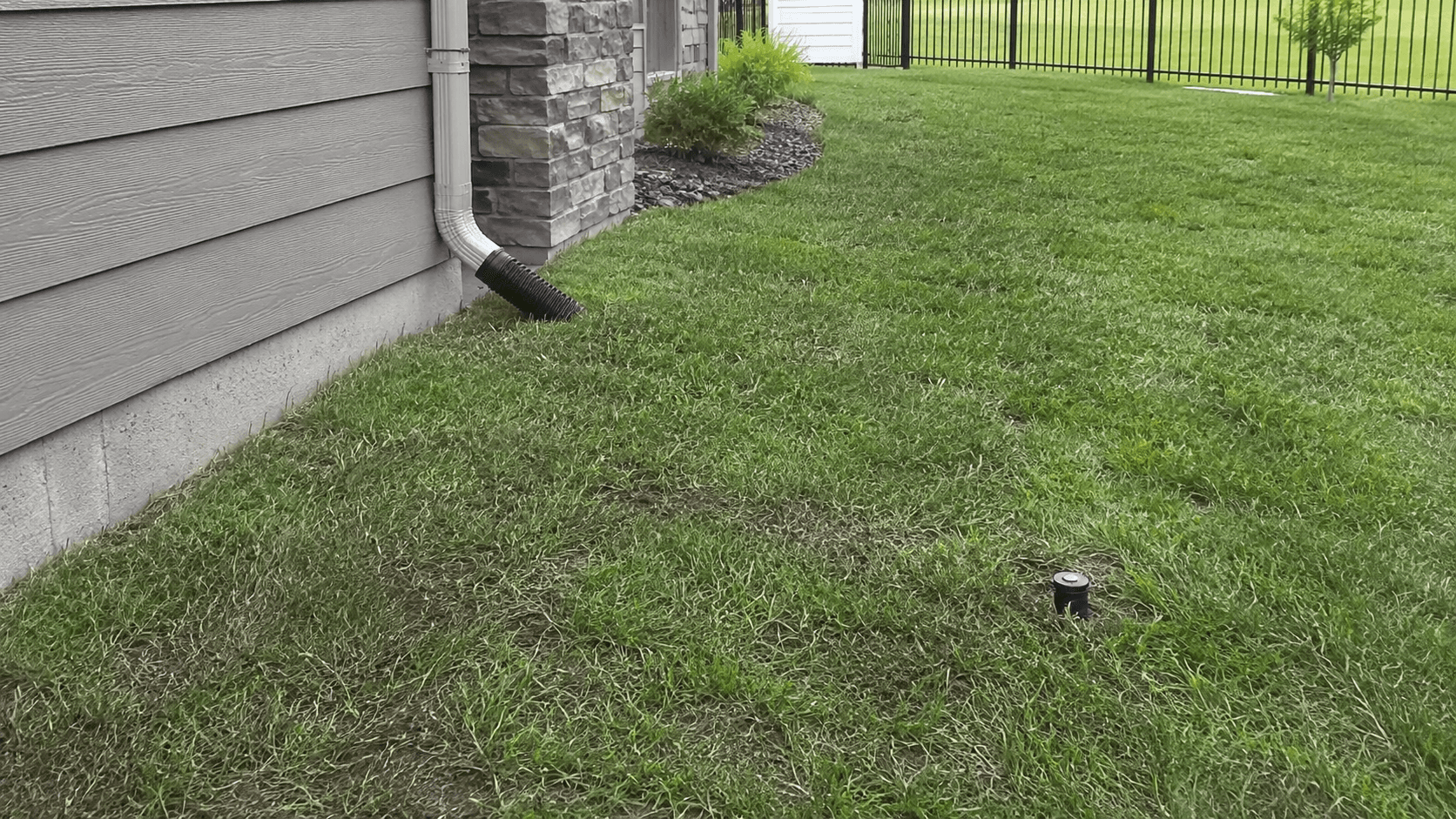
The simplest, highest-impact fix in most yards. We tie downspouts into buried pipe that carries roof water 10, 20, or 50+ feet away from the house out to a pop-up emitter, dry creek, or rain garden. No more roof water dumping at the foundation.
A quick thing worth knowing: standard downspouts that spill out right at the hinge point are one of the biggest causes of foundation erosion we see. Look at almost any house with them and you'll spot a black tar-like band along the foundation, that's the original waterproofing, and everywhere it's exposed used to be covered by soil. That's how much ground has washed away. Best for: Basement moisture, foundation protection, killing the muddy strip next to the house.
Catch Basins & Yard Drains
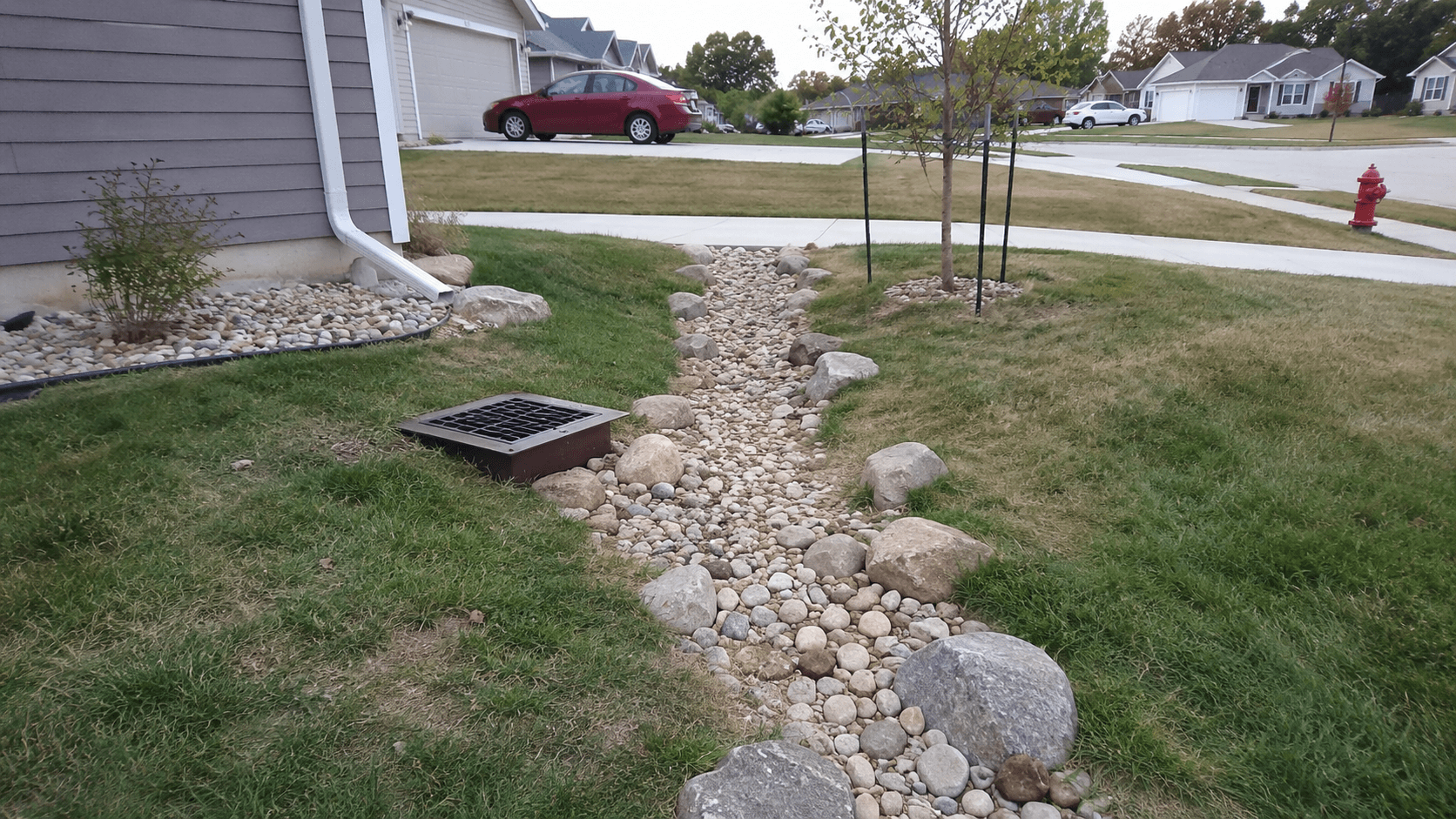
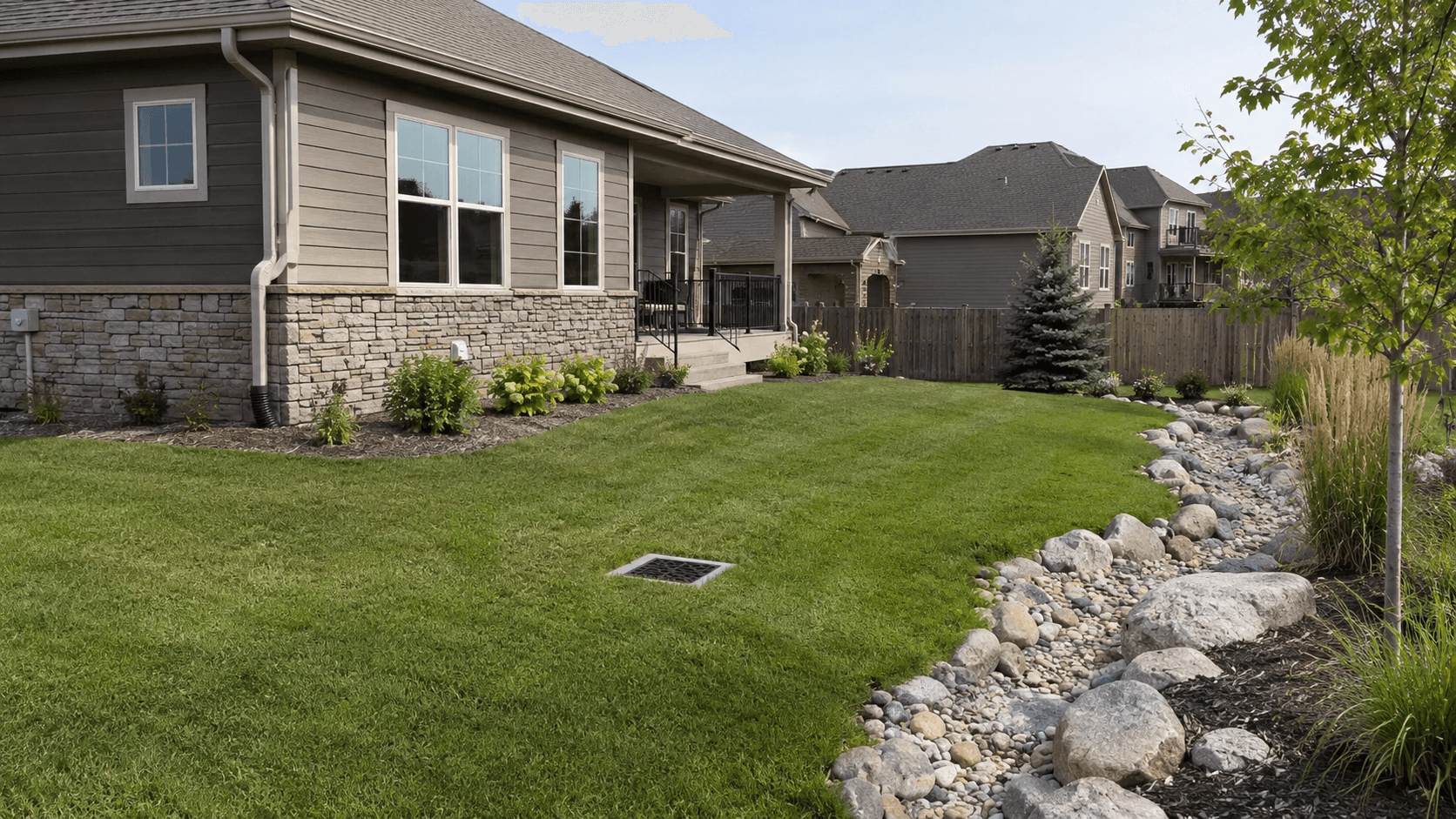
A grated inlet set into a low spot in the lawn or hardscape that captures pooling water and sends it underground through pipe. Think of it as a storm drain for your yard. We also use them as cleanouts inside larger drainage systems, so the whole network stays serviceable down the road. Best for: Persistent low spots, edges of patios, areas where water collects faster than the soil can absorb it.
Dry Creek Beds
A surface channel of stone, usually river rock with larger boulders for accent, that doubles as a working drainage path and a landscape feature. Dry creek beds carry water during storms and look intentional the rest of the time. Best for: Visible drainage routes, slopes, and yards where you want the system to look like landscaping instead of utility.
Rain Gardens
A planted, slightly recessed bed designed to collect runoff and let it soak in over a few hours. Built right, with the correct soil mix and native plants, a rain garden handles thousands of gallons of stormwater per year and looks like a normal landscape bed. Best for: Discharge points for downspouts and drains, low areas you want to turn into something useful, eco-conscious homeowners.
Erosion Control
Stabilizing slopes, bed edges, and washout areas with a combination of grading, retention, ground cover, and rock. Often the right move when water has already started cutting channels through mulch or soil. Best for: Sloped yards, washout along beds and walkways, areas downhill of downspouts.
Our Process
How a Moku Drainage Project Runs
Step 1: Inspect the property and find where water is coming from. We walk the yard, look at downspouts, low spots, slope, soil, and any signs of past damage. If we can, we time a visit during or after a rain. The goal of this step is figuring out the source of the water, not just where it ends up.
Step 2: Plan the route. Once we know where water is coming from and where it's going, we map out how to move it. That might mean grading, pipe runs, a catch basin or two, and a discharge point that works year-round. We share the plan with you before any digging happens.
Step 3: Install grading, drains, pipe, rock, or planting. This is where most of the visible work happens. Trenches get dug, pipe goes in, rock and fabric get placed, ground gets reshaped, and plantings or sod go down. We work in phases so the yard isn't torn up longer than necessary.
Step 4: Clean up and explain maintenance. We haul away spoil, restore disturbed turf, and walk you through what to keep an eye on. Most drainage systems are nearly maintenance-free, but we'll show you where to check after big storms and how to keep grates and emitters clear.
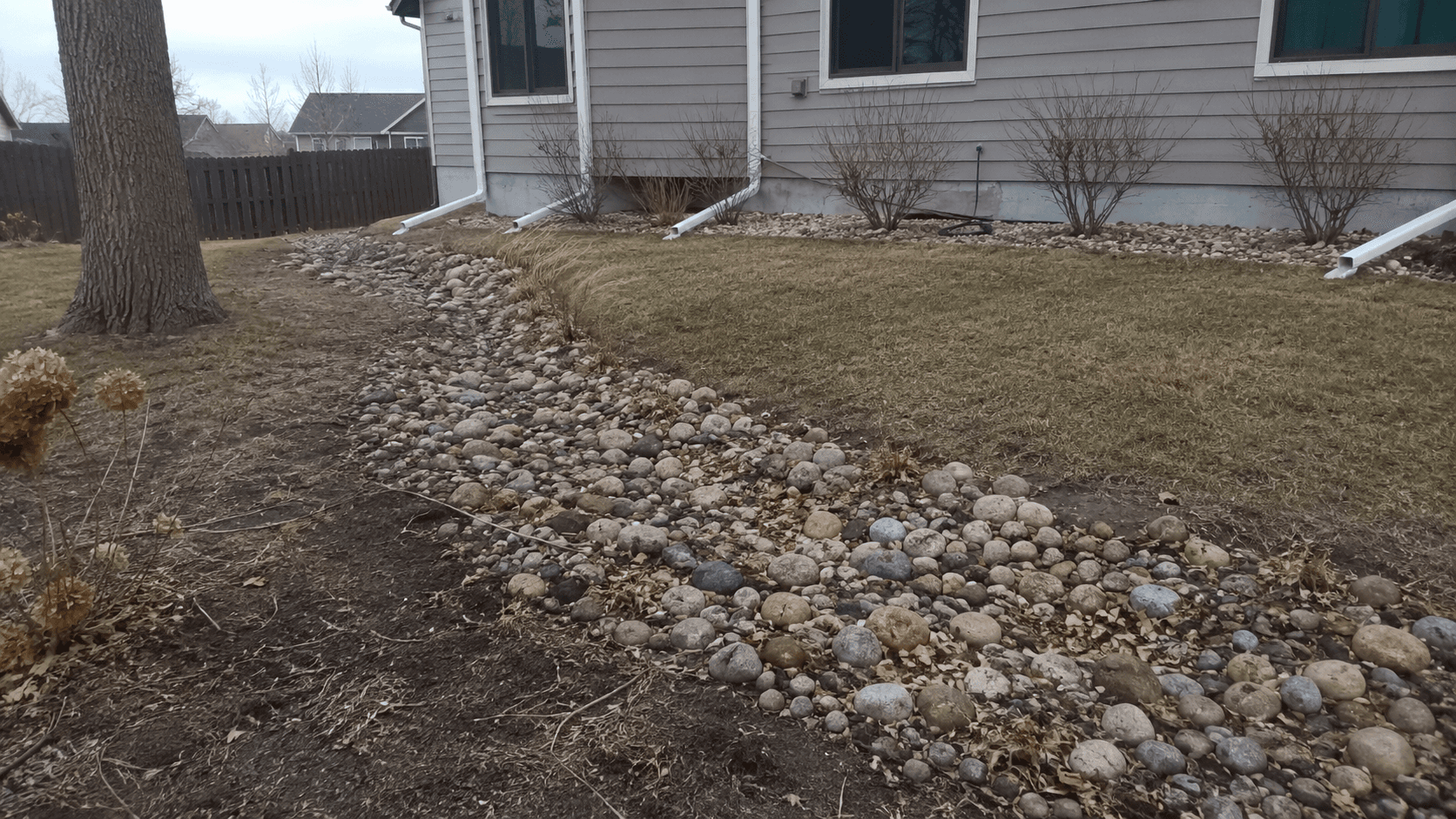
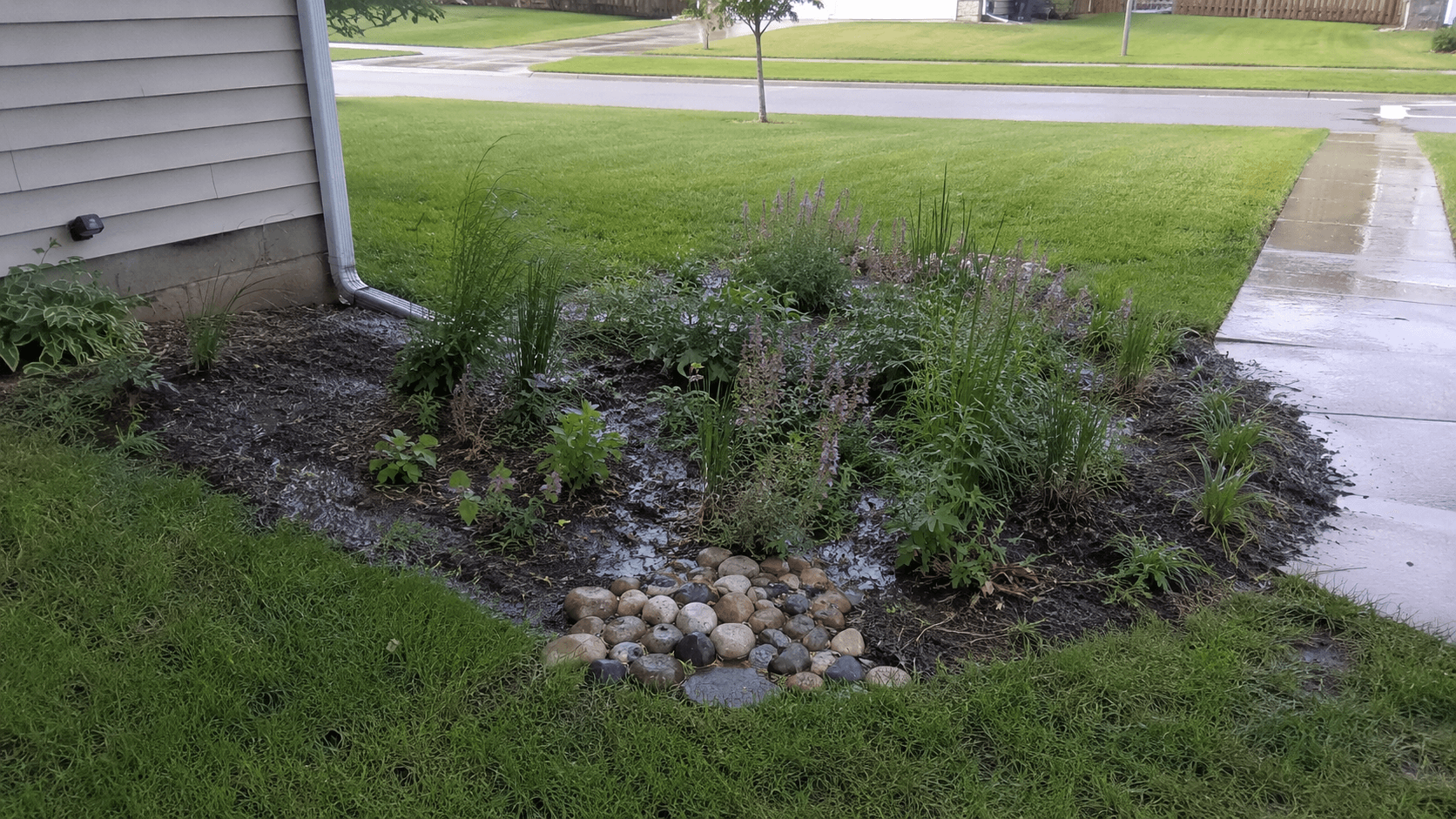
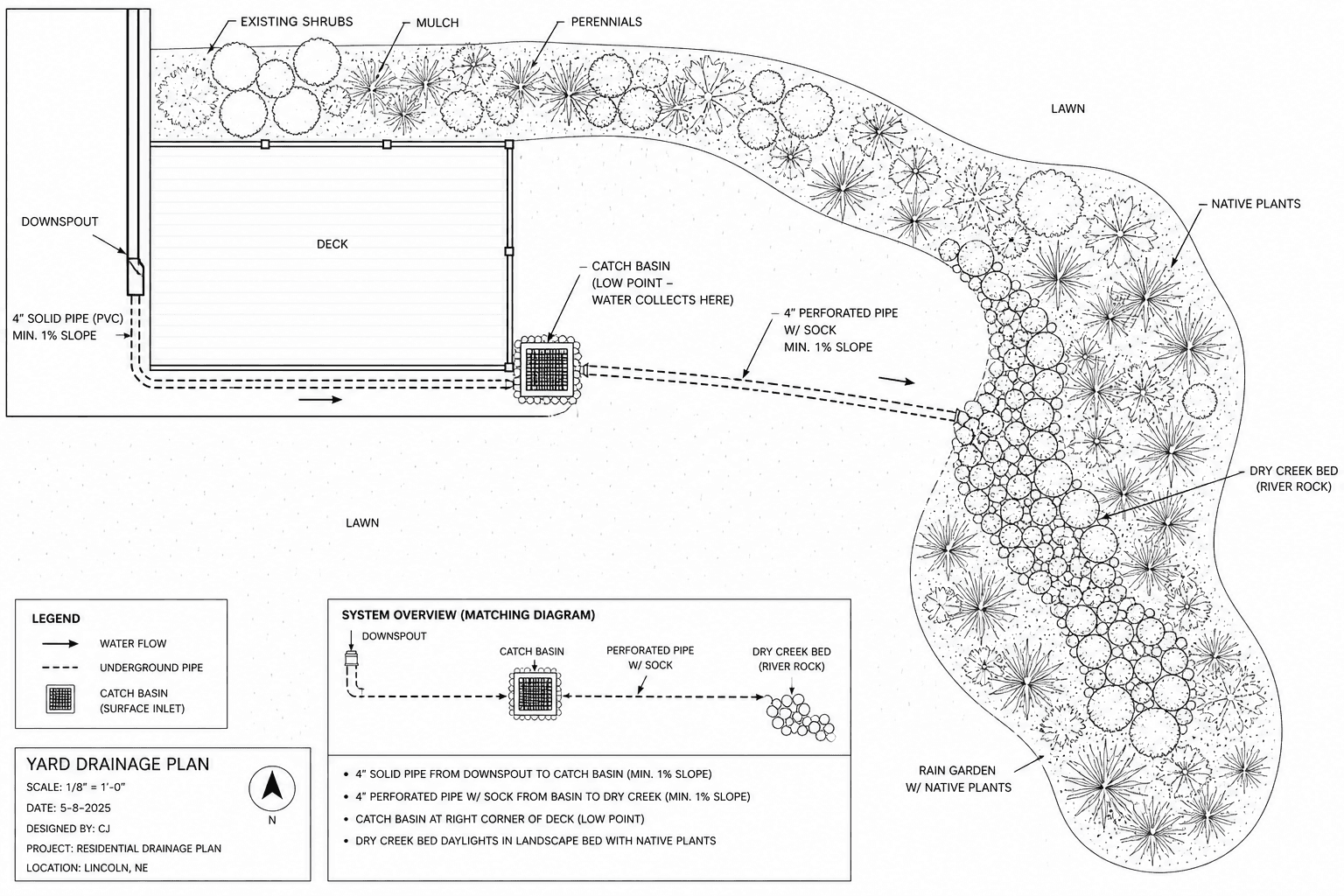
Diagram: How a Drainage System Connects
How the Pieces Connect
A typical drainage system catches roof and surface water, carries it underground through pipe, and releases it at a safe discharge point, usually a dry creek bed, rain garden, or pop-up emitter well away from the foundation.