Why Downspouts Are the #1 Cause of Drainage Problems
Here's what we usually see when we walk a property with downspout issues:
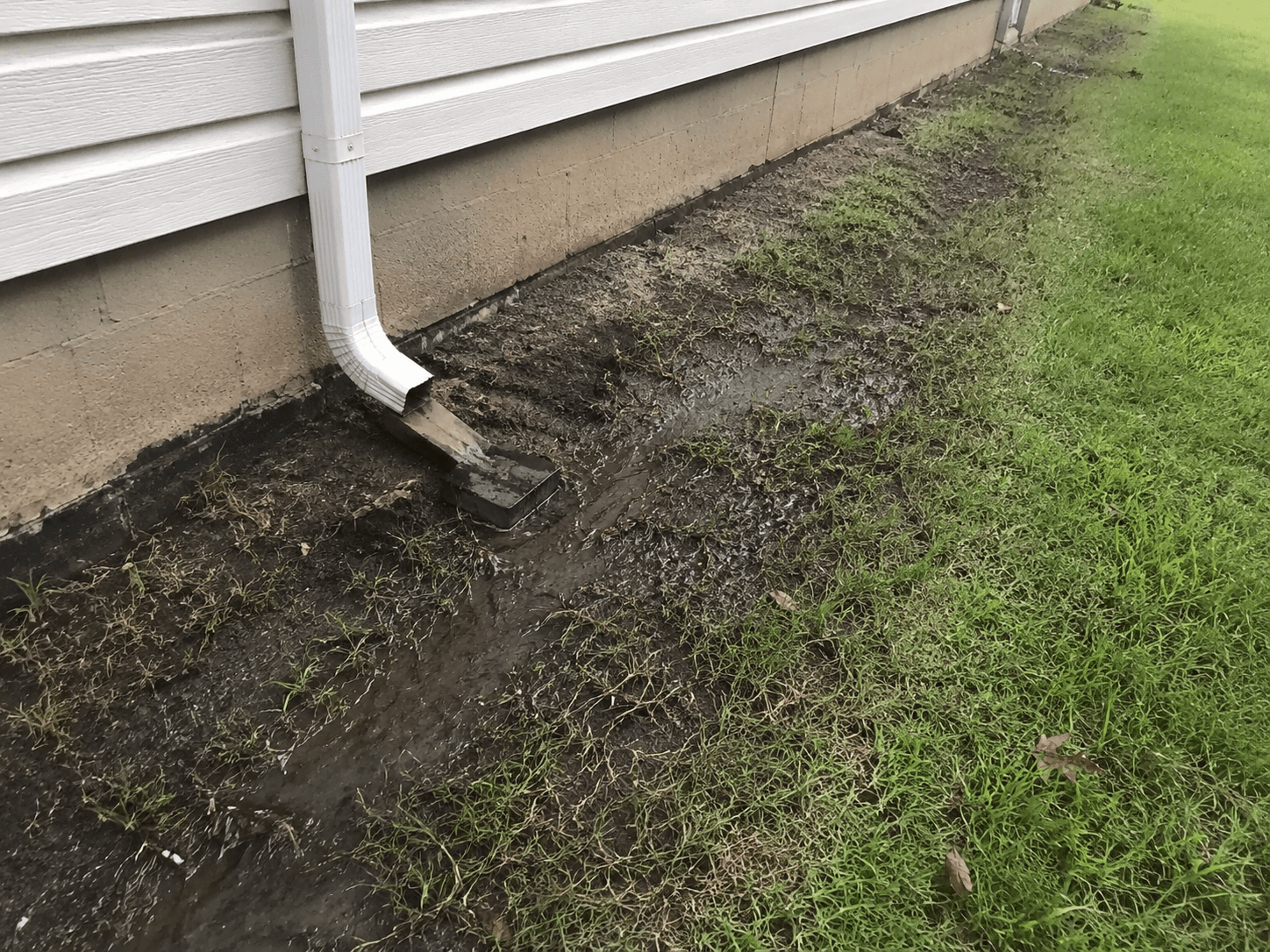
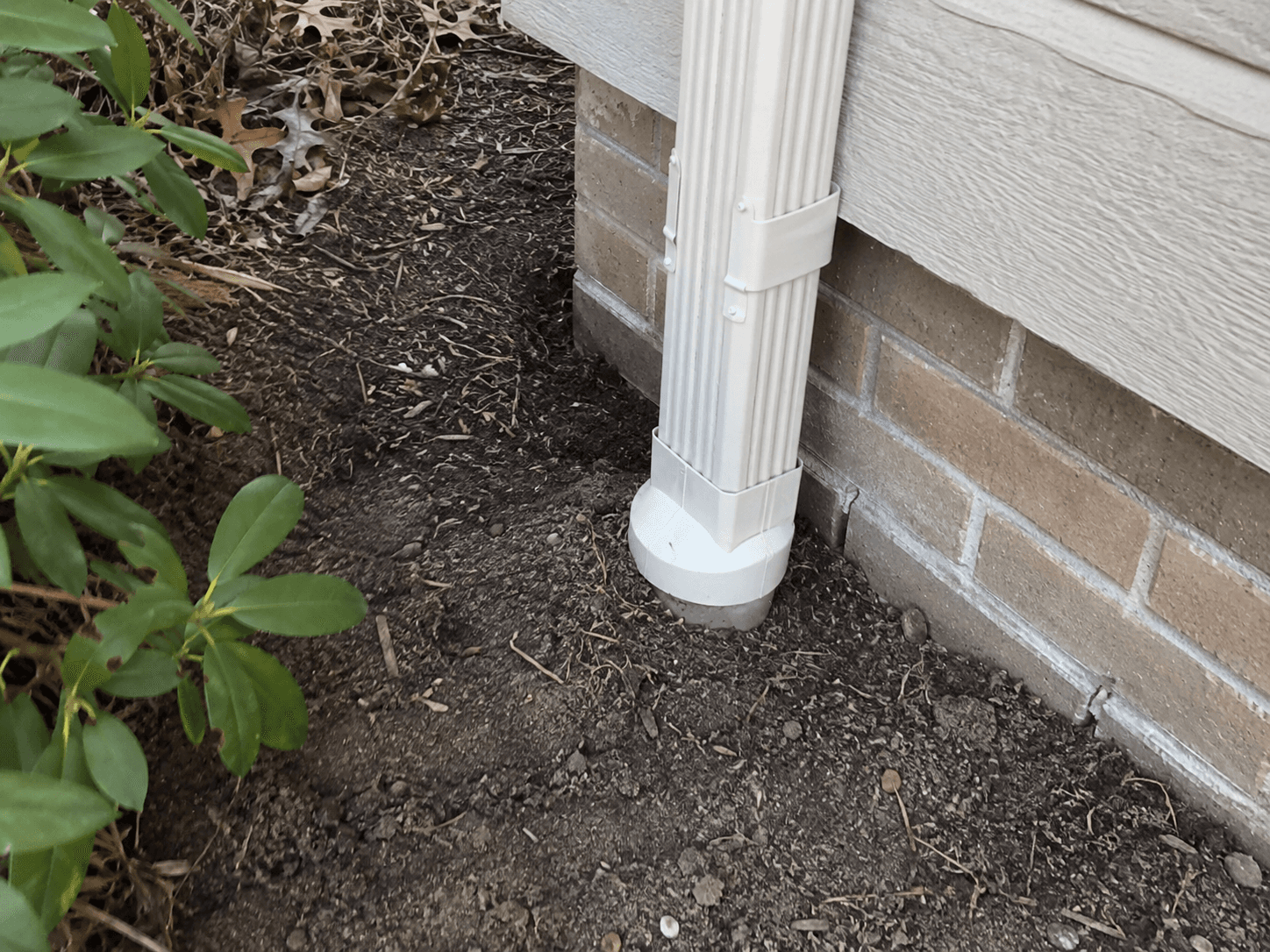
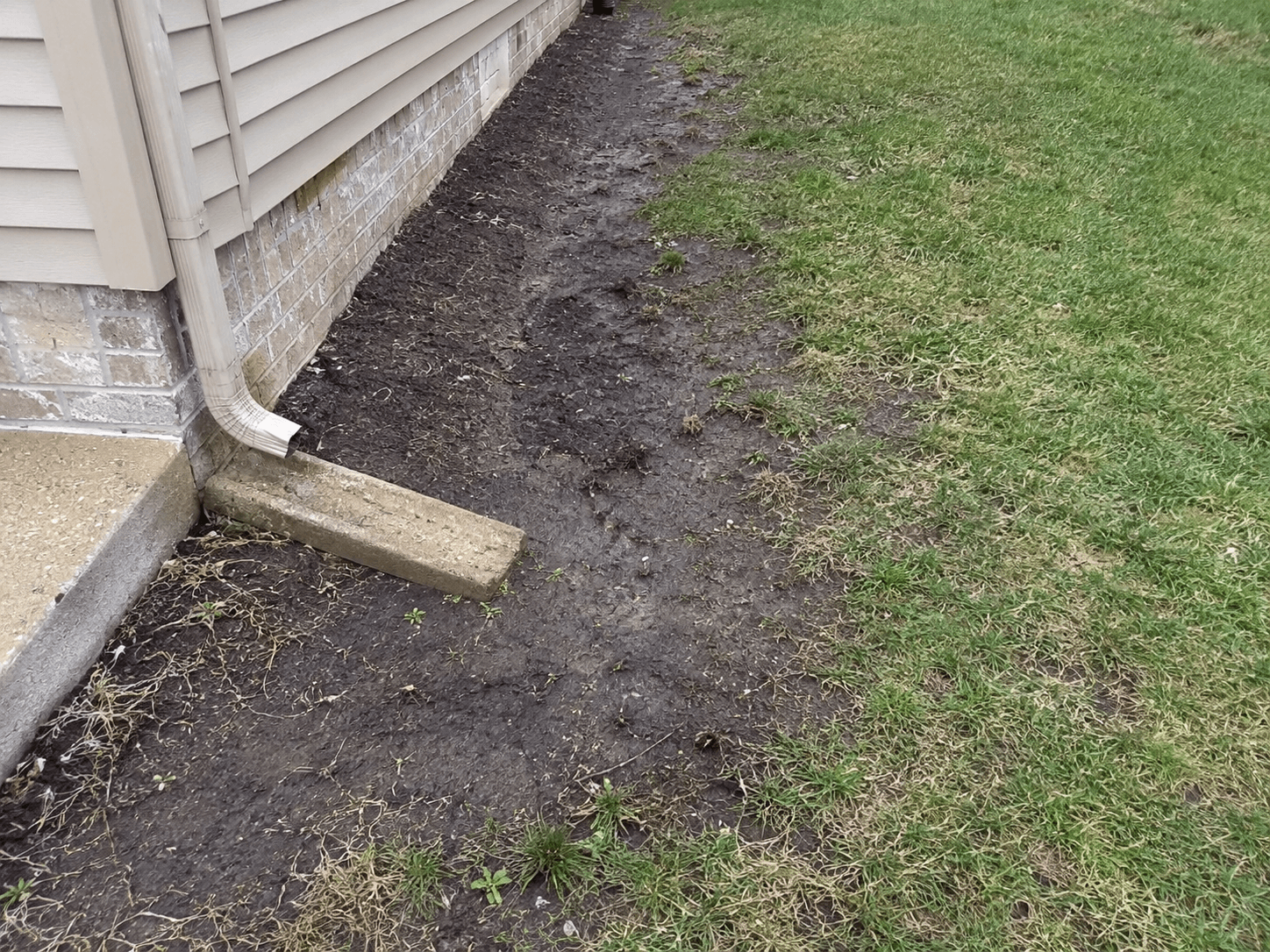
A muddy or eroded strip of soil along the foundation
Mulch that washes out of beds every time it rains
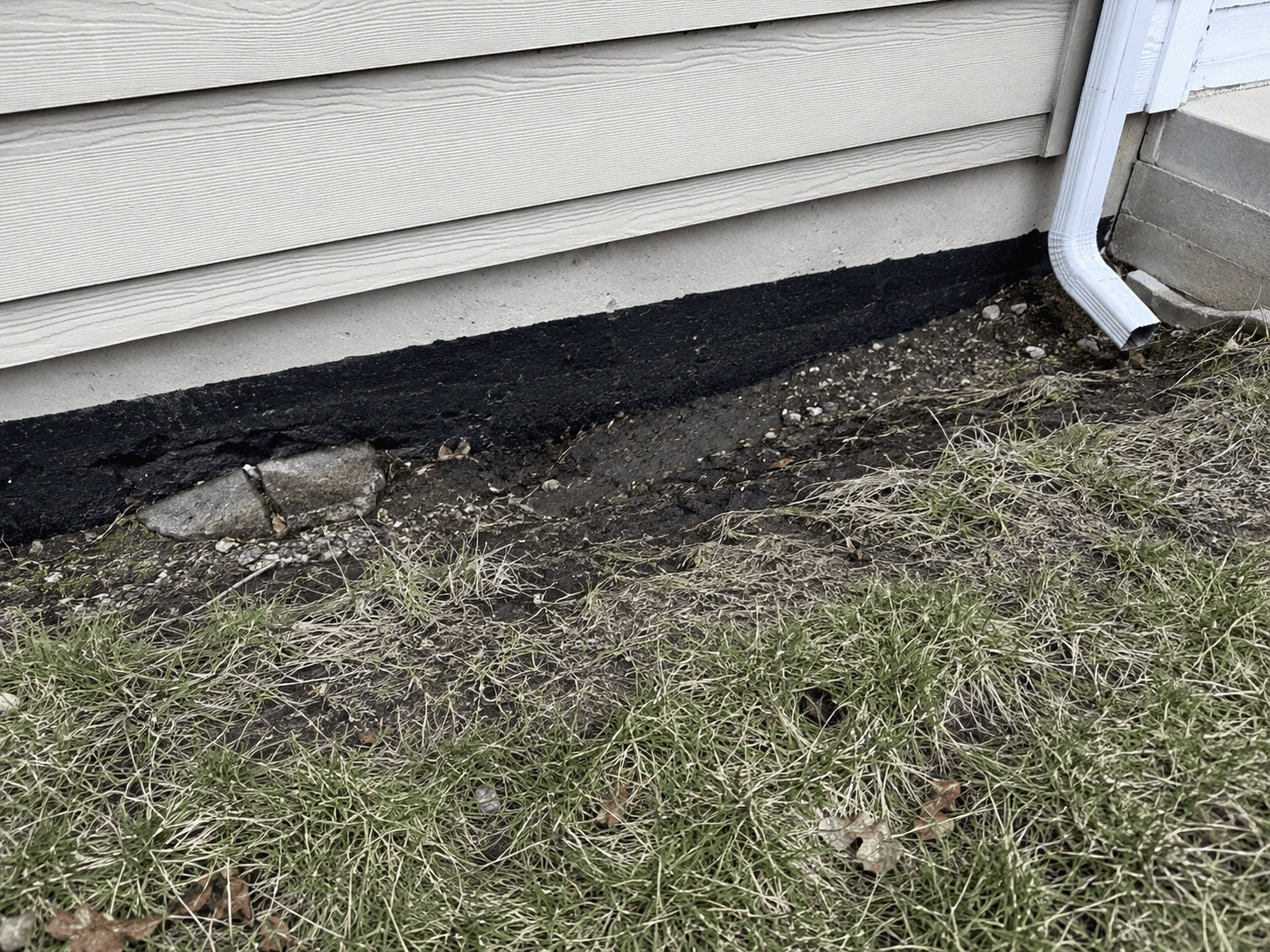
Black tar-like waterproofing showing along the bottom of the foundation, that's where soil used to be
Wet basement walls or persistent musty smells
Splash blocks that have been moved, broken, or buried
Downspouts that dump onto a patio, walkway, or driveway and pool there
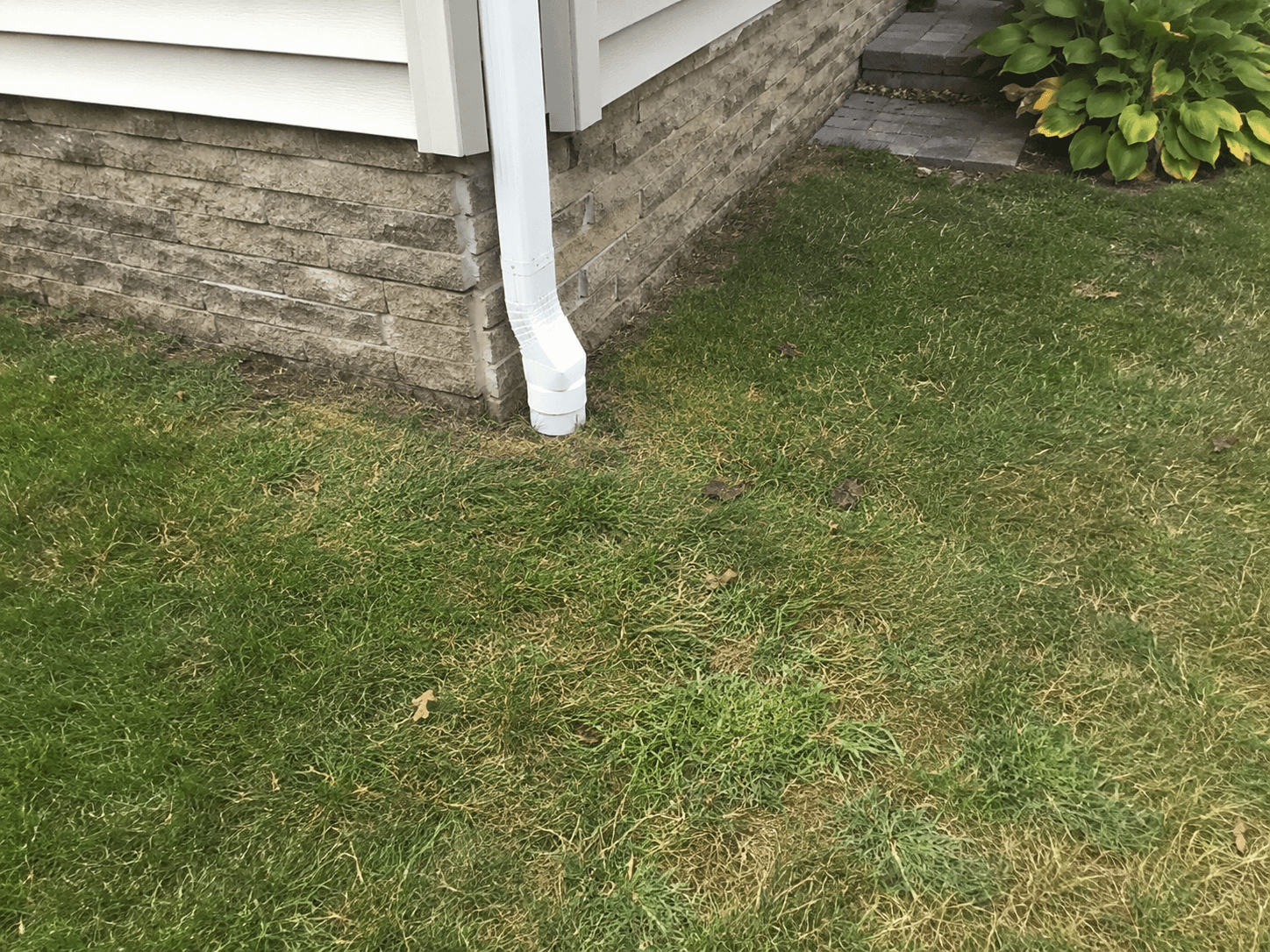
Hostas, grass, or beds dying right where the downspout lands
None of these are unusual. They're the default for how most builders frame out a house. Fixing downspouts is one of those projects where the math is hard to argue with: small investment, big return.
What's On This Page
How Downspout Drainage Works
The Simple Idea Behind a Working Downspout Extension
A proper downspout drainage system has three pieces:
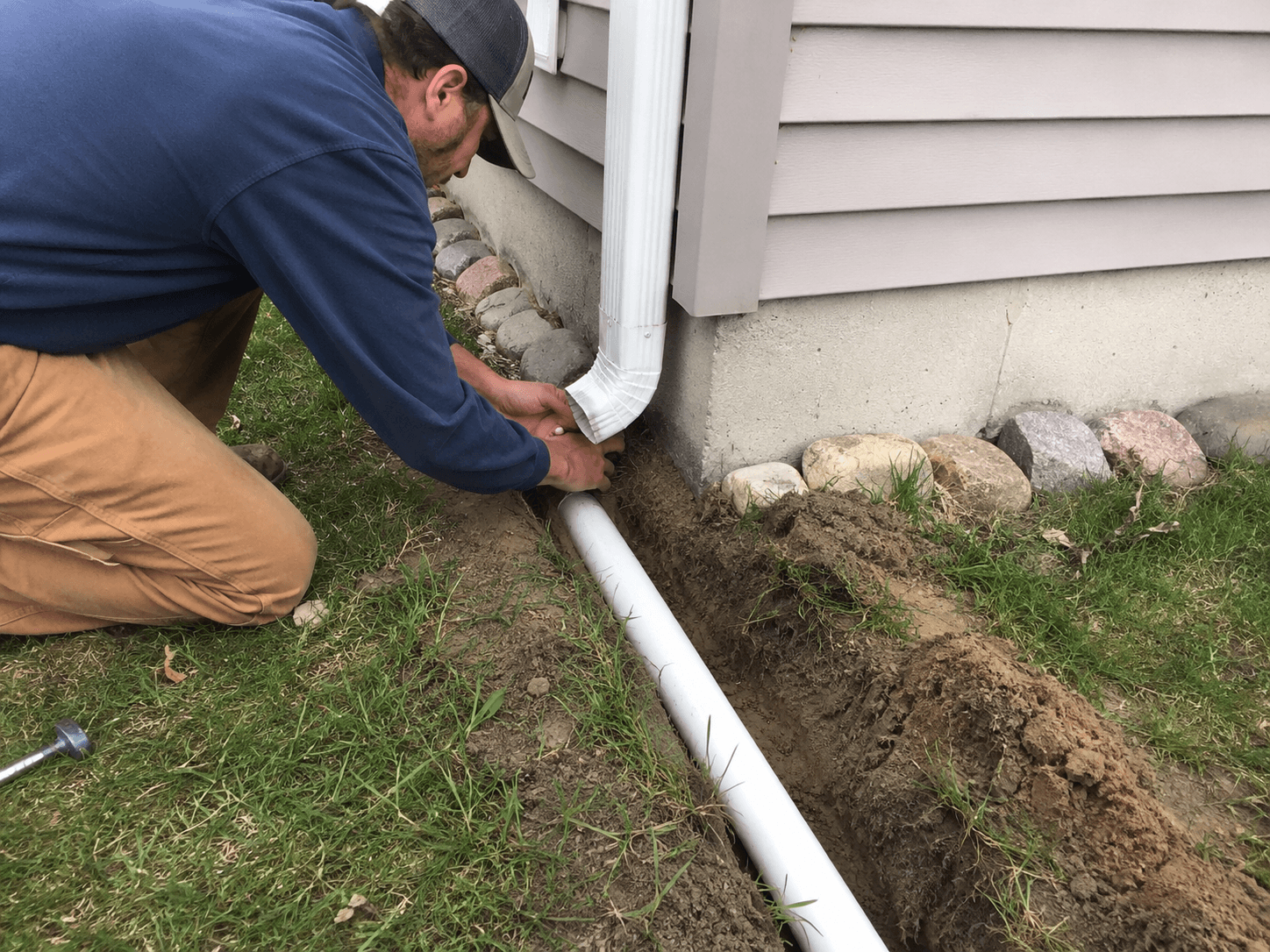
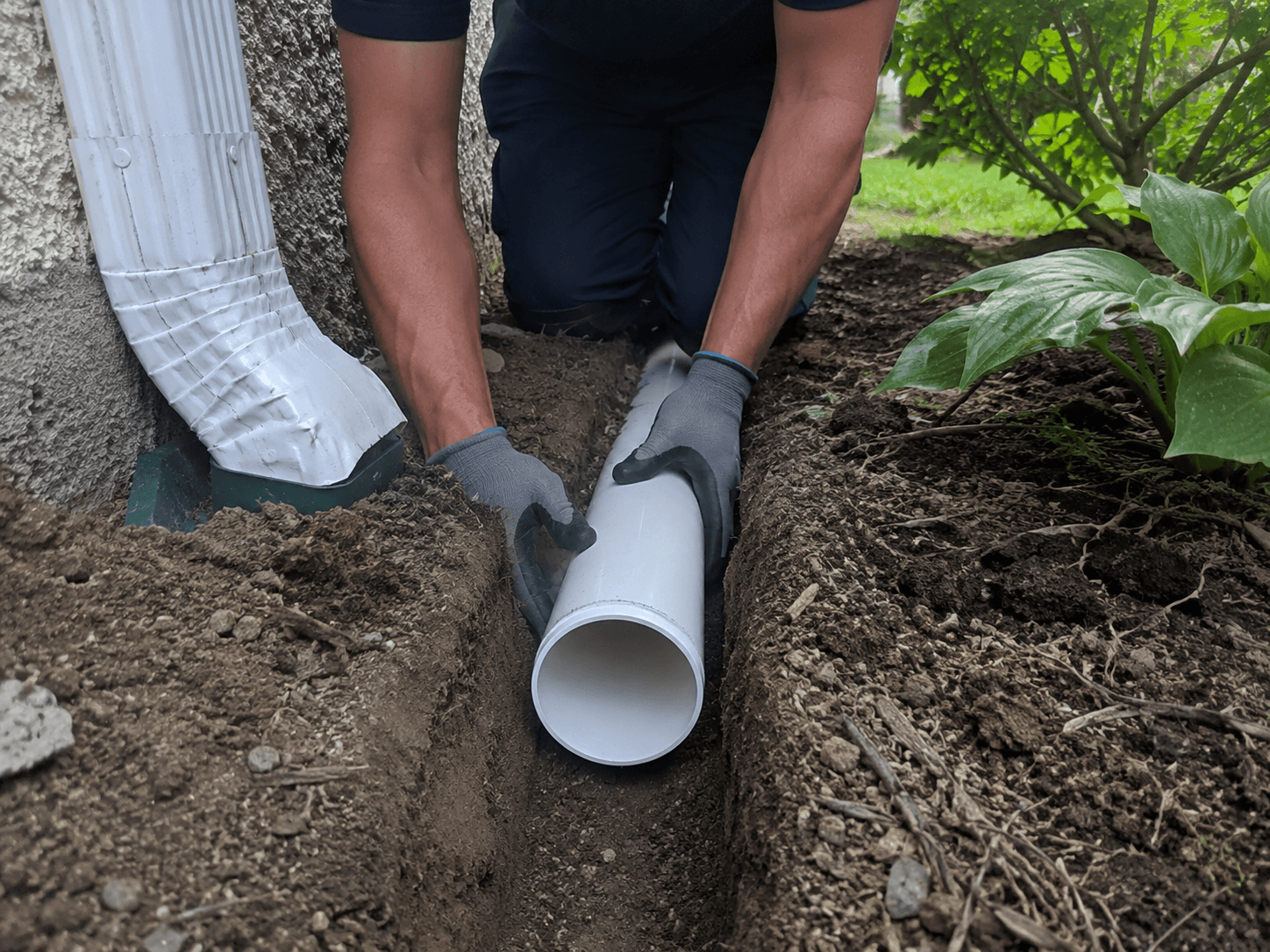
1. The connection at the house. Where the existing downspout meets the buried pipe. We use a transition fitting that seals tight so wind, leaves, and pests can't get in.
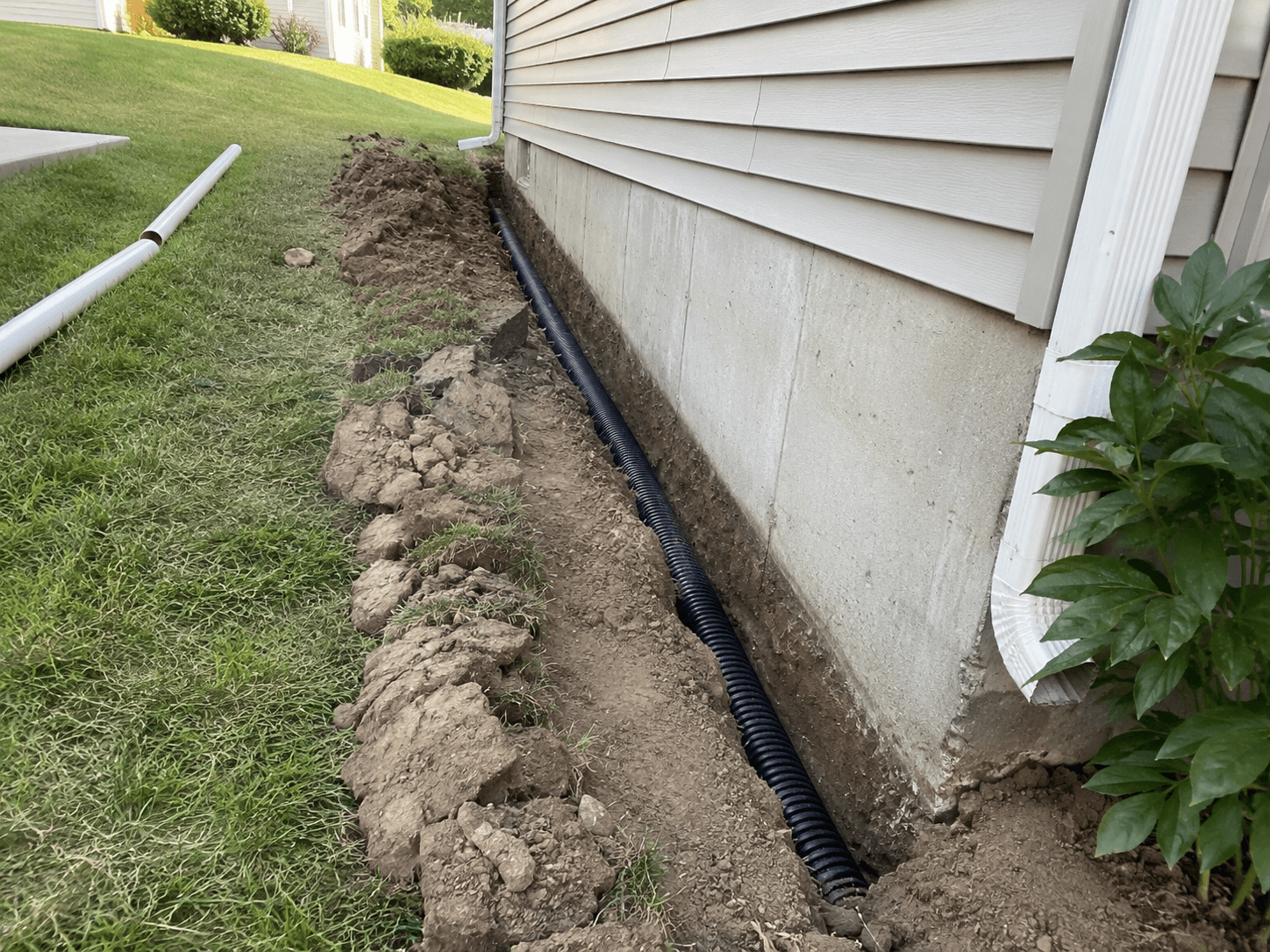
2. The buried pipe. Solid (not perforated) PVC or heavy-wall corrugated pipe set on a consistent downhill slope, buried 6 to 12 inches deep. Solid pipe is critical here. Perforated pipe would let roof water leak back into the soil right where you don't want it.
3. The outlet. Where the water actually comes out. This is where most DIY downspout extensions fall apart. Pipe that just ends in the lawn turns the discharge point into a new low spot. A working outlet is either a pop-up emitter, a dry creek bed, a rain garden, or a daylight outlet on a slope.
The goal is simple: get roof water far enough from the house that it can't make its way back to the foundation. In most Lincoln yards, that means 10 to 20 feet at minimum, and sometimes 50+ feet on flat lots.
Why Standard Downspouts Cause Problems
The Math Behind Why Builder Downspouts Don't Work
A standard 1,500 square foot roof produces about 935 gallons of water for every inch of rain. A 3-inch storm? Almost 2,800 gallons. All of it gets channeled through gutters and dumped at four to six downspout locations, usually within a foot or two of the foundation.
That water has to go somewhere. In Lincoln, where the soil is dense clay, it can't soak in fast enough. So it does the only thing it can do: it runs back toward the house, soaks into the foundation soil, and either ends up in the basement or slowly erodes the support around your footings.
Look at almost any house with builder-grade downspouts and you'll see the evidence. There's usually a band of exposed black waterproofing tar along the bottom of the foundation, that's the original coating, and everywhere it's visible used to be covered by soil. That's how much ground has washed away.
Downspout extensions stop this at the source. Roof water never touches the foundation soil in the first place.
Where We Discharge the Water
Outlet Options for Downspout Extensions
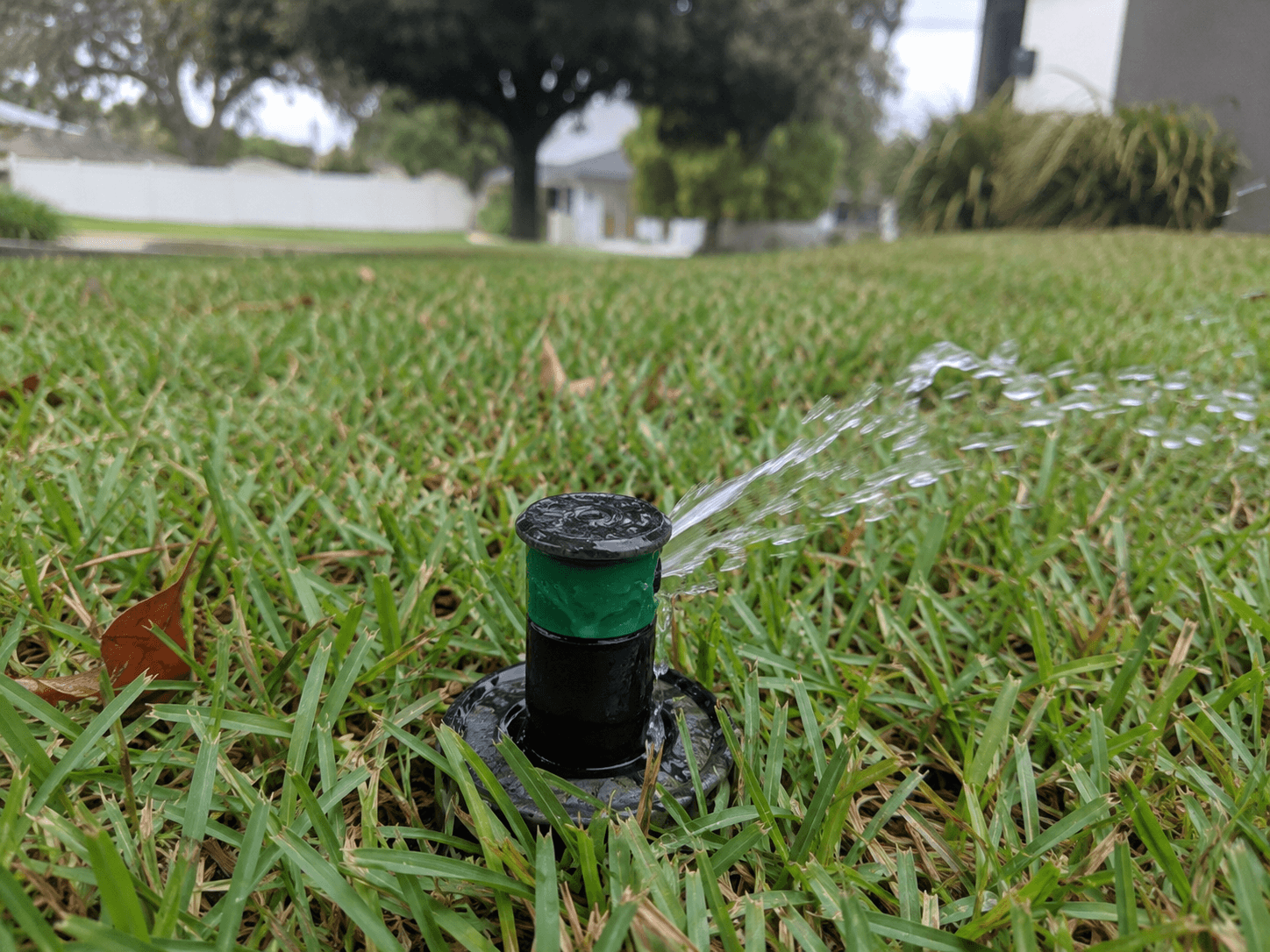
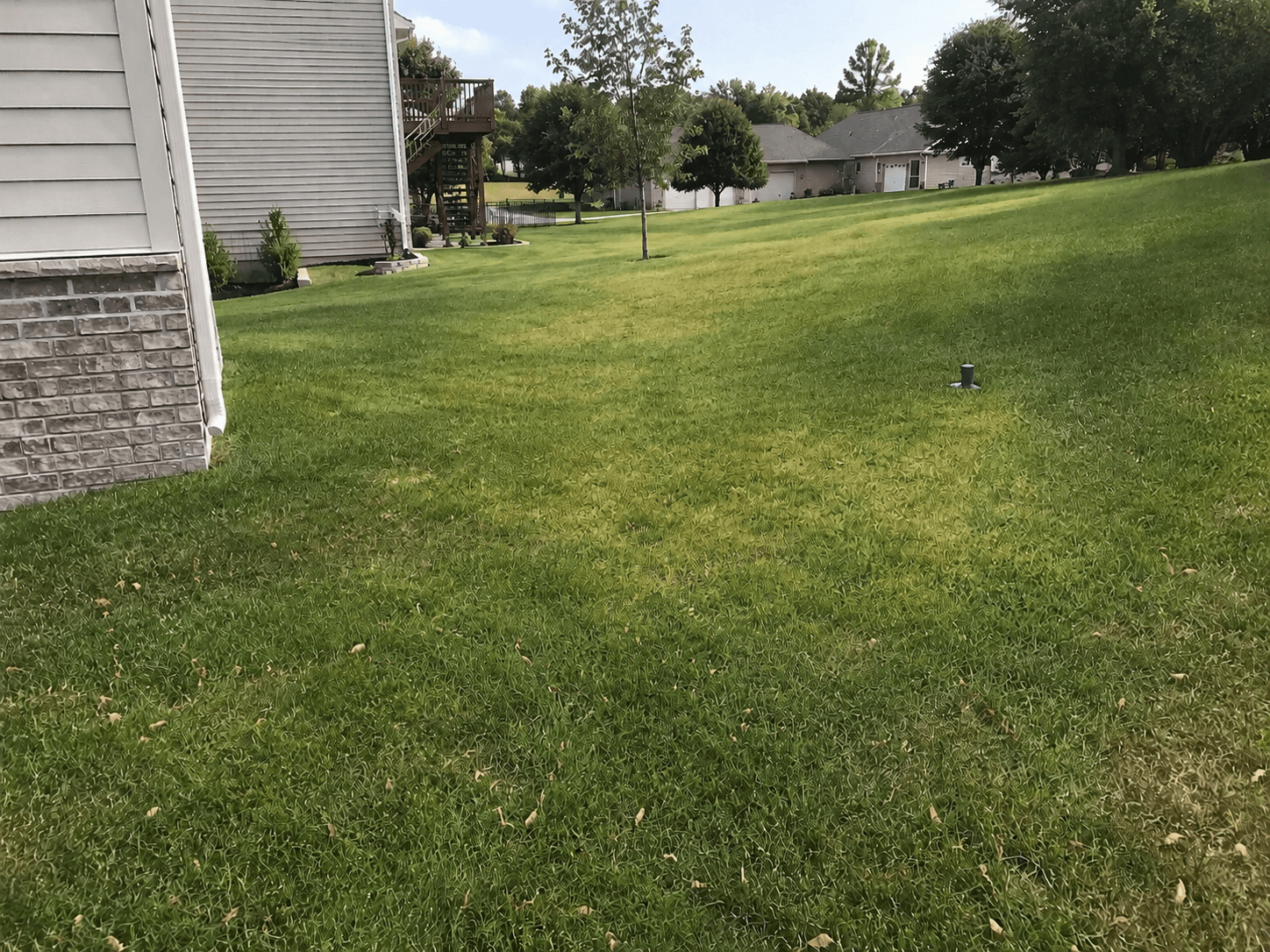
Pop-up emitters. A small spring-loaded green cap set flush with the lawn. When water flows through, the cap pops up and releases. When there's no flow, it stays closed so debris and lawn mowers don't damage it. Our most common outlet for residential downspout runs.
Dry creek beds. When the discharge point is visible or there's a natural channel through the yard, we'll terminate the pipe into a stone-lined dry creek bed. Doubles as drainage and a landscape feature.
Rain gardens. A planted, slightly recessed bed designed to absorb runoff over a few hours. Great option when you want the water to soak in on your property instead of running off, and especially good for environmentally conscious homeowners.
Daylight outlets. On sloped lots, we can sometimes run pipe to a point where it exits aboveground naturally. Cleanest option when the topography supports it.
Dry wells. A buried gravel pit that lets water dissipate into deeper soil. Used when there's no good surface outlet and the soil below the topsoil drains better than the topsoil itself.
We'll walk the property and figure out which outlet (or combination of outlets) makes sense for your yard. Most homes need two or three discharge points across all the downspouts.
Our Install Process
How a Moku Downspout Drainage Project Runs
Step 1: Walk every downspout. We look at each one, where it lands, what damage it's caused, and where the water naturally wants to go from there. A six-downspout house often needs three different discharge points, not one.
Step 2: Plan the routes. We map out trench lines, slope, and outlets. We'll also flag any downspouts where a simple aboveground extension would do the job and a buried run isn't necessary.
Step 3: Trench, pipe, connect, outlet. Trenches get dug 6 to 12 inches deep, solid pipe is run on grade, downspouts get cut to length and connected, and outlets get installed.
Step 4: Test and restore. We run water through every line to confirm flow and outlet function, then restore turf with seed or sod. Most downspout projects take one to two days on site for a typical home.