When a Catch Basin Is the Right Fix
If any of these sound familiar, a catch basin is probably part of the solution:
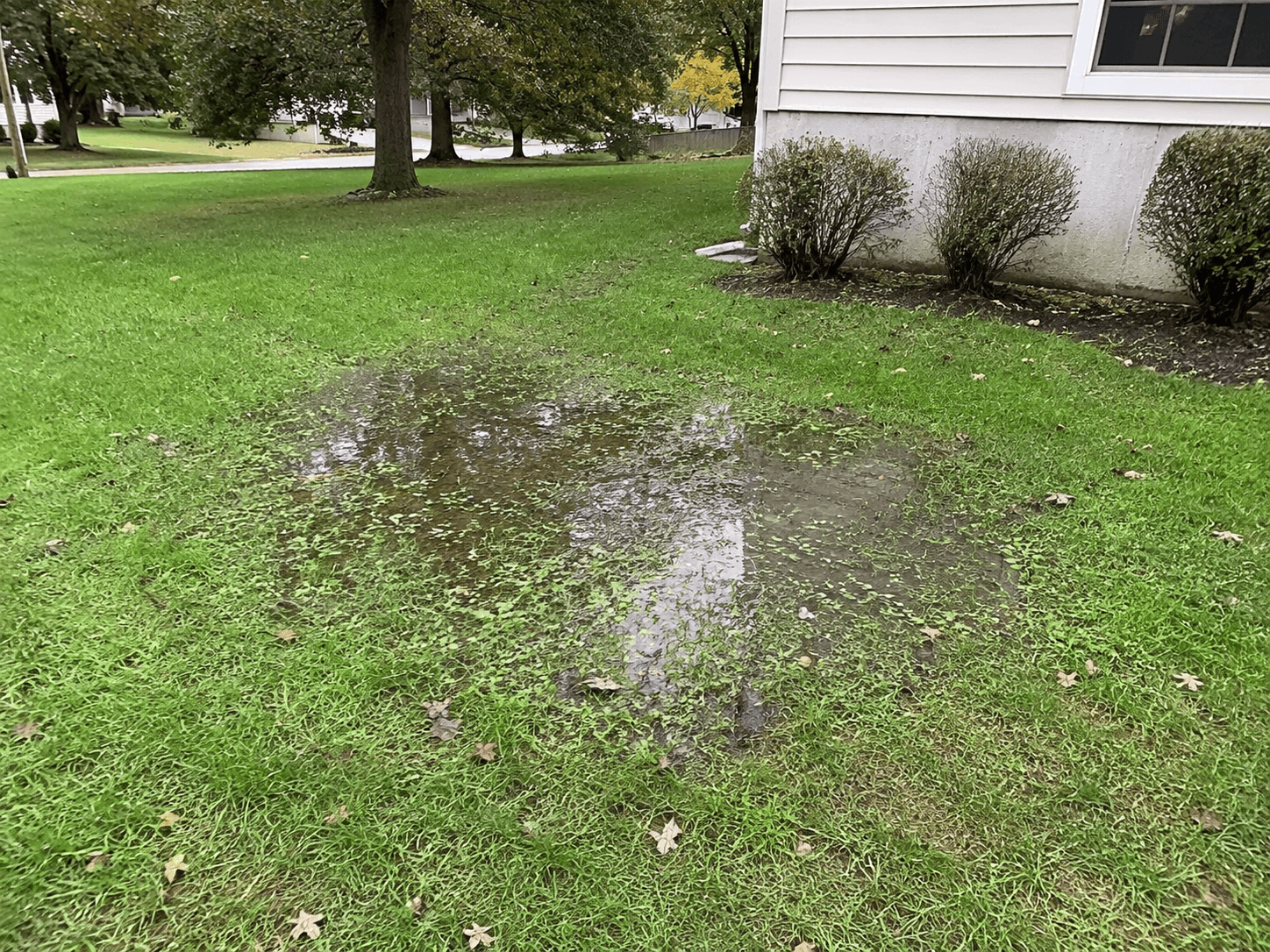
A low spot in the lawn that turns into a small pond after every storm
Water that pools at the edge of a patio, driveway, or sidewalk and won't drain
A specific corner of the yard that takes days to dry out
Water collecting around a sump pump discharge area or AC condenser pad
Hardscape that's lower than the surrounding lawn, so water flows toward it instead of away
Areas where you can see water flowing during a storm but it stops and pools before reaching a real outlet
When water has a clear collection point but no way to leave, a catch basin gives it one.
What's On This Page
How a Catch Basin Works
The Anatomy of a Catch Basin
A catch basin is straightforward in concept but the details matter. Here's what makes one actually work:
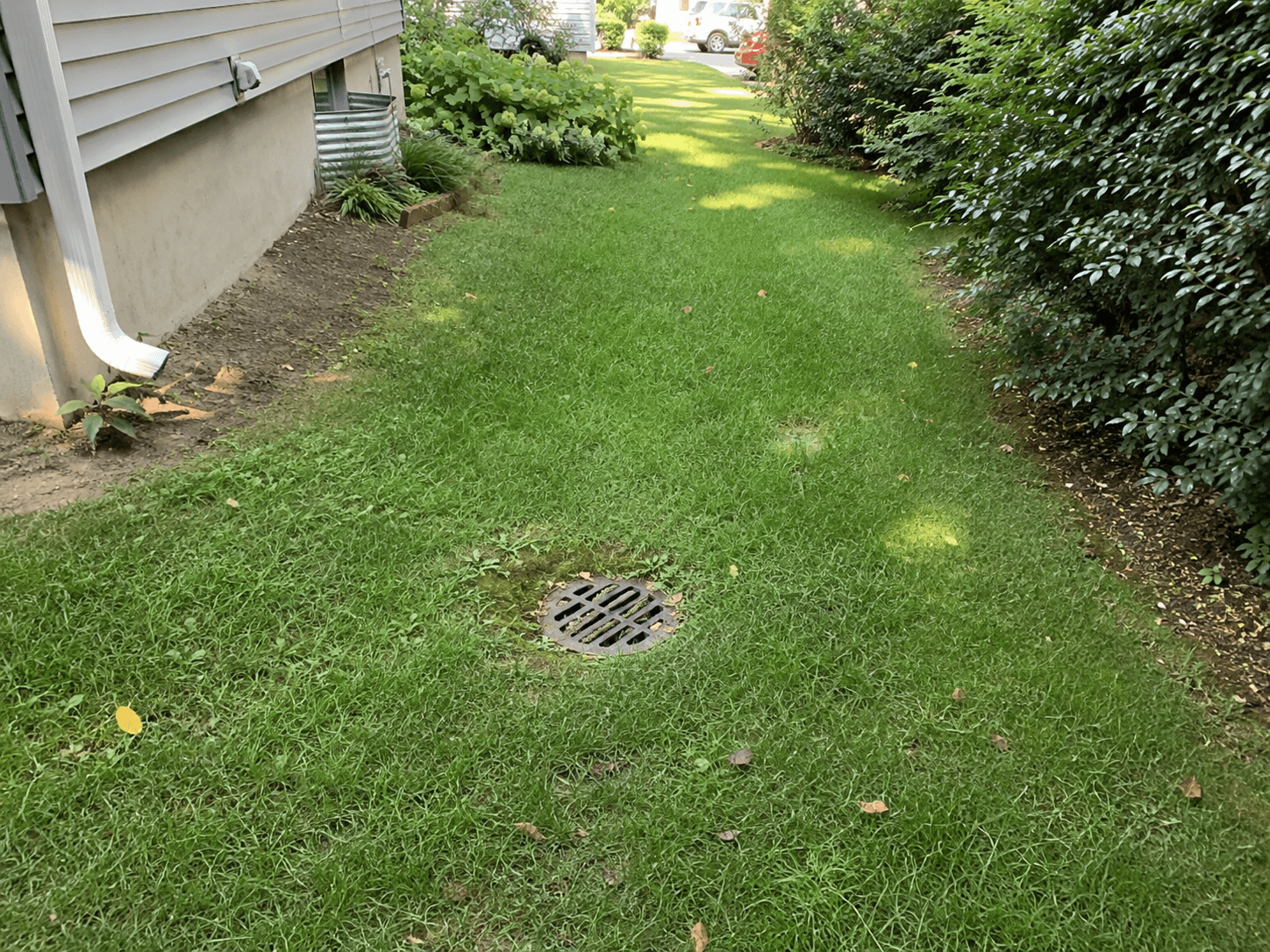
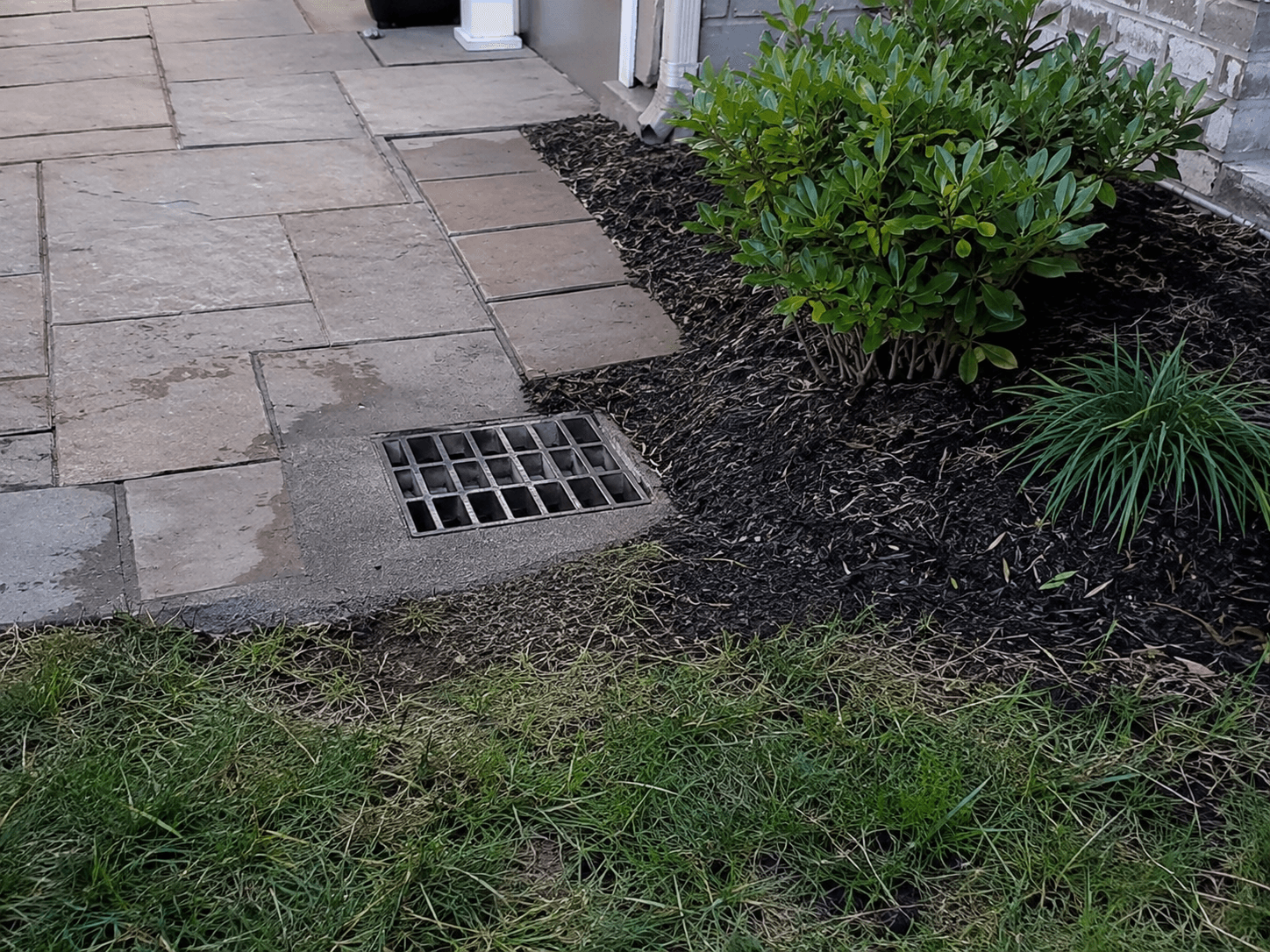
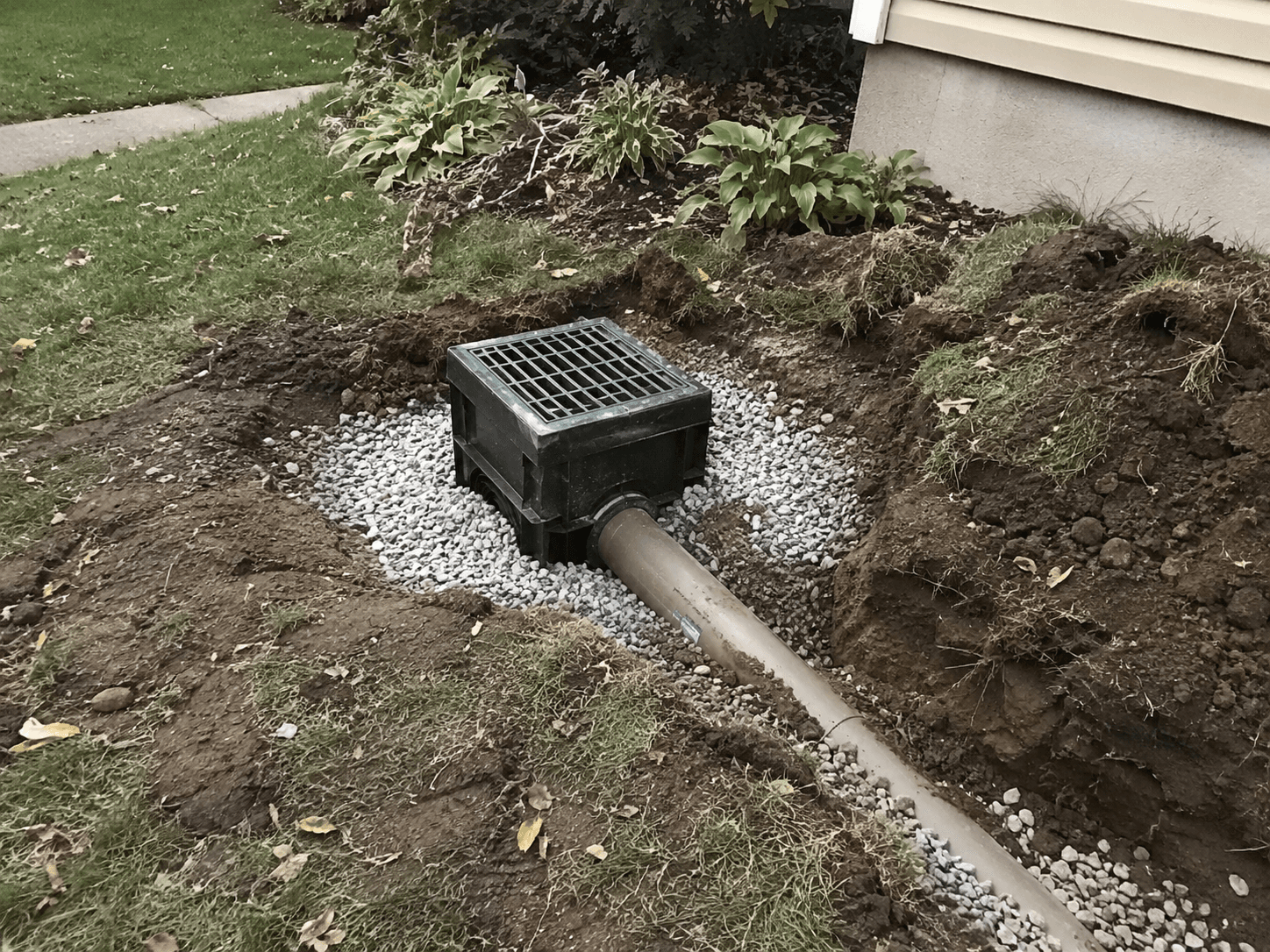
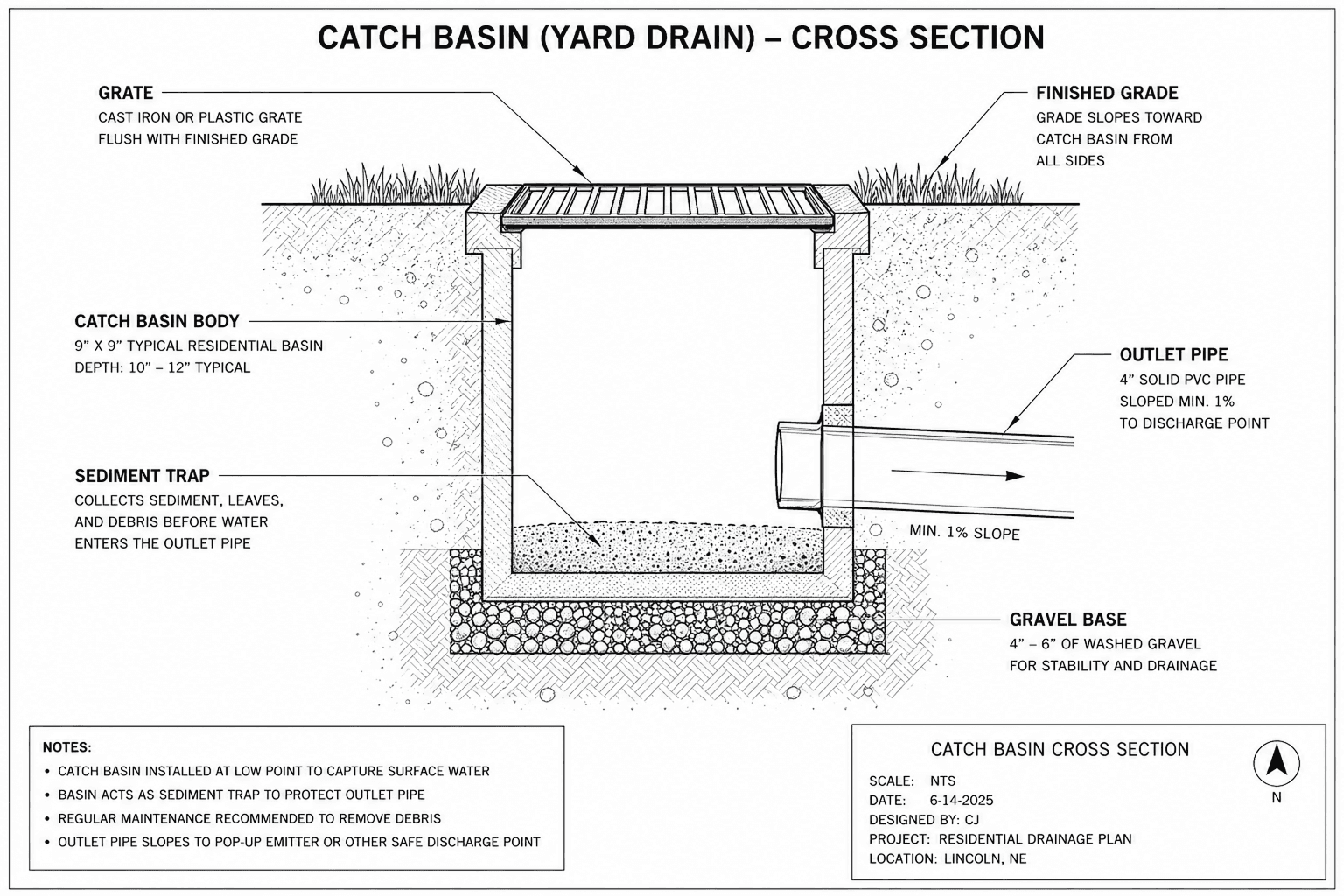
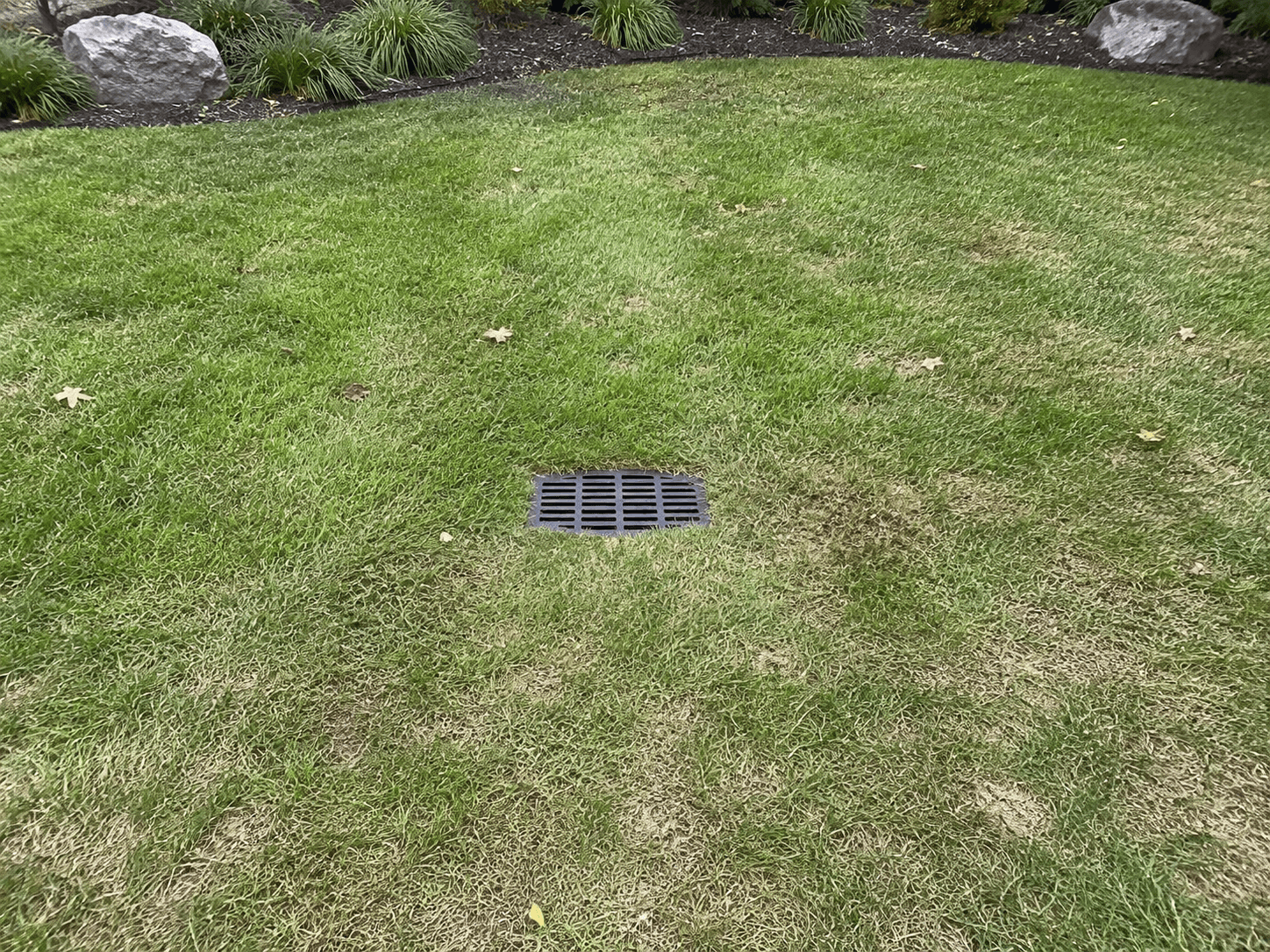
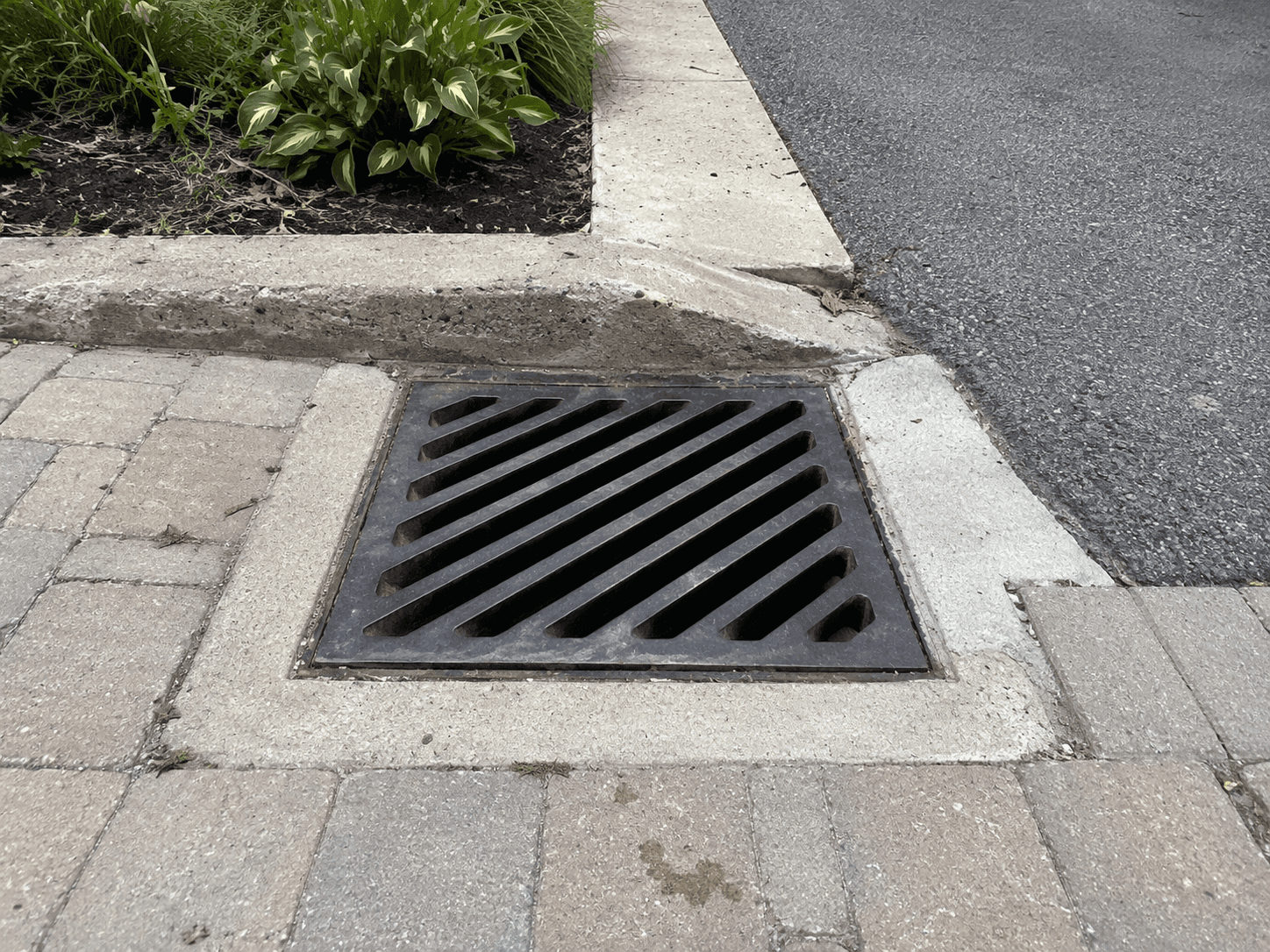
The grate. The visible top piece. Sits flush with the surrounding lawn or hardscape so water flows in but no one trips on it. Plastic grates work fine for lawn use. Cast iron grates are necessary for driveway or high-traffic hardscape.
The basin. The buried plastic or concrete box that the grate sits on top of. Most residential basins are 9 inches by 9 inches at the top and about 10 to 12 inches deep, though larger commercial basins exist. The basin acts as a sediment trap so dirt, leaves, and debris don't immediately wash into the drainage pipe.
The outlet pipe. Cuts into the side of the basin and carries water underground to its destination. We use 4-inch solid PVC for most residential applications. The pipe runs on a consistent downhill slope to a pop-up emitter, dry creek bed, rain garden, or other safe outlet.
The discharge point. Where the water actually exits the system. Same options as any other drainage solution. Without one, the catch basin is just a buried bucket.
A proper installation also includes settling the basin on a gravel base (so it doesn't sink), backfilling around it correctly (so it doesn't shift), and getting the grate height exactly right (so water actually flows into it instead of around it). Get any of these wrong and the basin either stops working or becomes a trip hazard.
Catch Basin vs. French Drain
Different Tools for Different Water Problems
These two terms get used interchangeably and they shouldn't be. They solve different problems.
A catch basin captures water that's already pooled on the surface in a specific spot. It's a point fix. If you have one low spot that always holds water after rain, a catch basin set right in that spot will solve it. The water collects in the basin, drops through the grate, and gets carried away by buried pipe.
A French drain captures subsurface water along a long stretch. It's a linear fix. If you have a soggy strip of yard or a wet foundation wall, a French drain runs alongside the problem and intercepts the water as it moves through the soil.
The simple test: is the water pooling on top (visible standing water), or is the ground saturated underneath (soggy but not flooded)? Pooling = catch basin. Saturated = French drain. Both = you probably need both.
We see homeowners try to fix surface pooling with French drains all the time. It rarely works. The water is already on top of the soil by the time the French drain would catch it. A catch basin set at the low point is faster, cheaper, and more effective.
Where We Install Catch Basins
Common Catch Basin Applications
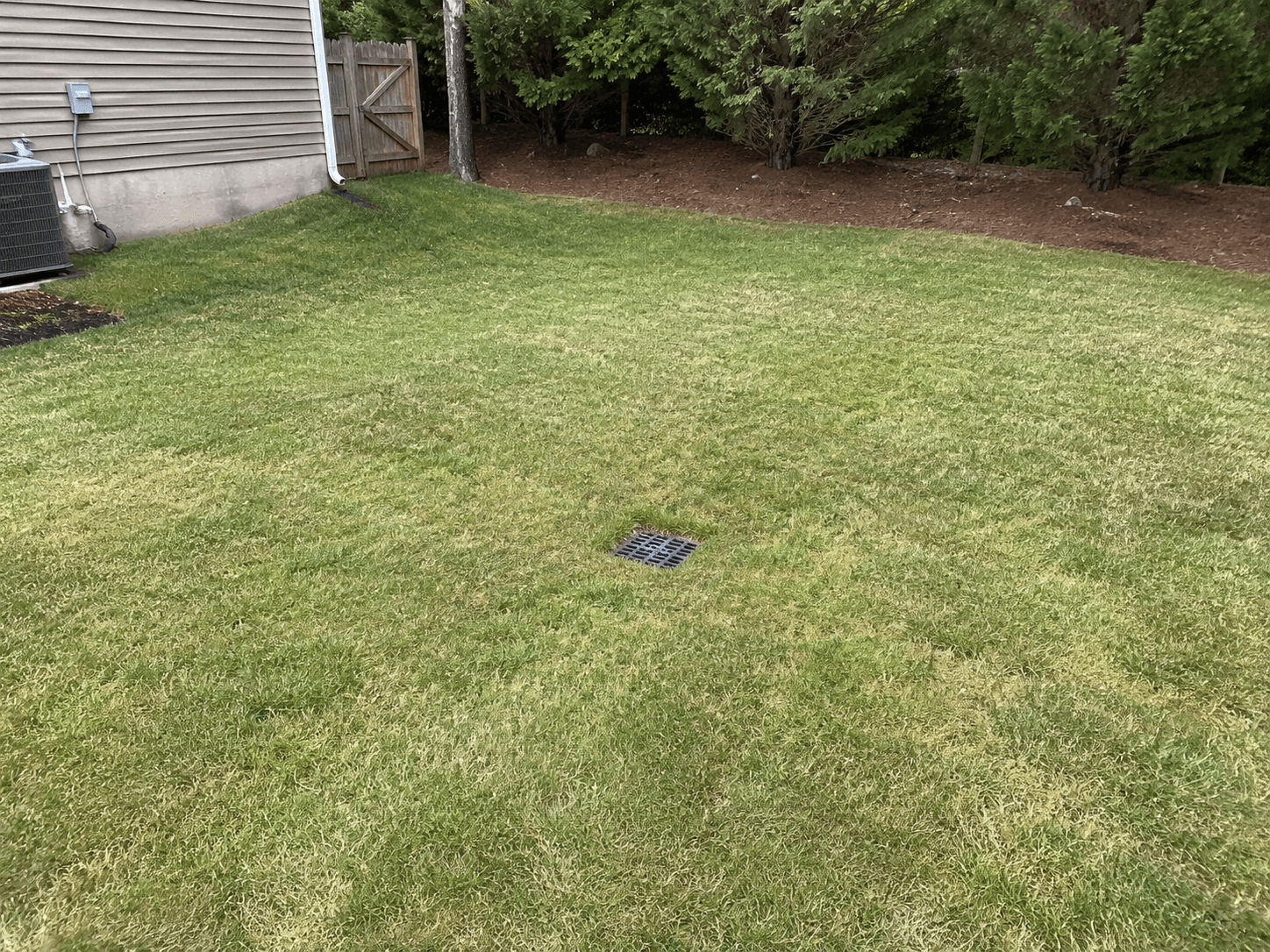
Lawn low spots. The classic use case. A low area that always holds water after rain. Set the basin at the lowest point, run pipe to an outlet, and the low spot drains in minutes instead of days.
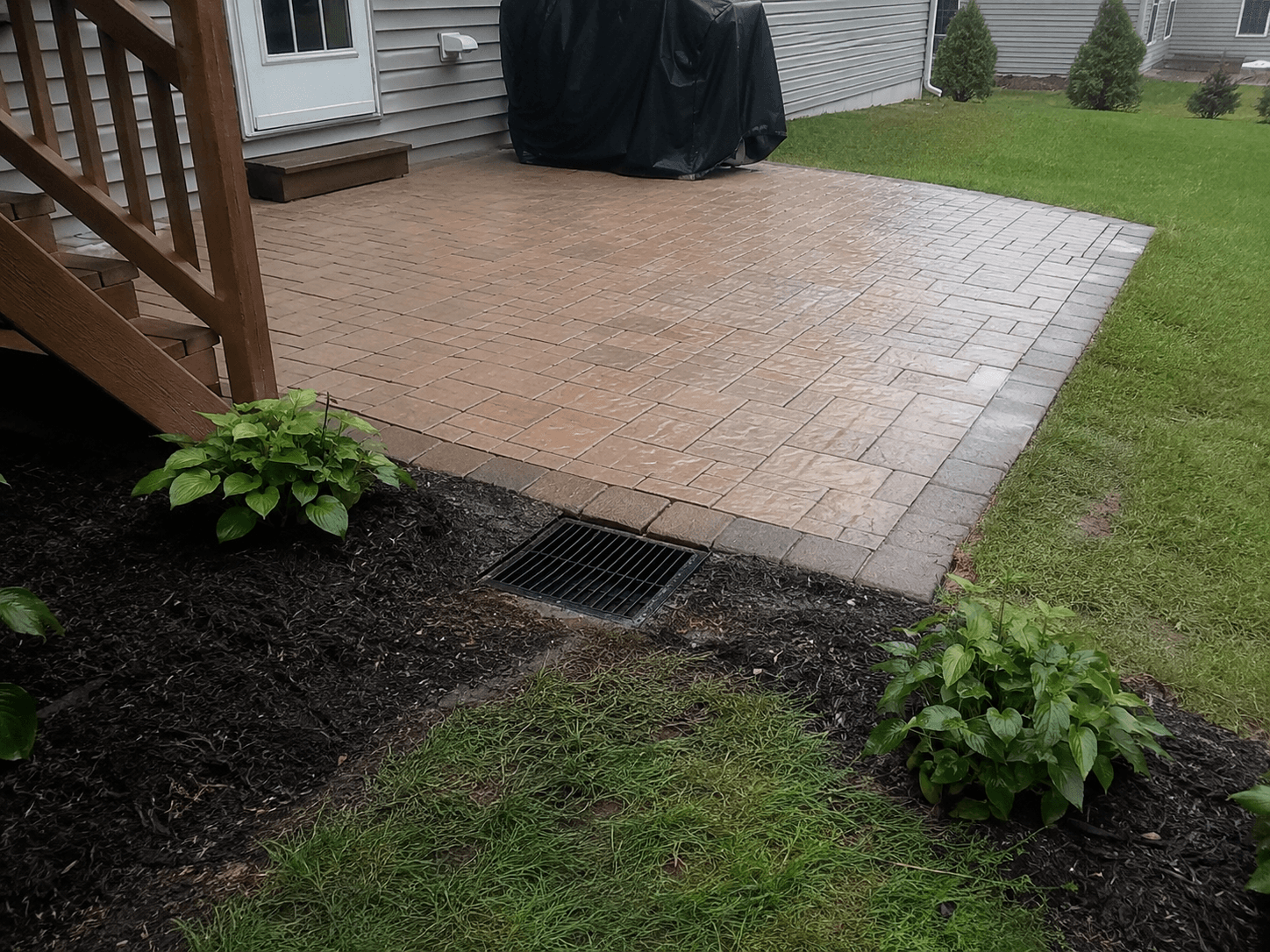
Patio and walkway edges. Where hardscape meets lawn, water often collects against the edge of the patio because the soil next to it is slightly lower than the patio surface. A catch basin set at the low point captures that water before it pools.
Driveway drains. When a driveway slopes toward the garage or sits lower than the surrounding ground, a trench drain or driveway basin at the low point keeps water from running into the garage. Heavier-duty grate required.
Sump pump and AC condensate areas. Where a sump pump discharges or an AC condensate line drips constantly, the water has to go somewhere. A small catch basin can capture that flow and route it to a proper outlet.
Sport courts and play areas. Anywhere kids and pets are using the yard, persistent puddles become more than a drainage problem. Catch basins drain these areas fast enough to keep them usable.
As cleanouts in larger drainage systems. We often install catch basins inside larger French drain or downspout drainage networks as access points for future maintenance. The whole network stays serviceable instead of being buried and forgotten.
Our Install Process
How a Moku Catch Basin Project Runs
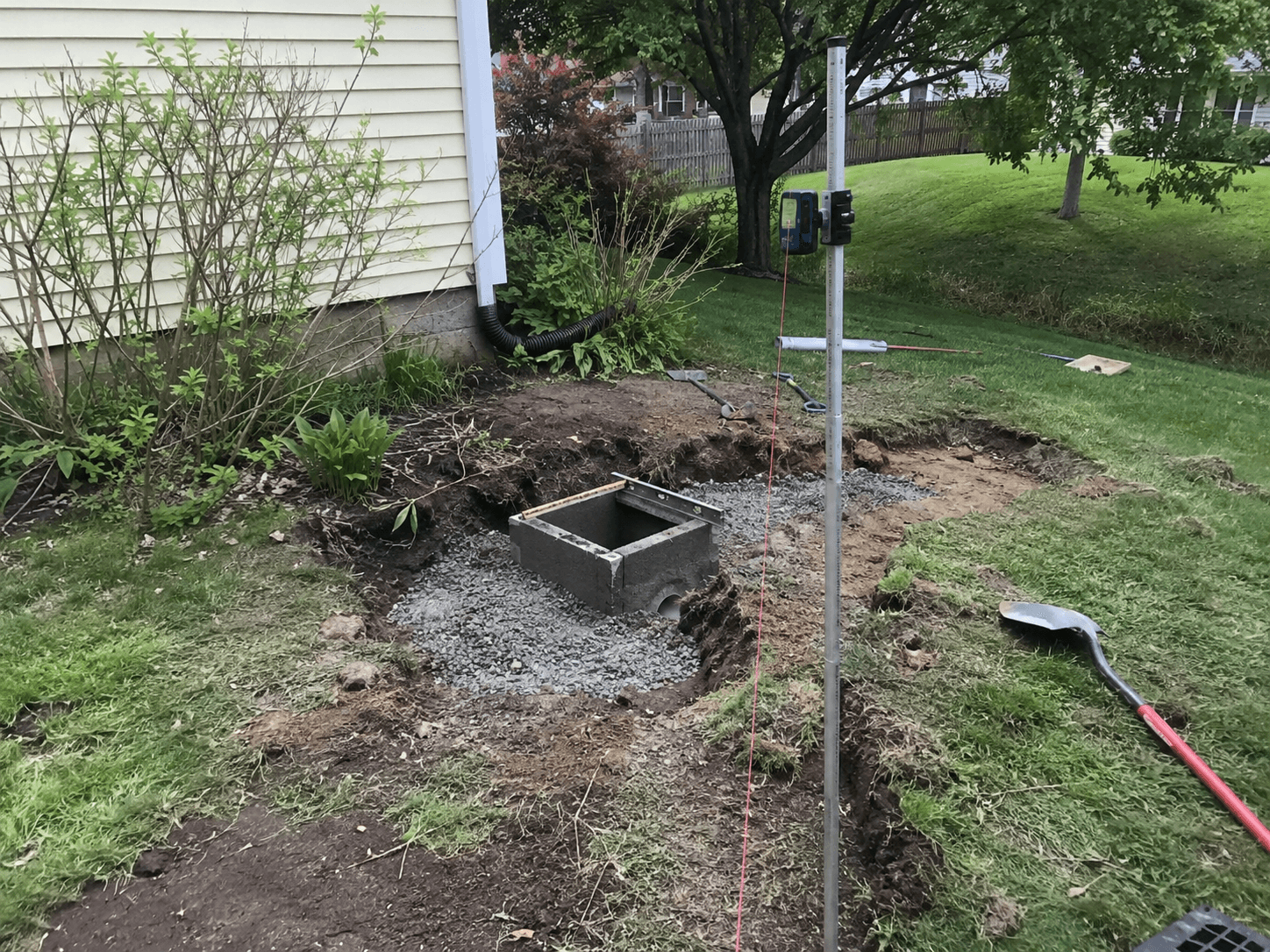
Step 1: Find the actual low point. This sounds obvious but it's easy to get wrong. We come during or after rain when possible to see exactly where water collects, or we shoot grades with a laser to find the true low. Setting the basin a foot away from the actual low spot means it doesn't catch the water.
Step 2: Plan the outlet route. Before we dig the basin, we plan the pipe run to make sure we have somewhere to discharge the water that's actually downhill from the basin. Drainage runs on gravity. If we can't get a downhill route to a safe outlet, a basin won't help.
Step 3: Dig, set, pipe, restore. Excavate the basin location and the pipe trench, set the basin on a gravel base at the right height, run pipe to the outlet on consistent slope, backfill around the basin, and restore the turf.
Step 4: Test and walk through maintenance. We flush water through the system to confirm flow, show you how the grate comes off for cleaning, and explain what to clear out of the sump twice a year.