What Gravel Spreading Actually Solves
A driveway, parking pad, or vehicle approach that needs a new surface or a refresh
Garden paths, walkways, or service routes through landscape areas
Drainage areas, dry creek beds, or French drain caps that need stone fill
Landscape bed mulch alternative that doesn't break down or need annual replacement
Areas around outbuildings, sheds, fire pits, or play sets where grass won't work
Drip lines around buildings to prevent splash erosion
Decorative ground cover under decks, around trees, or in difficult-to-mow spots
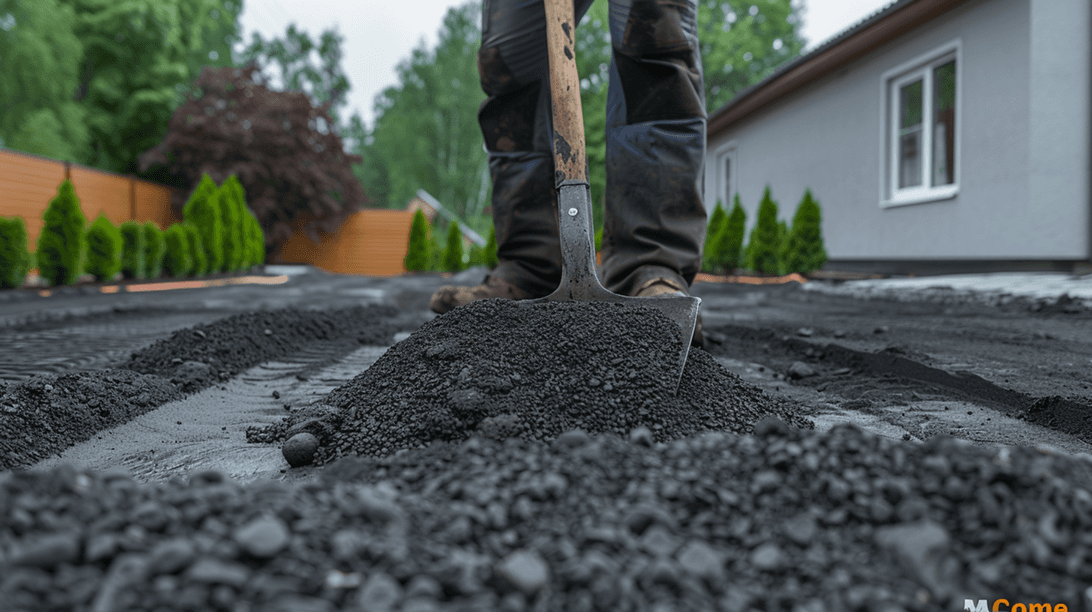
Gravel is one of the most underrated landscape materials. It solves problems that grass and mulch can't, and it does it once instead of annually.
What's On This Page
What Makes a Gravel Install Last
Stone Types and What Each Is For
Common Gravel Projects
Our Process
FAQs
What Makes a Gravel Install Last
Why Most DIY Gravel Projects Look Bad in a Year
The difference between a gravel install that lasts and one that disappears into the soil within a season comes down to four things that get skipped on most DIY projects.
The base. Gravel needs a compacted aggregate base underneath, not just bare soil. Without a base, the gravel sinks into the soil over time. Within a year, you've got weeds growing up through it and mud showing on the surface after every rain. The base is what holds the gravel up.
The fabric. Heavy-duty landscape fabric between the soil and the stone keeps weed seeds in the soil from reaching the gravel surface, and keeps soil from migrating up into the stone. A gravel install without fabric is a weeding project waiting to happen.
The edging. Without a hard edge (steel, aluminum, paver, or concrete), gravel migrates into the surrounding lawn or beds every time it rains and every time someone walks on it. Within two years, you'll have gravel mixed into the lawn 12 inches out from where the install ended.
The right stone for the job. Decorative pea gravel doesn't belong on a driveway. Crushed road base doesn't belong as a finish layer in a flower bed. Different stones are designed for different applications, and picking the wrong one means the surface fails in a way the right stone wouldn't have.
When we install gravel, the visible stone is just the top layer. Underneath, there's compacted base, heavy fabric, proper edging, and the right stone selection for the job. That stack is what makes a gravel install last 10+ years instead of one season.
Stone Types and What Each Is For
Stone Selection By Job
Crushed limestone (1/2 inch to 3/4 inch). The workhorse decorative gravel for Lincoln. Light gray to tan color, compacts well, looks clean. Used for pathways, landscape beds, and drip lines. Locally quarried so it's affordable and abundant.
Road base (recycled concrete or crushed limestone, 1.5 inch minus). The base layer under driveway and high-traffic gravel surfaces. Compacts hard, provides the structural foundation. Goes down before any decorative top stone.
River rock (1 inch to 3 inch, smooth and rounded). Decorative stone for dry creek beds, drainage features, and landscape accents. Doesn't compact, doesn't pack into a hard surface. Used as a visible finish material rather than a walking or driving surface.
Pea gravel (1/4 inch to 3/8 inch, smooth). Small, smooth, rounded stone. Decorative use under decks, around fire pits, or as ground cover in beds. Loose underfoot, so not great for primary pathways.
3/4 inch washed rock. Drainage layer used inside French drains, behind retaining walls, and in dry well construction. Clean, no fines, water moves through it easily. Different product than decorative gravel even though it looks similar.
Larger decorative stones (2 inch to 6 inch). Used as accent layers in dry creek beds, around boulders, or as ground cover in beds where you want a chunky natural look.
For any specific job, the right stone is whichever one matches the function. Driveway needs road base. Path needs crushed limestone over base. Dry creek bed needs river rock. We bring the right product for what you're building, not a one-size-fits-all bulk gravel.
Common Gravel Projects
Gravel Applications We Handle
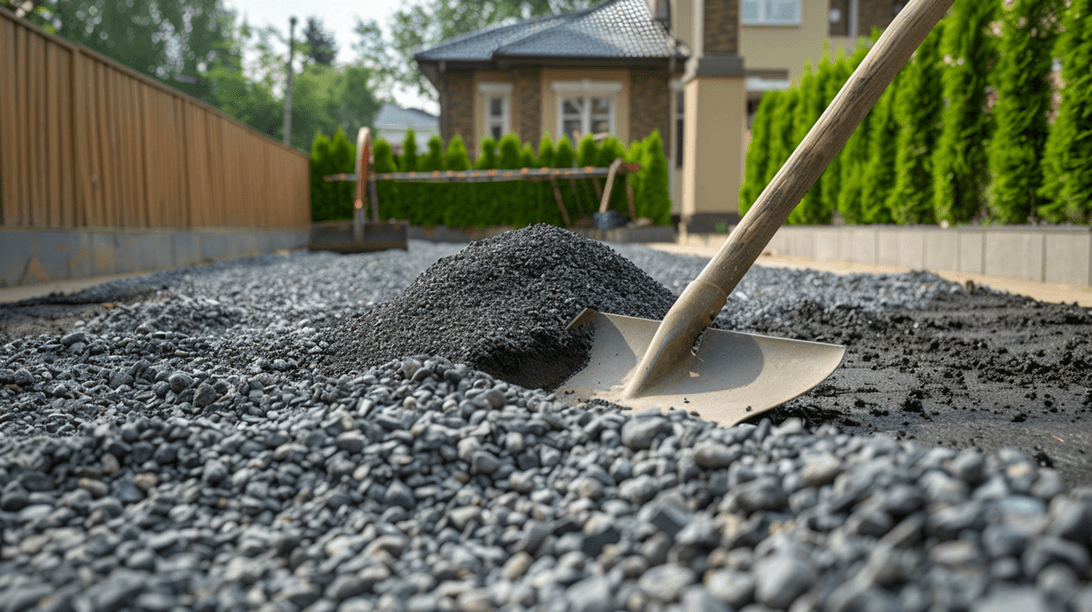
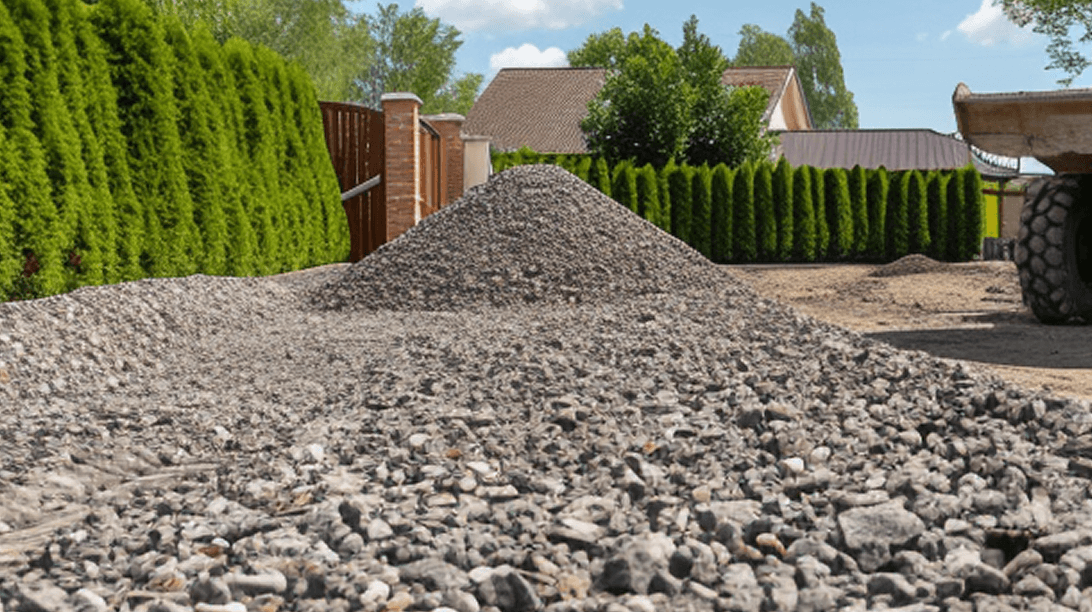
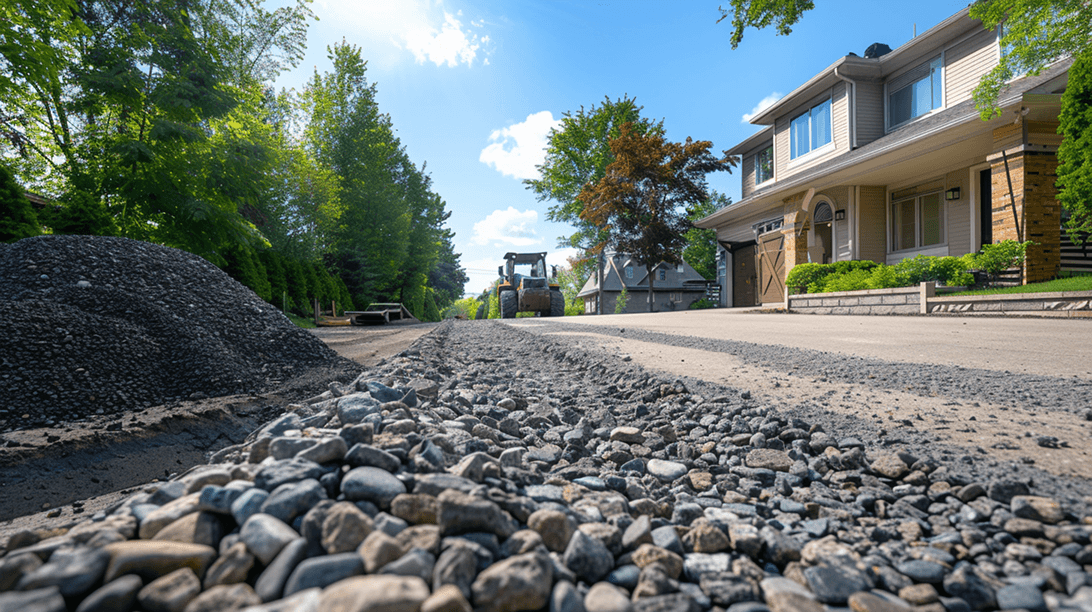
Gravel driveways and parking pads. Full installs and refreshes. Compacted road base topped with decorative stone. Edging keeps the driveway defined and prevents migration into lawn. Designed to handle vehicle traffic without ruts.
Landscape paths and walkways. Defined routes through gardens, side yards, and landscape beds. Crushed limestone or pea gravel over fabric and base, edged with steel or paver to keep the path clean.
Drip lines around buildings. A strip of decorative rock along foundations and outbuildings, usually 12 to 24 inches wide. Prevents splash erosion from roof runoff, defines the building edge, and keeps mulch from washing against the structure.
Mulch replacement in landscape beds. Rock as a permanent alternative to mulch. Doesn't decompose, doesn't need annual replacement, doesn't host insects. Higher upfront cost than mulch but no ongoing labor or material expense for decades.
Dry creek beds and drainage features. River rock or larger decorative stones layered over fabric to create functional drainage that looks like landscape. Pairs with our drainage work as the visible component of a buried system.
Areas under decks, around fire pits, sheds, and play structures. Where grass won't grow or won't survive the use pattern. Gravel handles foot traffic, doesn't get muddy, and looks clean year-round.
Tree wells and around large landscape rocks. Decorative rings of stone that define mature trees or features in the lawn. Keeps mower damage away from the trunk and creates a clean planted look.
We can also do load-out only, delivering and dumping if you'd rather spread and finish yourself. Most clients want the full install for the warranty and the finished look.
Our Process
How a Moku Gravel Spreading Project Runs
Step 1: Walk the property and scope the project. We measure the area, look at the use case (decorative bed, walkway, driveway), assess existing conditions, and recommend the right stone selection and depth. Some jobs need full base prep. Others can go over existing surfaces.
Step 2: Calculate material and quote. Stone is sold by the cubic yard or by the ton, and getting the math right matters. We calculate the volume based on the area and target depth, plus 10% for compaction and waste. Quote includes material, delivery, base prep, fabric, edging, and labor.
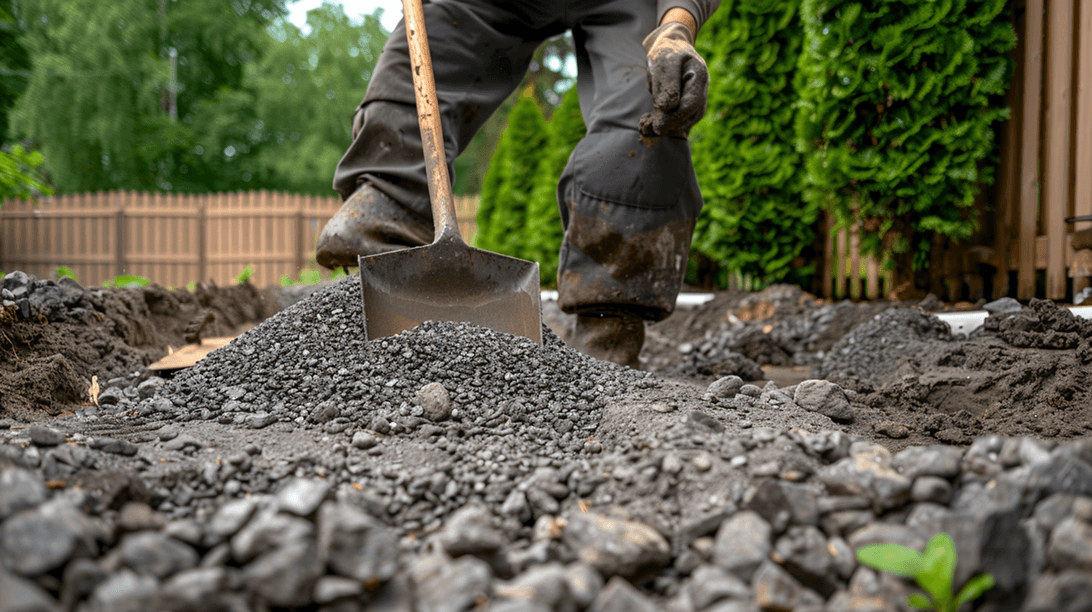
Step 3: Prep the site. Excavate to the right depth (depending on whether base prep is needed), install edging, compact and level the subgrade, lay heavy-duty fabric, and install compacted aggregate base where required.
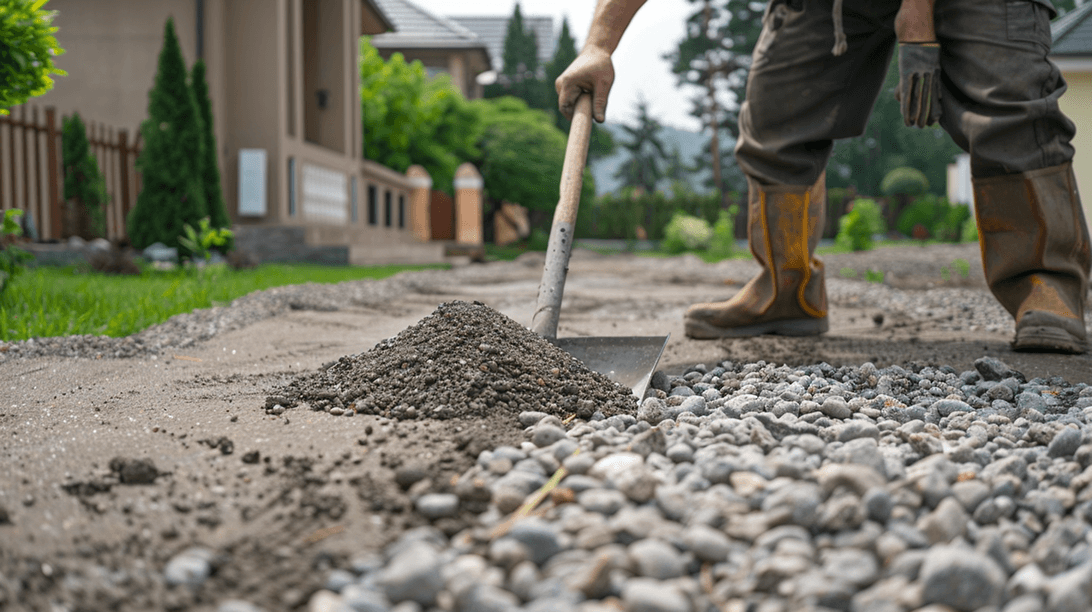
Step 4: Deliver and spread stone. Stone comes in by dump trailer or truck. We spread it with a skid steer bucket for large areas and finish by hand for paths, edges, and detail work. Final pass tamps and levels the surface.
Step 5: Walk the finished project. Inspect edges, confirm depth and coverage, clean up overspread stone, and walk the install with you. Most residential gravel projects take 1 to 3 days depending on size and prep work.