When a Property Needs Fresh Sod
Most sod projects we handle fall into these categories:
New construction with bare dirt and no lawn established yet
Lawn renovation where the existing turf has thinned, weeded out, or died off
A specific section of lawn that has failed (shade die-back, drought damage, pet damage)
A regrading project that left no usable lawn behind
Removal of an old planting bed, hardscape, or play area where lawn now belongs
A pet area or play area that needs to handle traffic immediately
A property that needs to look established and finished before a sale or event
Sod is faster than seed, more reliable, and gives an immediate finished look. The trade-off is higher upfront cost, but the establishment time savings often justify it.
What's On This Page
Sod vs Seed (and When Sod Is Worth the Cost)
Grass Varieties We Install
When Sod Beats Seeding
Our Process
FAQs
Sod vs Seed (and When Sod Is Worth the Cost)
Sod vs Seed
The honest comparison: sod costs 5 to 10 times more than seed per square foot upfront, but it gives you a finished lawn in 2 weeks instead of 18 months and has dramatically higher success rates. Whether sod is worth the cost depends on the specifics of your situation.
Why sod usually wins:
Speed. Sod is a lawn the day it's installed. Within 2 weeks it's rooted enough to walk on. Within 6 weeks it's a fully established lawn. Seed takes a full growing season at minimum, often two, and requires overseeding to fill in thin spots.
Erosion control. A sloped property with seed will erode for the entire establishment period. Sod stops erosion the day it goes down. For any property with grade changes, sod is often the only practical option.
Weed pressure. Seed competes with weeds from day one. Without aggressive weed control during establishment, weeds win or share the space. Sod arrives weed-free and stays that way if installed properly.
Visual appearance. A property with new sod looks finished. A property with new seed looks like a construction site for 3 to 6 months. For new construction, before-sale properties, or anyone who doesn't want to look at dirt for a season, sod is the clear choice.
Why seed sometimes wins:
Cost. Seed is dramatically cheaper. For large areas (over 5,000 square feet), the math sometimes favors seed even with overseeding and patience.
Variety options. More grass varieties are available as seed than as sod. For specialty plantings or unusual conditions, seed gives more options.
Acceptance of imperfection. Some homeowners genuinely don't mind the slow establishment process and the patchy look while seed germinates. If you're not in a hurry and the cost gap is meaningful, seed works.
We install both. For most residential projects under a few thousand square feet, especially with sloped terrain or visible front yard locations, sod usually makes more sense. For backyard areas, large rural properties, or budget-driven projects, seed is often the better fit. We'll be straight about which makes sense for your situation.
Grass Varieties We Install
Grass Varieties for Lincoln
Tall fescue. The most common variety we install in Lincoln. Cool-season grass, stays green from early spring through late fall, handles partial shade, deep root system makes it more drought-tolerant than other varieties. Tolerates moderate foot traffic. The right default for most residential lawns.
Kentucky bluegrass. The classic lush, fine-bladed lawn most homeowners picture when they think of a great lawn. Beautiful but needs more water and care than fescue. Works well in full sun areas with irrigation. Often blended with fescue for the best of both.
Bluegrass-fescue blends. Our most common product. Combines the durability and shade tolerance of fescue with the fine texture and color of bluegrass. Most adaptable to mixed sun and shade conditions, holds up to typical residential traffic.
Zoysia. Warm-season grass that goes dormant (brown) from late fall through early spring but is bulletproof in summer heat. Some Lincoln properties use it for high-traffic areas. Not for clients who want green year-round, but extremely low maintenance during the growing season.
Buffalo grass. Native Nebraska prairie grass. Drought-tolerant to the point of needing essentially no supplemental water. Lower-maintenance than other lawn types. Texture is slightly coarser and color is sage-green rather than emerald. Right for properties where authentic native and sustainability matter.
We match the grass variety to the site and the client's expectations. A south-facing front yard with full sun and an irrigation system has different needs than a shaded backyard with no irrigation. Picking the right grass for the conditions is half the work of making sure the sod establishes.
When Sod Beats Seeding
Project Types Where Sod Makes Sense
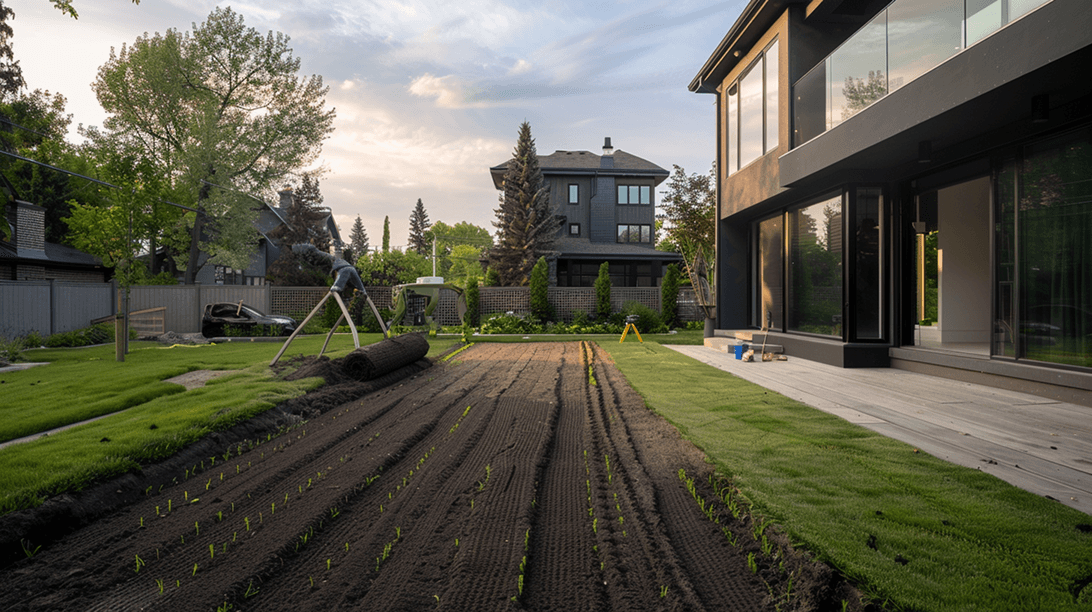
New construction. Properties with bare dirt and no lawn established. Sod transforms a construction site into a finished home in a few days. Common for builders, real estate sales, and homeowners moving into newly built homes who don't want to wait 18 months for seed.
Lawn renovation and replacement. Existing lawns that have failed, thinned, or filled with weeds and crabgrass. We strip the old lawn, prep the soil, and lay fresh sod. The complete reset that seeding-and-overseeding can't always deliver.
Problem-area replacement. Specific zones where the lawn has failed (shade die-back patches, drought damage, pet damage, irrigation gaps). Sod fills these zones quickly without restarting the whole lawn.
Post-construction or post-project restoration. After we install drainage, regrade a yard, or build hardscape, the surrounding lawn needs to be restored. Sod handles this immediately, where seed would leave a brown patch for months.
Sloped or eroded areas. Where seed can't establish without washing away. Sod's instant root contact and surface coverage prevents erosion from day one.
High-traffic areas. Where seed can't survive the foot traffic during establishment. Sod handles use within 2 weeks instead of 6 to 12 months.
Pre-sale property prep. Properties getting listed where the lawn needs to look established before showings start. Sod is one of the highest-ROI improvements for properties going on the market.
Sod is less appropriate for very large areas where cost becomes the dominant factor, for properties where the homeowner wants to use unusual seed varieties not available as sod, or for sites where ongoing maintenance commitment is in question. We'll walk through whether sod or seed makes more sense for your specific project.
Our Process
How a Moku Sod Install Runs
Step 1: Walk the property and scope the install. Measure the area, evaluate the existing soil conditions, identify any prep work needed (grading, dethatching, soil amendment), and pick the right grass variety for the site. Some areas need full soil reconstruction. Others can take sod over light prep.
Step 2: Quote and schedule. Quote includes sod material, soil prep, edge cutting, and labor. We coordinate sod delivery for the morning of install (sod needs to go down the same day it's cut for best establishment).
Step 3: Prep the soil. Remove any existing lawn or debris, regrade where needed (especially for proper slope away from foundations), till compost or topsoil into compacted clay, level and rake to a clean planting bed. Soil prep is the single biggest factor in whether the sod establishes well.
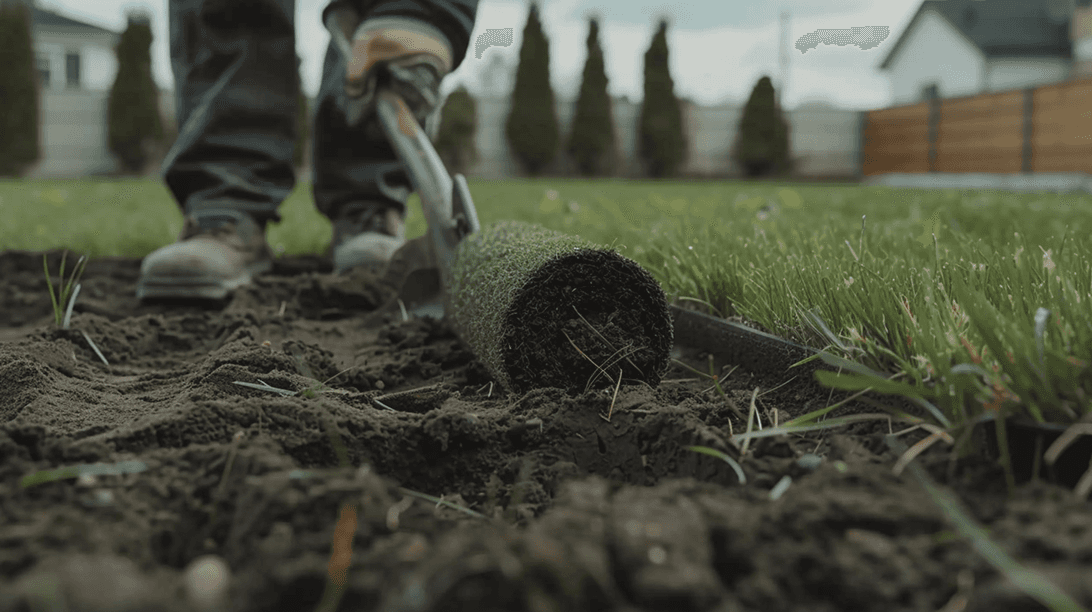
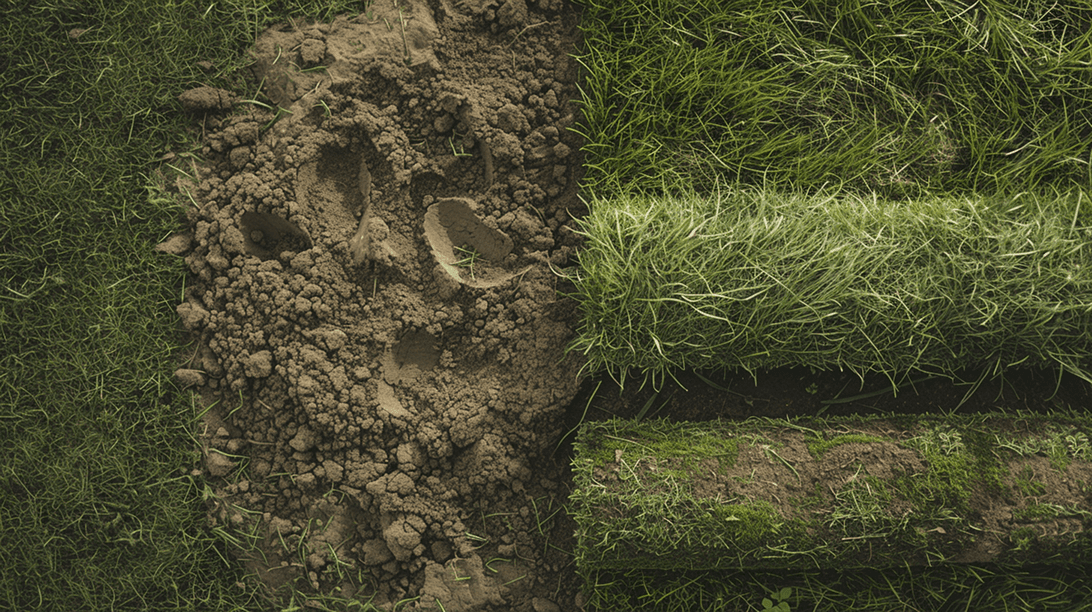
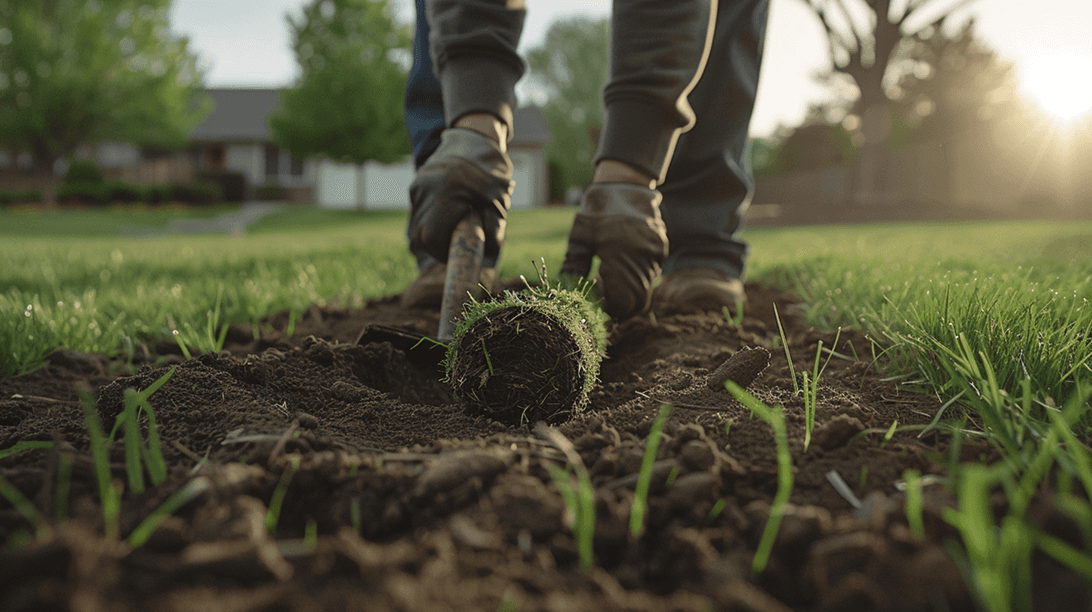
Step 4: Lay the sod. Roll out fresh-cut sod in staggered rows (like brickwork) with tight seams. Cut around landscape beds, trees, walkways, and edges for a clean finish. Roll the entire surface to ensure root contact with prepared soil.
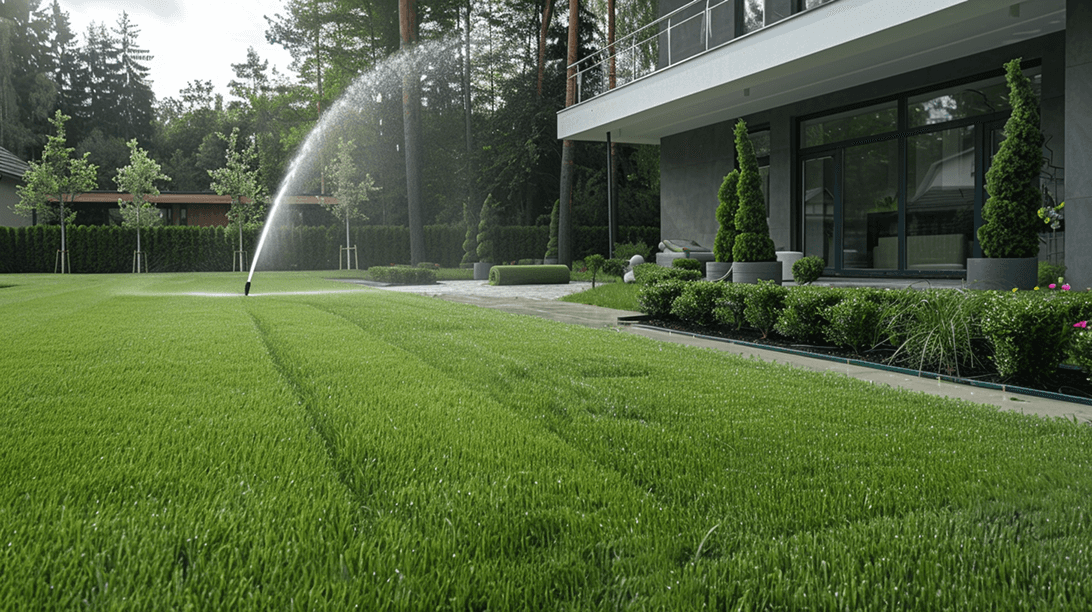
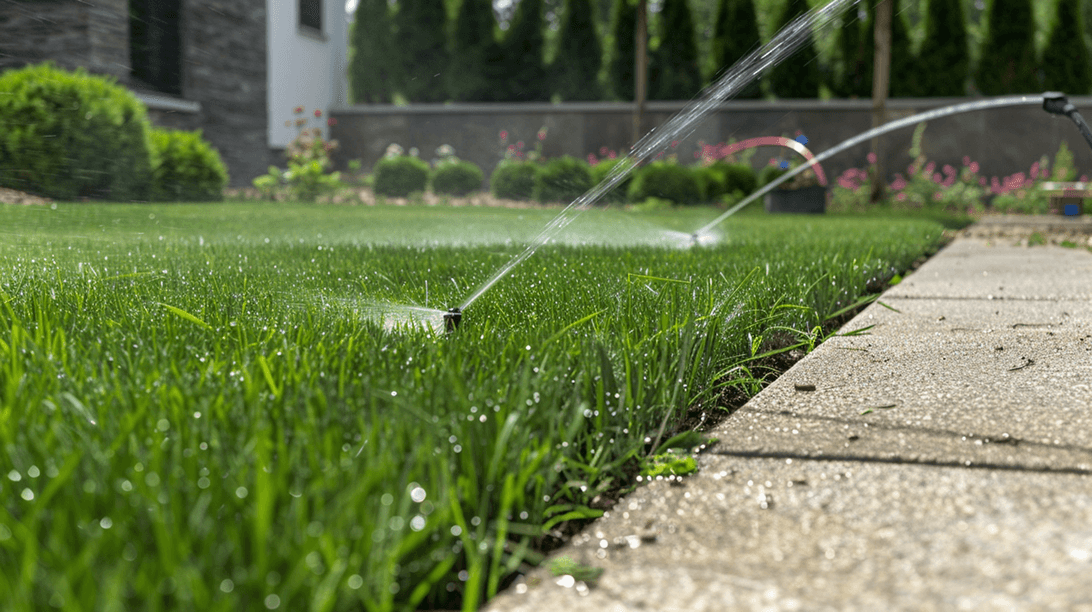
Step 5: Water in and instructions. First watering happens at install, deep and thorough. We leave a clear watering schedule (heavy daily watering for the first 2 weeks, then tapering) and check in during establishment. Sod is fully established and ready for normal use within 4 to 6 weeks.
Diagram: What Goes Under the Sod
The Layers That Actually Matter
A successful sod install is really about what's underneath, not what's on top. From the bottom up: native soil tilled and decompacted, a layer of topsoil and compost worked into the top few inches, a graded and rolled surface, then sod with starter fertilizer applied. The grass you see is the last six percent of the work, and it's only as good as everything sitting under it.