When a Property Needs New Plantings
New construction with bare dirt and no landscape
A landscape that hasn't been touched in 10+ years and needs a refresh
Specific problem zones (steep slopes, shaded areas, wet spots) where current plants aren't working
Foundation plantings that have outgrown the house or died off
New planting beds being added to an existing landscape
Tree removal aftermath where you need to fill the gap
A redesign focused on attracting birds, pollinators, or wildlife
Privacy plantings to screen a neighbor, road, or eyesore
We focus on plant selection that fits your site (sun, soil, water, scale) and your goals (low maintenance, color, structure, wildlife support). Right plant, right place. The single most important rule in planting.
What's On This Page
The Difference Between Planting and Just Sticking Plants in the Ground
Plant Categories We Install
Common Planting Projects
Our Process
FAQs
The Difference Between Planting and Just Sticking Plants in the Ground
Why Planting Is Less Like Decorating and More Like Hiring
Picking a plant for a specific spot is more like hiring someone for a specific job than picking out throw pillows. The plant has to do work over decades. It has to handle the soil, the water, the sun exposure, the winter wind, the summer heat, the deer pressure, the foot traffic, and grow into a shape and size that fits the space.
Get the match right and the plant becomes a permanent fixture of the property that you barely have to think about. Get it wrong and you'll spend 5 years fighting to keep it alive before it fails anyway.
This is why the planting selection process matters more than the actual installation. Anyone can dig a hole. The harder skill is knowing what to put in it.
Three things that get a planting selection wrong:
Ignoring soil conditions. Lincoln's clay soil is heavy, drains slowly, and compacts easily. Plants that need fast-draining, loose soil (most Mediterranean plants, lavender, many herbs) struggle here. Plants adapted to clay or wet conditions thrive. Reading the soil is the first decision.
Ignoring scale at maturity. A shrub that's 18 inches tall at the nursery may grow to 8 feet wide. Planted next to a house, that 8-foot shrub blocks windows, blocks airflow, and has to be aggressively pruned or removed within 5 years. We size plants for mature dimensions, not what they look like on day one.
Ignoring water and sun. A plant tag that says "full sun" actually means 6+ hours of direct sun. A plant tag that says "part shade" means 4 or fewer hours. Many planting failures are simply plants in the wrong light or wrong moisture. Getting this right is free, but only if you check before you plant.
When we do a planting project, we walk through these factors for every plant in the design. The result is plants that establish in their first year and thrive thereafter, not plants that struggle and get replaced after two seasons.
Plant Categories We Install
Plant Material Categories
Trees. Shade trees, ornamental trees, evergreens. The longest-term investment in any landscape. We focus on Nebraska-adapted species: oaks, lindens, maples (specific cultivars), Eastern redbud, serviceberry, and hardy evergreens like spruce. We avoid problem species (ash for emerald ash borer reasons, silver maple for surface root issues).
Shrubs. Foundation plantings, hedge material, ornamental shrubs, native shrubs. Workhorses of residential landscape. Common installs include viburnum, ninebark, sumac, hydrangea, juniper, and a long list of regional natives. Sized based on mature dimensions, not nursery size.
Perennials. Plants that come back every year, get bigger and better each season. Native perennials are our default: coneflower, black-eyed Susan, native sedges, Joe-Pye weed, milkweed, asters. They handle the climate, support pollinators, and require minimal care once established.
Ornamental grasses. Switchgrass, little bluestem, prairie dropseed, feather reed grass. The visual structure and seasonal movement that most modern landscapes need. Tough as nails, drought tolerant, and adds winter interest when most plants are dormant.
Native plantings and rain garden plants. Specialty plant communities designed for specific functions (pollinator gardens, rain gardens, prairie meadows). We pull from a Nebraska-native plant palette and design with ecological function in mind.
Annuals and bedding plants. Color plants for high-visibility areas. Replaced each season. Useful for entryways, container plantings, and visual focal points where year-round structure isn't the priority.
Bulbs. Spring and fall bulb plantings (tulips, daffodils, alliums, crocus). Planted in fall, deliver dramatic spring color. Often integrated with perennial bed designs for early-season interest.
Most residential landscapes need a mix. A few trees for structure and shade, a layer of shrubs for mass and screening, perennials and grasses for color and texture, and seasonal bulbs and annuals where the eye lands first.
Common Planting Projects
Typical Planting Projects
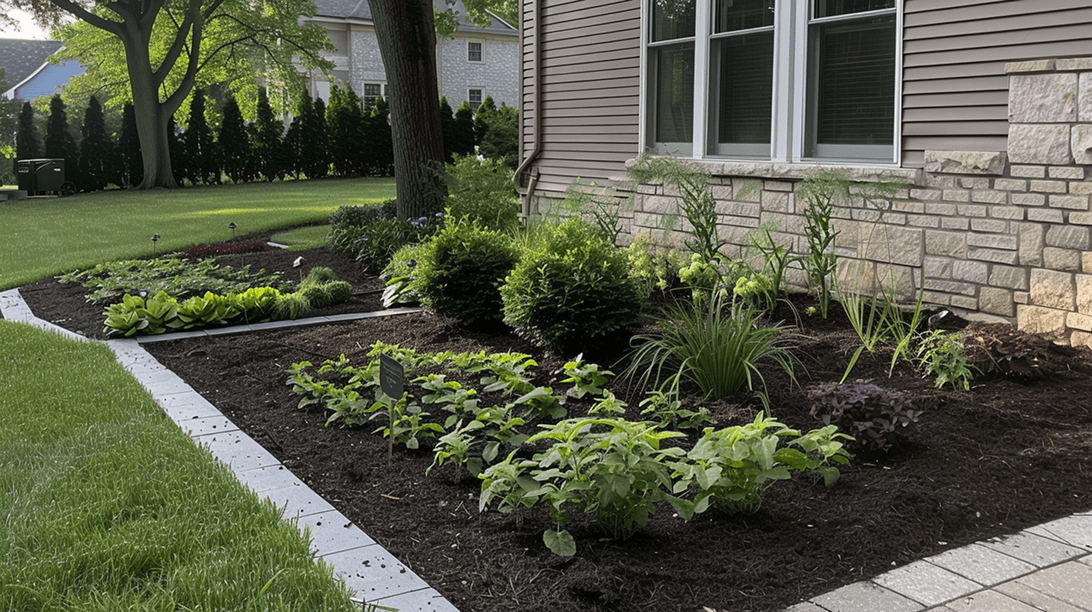
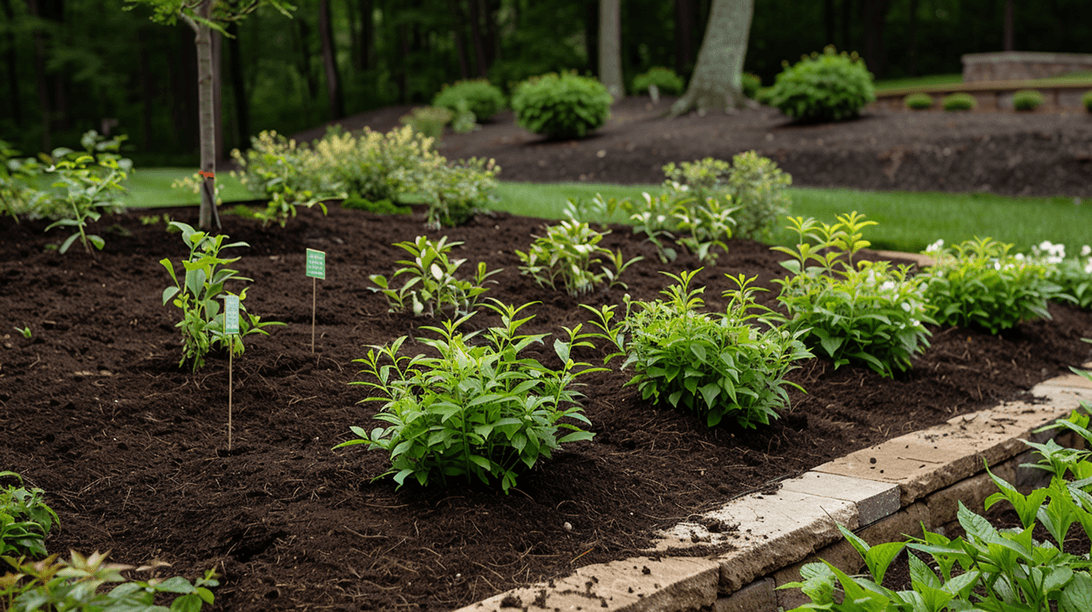
Foundation plantings. The bed of shrubs and perennials along the house. Often the most visible bed and the first thing visitors see. We design for scale (so plants don't outgrow the house), for seasonal interest (something happening year-round), and for low maintenance.
Curb appeal islands and front yard beds. Beds carved out of the front yard, often around mailboxes, light posts, or as standalone focal points. Designed for high-impact color and structure.
Privacy plantings. Screening hedges or staggered tree-and-shrub plantings that block sight lines from neighbors, roads, or unwanted views. Sized for mature dimensions so they actually do the job in 5 years.
Pollinator and native plantings. Beds specifically designed for bees, butterflies, and other pollinators. Heavy on native perennials and grasses. Beautiful, ecologically functional, and low maintenance once established.
Rain garden plantings. The plant component of a rain garden drainage feature. Plants that handle both wet and dry conditions (sedges, switchgrass, certain perennials). Pairs with our drainage work.
Tree and shrub replacement. Filling in after the loss of a tree or shrub. Often paired with adjustments to surrounding plantings to integrate the new plant into the existing design.
Whole-bed redesigns. Removing and replacing the plants in an existing bed. Comes up when the original design has aged out, plants have failed, or the property has new owners with different goals.
Specialty gardens. Vegetable gardens, cutting gardens, herb gardens, sensory gardens. Designed for specific use rather than purely ornamental.
Most residential planting projects are a mix of these. A foundation refresh might also include curb appeal beds and a privacy hedge. A whole-property landscape redesign might include all of the above plus rain gardens and pollinator beds. We design for the whole property, not just the bed in question.
Our Process
How a Moku Planting Project Runs
Step 1: Walk the property and identify the project scope. Look at site conditions (sun, soil, water, slope), existing plantings, and what the client wants to accomplish. Some projects are a single bed. Others are whole-property redesigns.
Step 2: Plant selection and design. We pick plants based on site conditions, mature dimensions, seasonal interest, and the client's goals. For larger projects, we sketch the bed layout showing plant placement and spacing. We always run the plant list by you before ordering.
Step 3: Source the plants. We source from regional nurseries that specialize in Nebraska-adapted plant material. Healthier plants than big-box stores, and better matched to local conditions. Most plant material is locally grown.
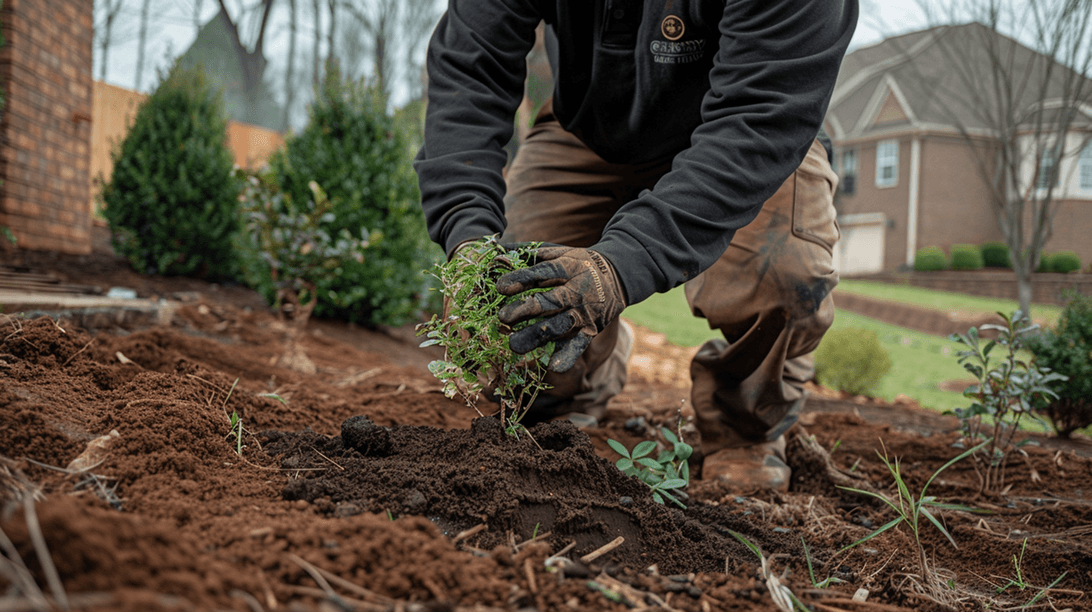
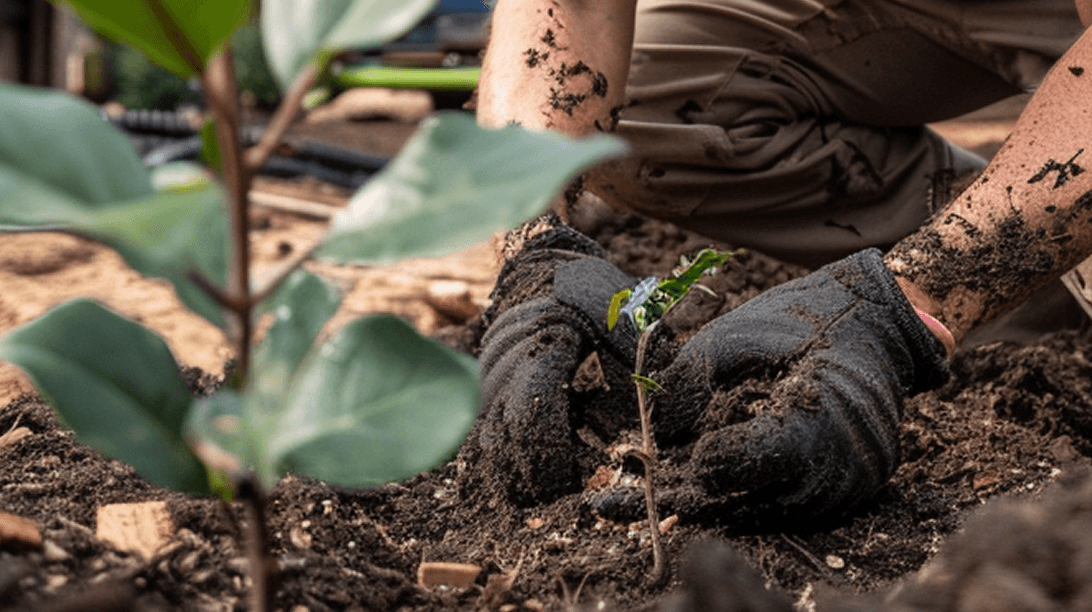
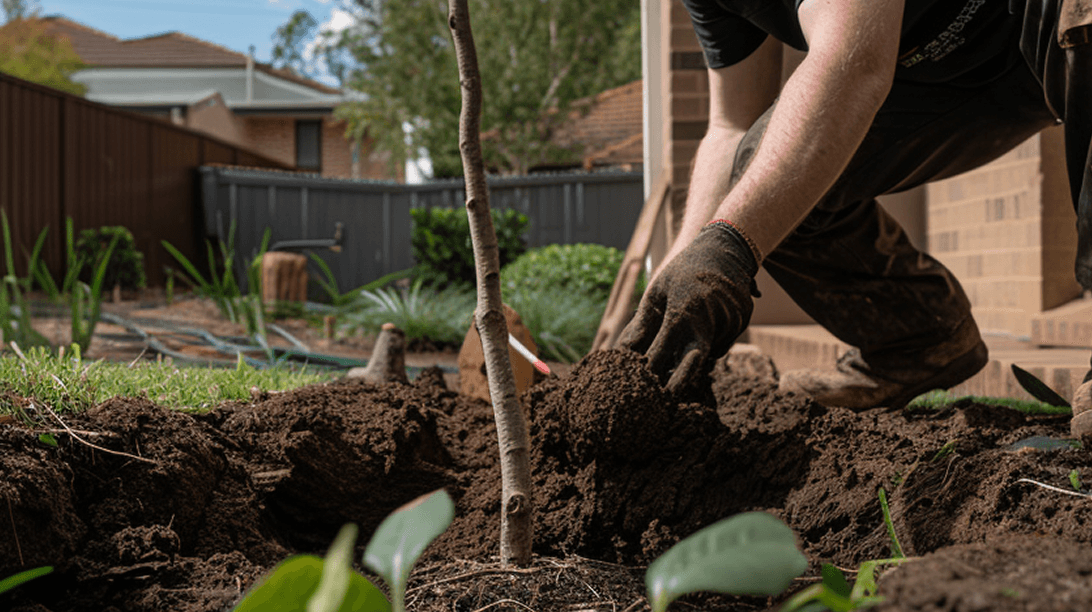
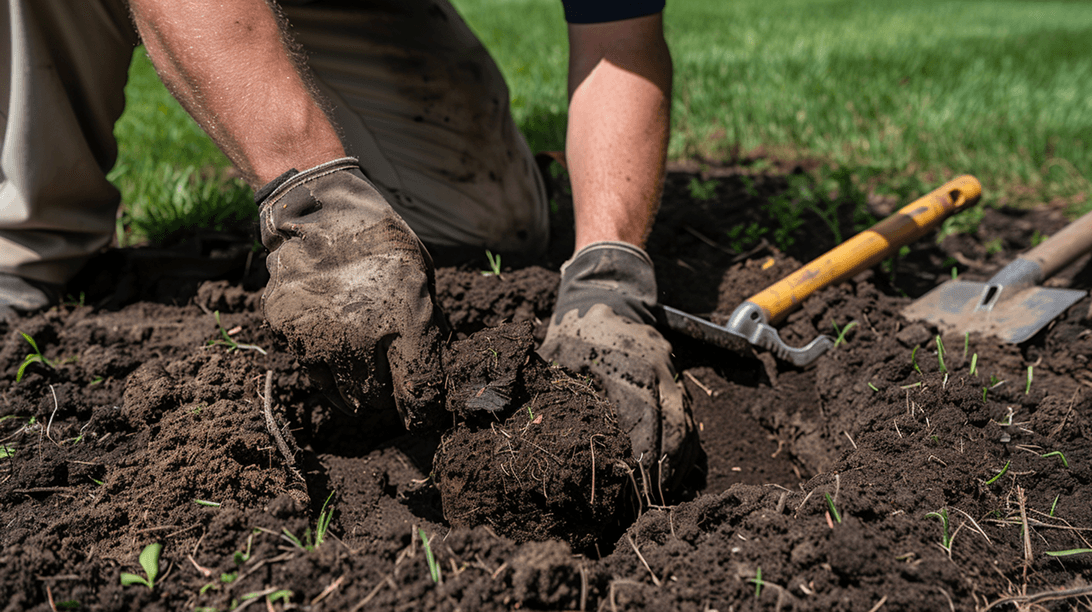
Step 4: Site prep and planting. Excavate planting holes 2 to 3 times wider than the root ball, amend the backfill soil with compost for heavy clay, set plants at the proper depth (root flare at grade), backfill, and water in heavily. Mulch 2 to 3 inches deep around the plant.
Step 5: Watering instructions and follow-up. New plants need consistent watering for the first 4 to 6 weeks. We leave a clear watering schedule and follow up with the homeowner during establishment. Most plants take a full year to fully establish their root system.