What Deadheading Actually Does for Your Garden
A flowering bed that produced beautifully early in the season but has gone quiet
Annuals (petunias, zinnias, marigolds) that have stopped blooming or are blooming less
Perennials with spent flower heads that are dragging down the bed's appearance
Roses that are producing one set of blooms and then stopping
Salvia, coneflower, black-eyed Susan, and other repeat-blooming perennials at mid-season
Container plantings that need to be kept looking fresh through the summer
Spring bulbs (tulips, daffodils) with spent flower stalks after bloom
Deadheading is the difference between a garden that peaks in June and disappears, and a garden that produces flowers from May through hard frost.
What's On This Page
Why Deadheading Doubles Bloom Time
How We Approach Deadheading
Common Deadheading Projects
Our Process
FAQs
Why Deadheading Doubles Bloom Time
Why Deadheading Doubles Bloom Time
Every flowering plant has the same biological program: produce flowers, attract pollinators, get pollinated, make seeds. Once seeds start forming, the plant has accomplished its reproductive goal for the season and shifts its energy into seed maturation instead of producing more flowers.
Deadheading interrupts this program. By removing the spent flower before seeds form, you're telling the plant "that didn't work, try again." The plant's response is to produce more flowers in another attempt at successful pollination.
What you actually get from consistent deadheading:
Doubled or tripled bloom time. Many plants that would naturally bloom for 2 to 3 weeks can be kept blooming for 6 to 12 weeks with regular deadheading. Petunias, salvia, coneflower, and zinnias are dramatic examples.
More blooms total. Not just a longer season but more flowers within it. The plant cycles back into bloom production multiple times instead of stopping after one round.
Cleaner appearance. Spent flowers turn brown, drop petals, and look messy. Removing them keeps the bed looking fresh.
Stronger plants. Energy redirected away from seed production goes into roots, stems, and new growth. Plants that get deadheaded consistently are often larger and healthier the following year.
Self-seeding control. Some plants self-seed aggressively (coneflower, certain native perennials), spreading beyond their intended location. Deadheading prevents seed production where you don't want spread.
Why most homeowners skip it:
Deadheading requires showing up every 1 to 2 weeks during peak bloom. It's not hard work, but it's regular work. Most homeowners do it for the first few weeks, then forget for the rest of the season. By the time they remember, the plants have already shifted into seed mode and produced fewer flowers.
This is why deadheading is a service worth contracting. The labor isn't expensive but the schedule is what makes the difference. We come on a regular cadence and the bed performs at peak all season instead of fading by July.
How We Approach Deadheading
Three Approaches to Deadheading
Not all flowers respond the same way to deadheading, and the right approach varies. Here's the technique we use depending on the plant:
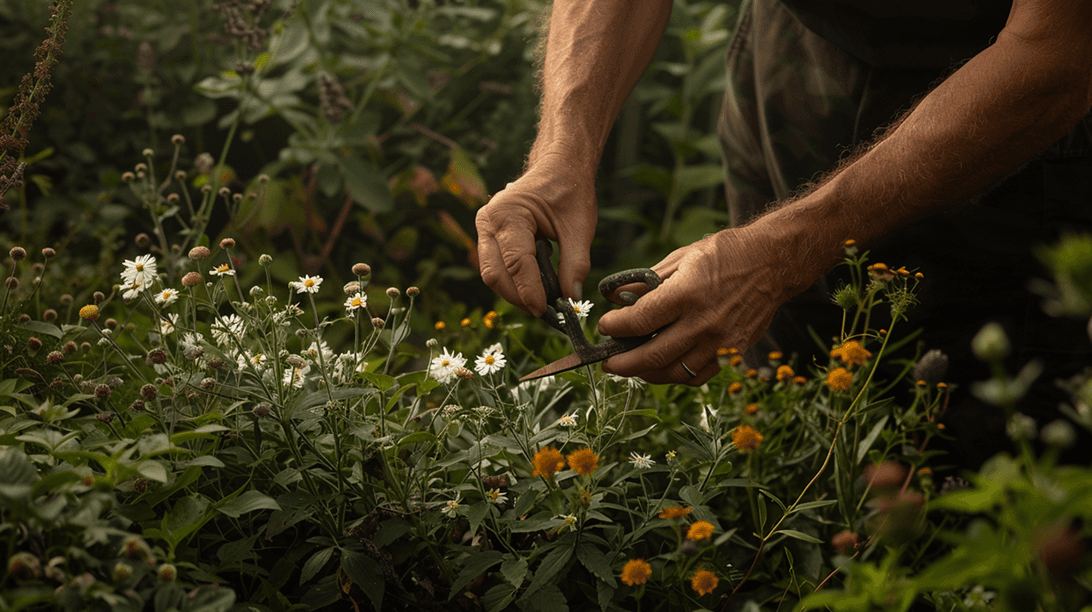
Pinching. Removing the spent flower with fingers, just below the bloom head. Right for soft-stemmed annuals like petunias, marigolds, and zinnias. Fast, doesn't require tools, can be done while walking through the garden.
Snipping at the next set of leaves. Cutting the spent flower stem back to the next leaf node down. Right for perennials like coneflower, black-eyed Susan, and salvia. The new growth typically emerges from that node within a week or two.
Shearing. Cutting an entire plant back by 30 to 50% after the first major flush is done. Right for plants that bloom in waves (catmint, salvia, hardy geraniums). Triggers a complete second flush within 2 to 3 weeks. Looks dramatic for a few days but the result is worth it.
Selective seed-head removal. Cutting individual seed heads from plants you want to keep blooming but also want to allow some seed for self-seeding or birds. The mix-and-match approach for native plant beds.
Leaving on purpose. Some plants we don't deadhead. Coneflower, black-eyed Susan, native grasses, asters, and rudbeckia have beautiful seed heads that feed birds in fall and look great with snow on them in winter. We leave these and cut back in late winter before spring growth.
The goal isn't to deadhead every flower on the property. It's to maximize bloom time and plant health on the plants that respond, and leave the rest alone where the seed heads serve a purpose.
Common Deadheading Projects
Where Deadheading Earns Its Keep
Annual flower beds. Petunias, marigolds, zinnias, cosmos, snapdragons. The most responsive plants to deadheading and the ones that fail the fastest without it. A bed of annuals deadheaded weekly produces flowers from late spring to first frost.
Perennial flower beds. Coneflower, black-eyed Susan, salvia, daylilies, bee balm. Repeat bloomers that need 1 to 2 deadheading passes to keep producing. Often paired with a mid-season hard cutback on certain species.
Container gardens. Containers on patios, porches, and entryways need weekly deadheading to look their best. The most visible plantings on a property and the ones that go from beautiful to sad fastest if neglected.
Rose gardens. Roses respond dramatically to deadheading. Old varieties and modern hybrids both benefit. Cutting just above the first 5-leaf set encourages new flowering stems.
Hanging baskets. Frequent deadheading combined with regular feeding keeps hanging baskets vibrant all summer. Without deadheading, hanging baskets typically fade by mid-summer.
Spring bulb cleanup. After tulips, daffodils, and other spring bulbs finish blooming, the spent flower stalks need to be removed (but the foliage left to feed the bulb for next year). Often overlooked but important for next year's bloom.
Cutting gardens. If you grow flowers for cutting, deadheading is essential to keep production going. Otherwise plants slow or stop after a few weeks.
Most deadheading work is folded into our recurring maintenance schedule. For clients with significant flowering plantings, we add 30 to 60 minutes per visit during peak season to keep beds at peak appearance and production.
Our Process
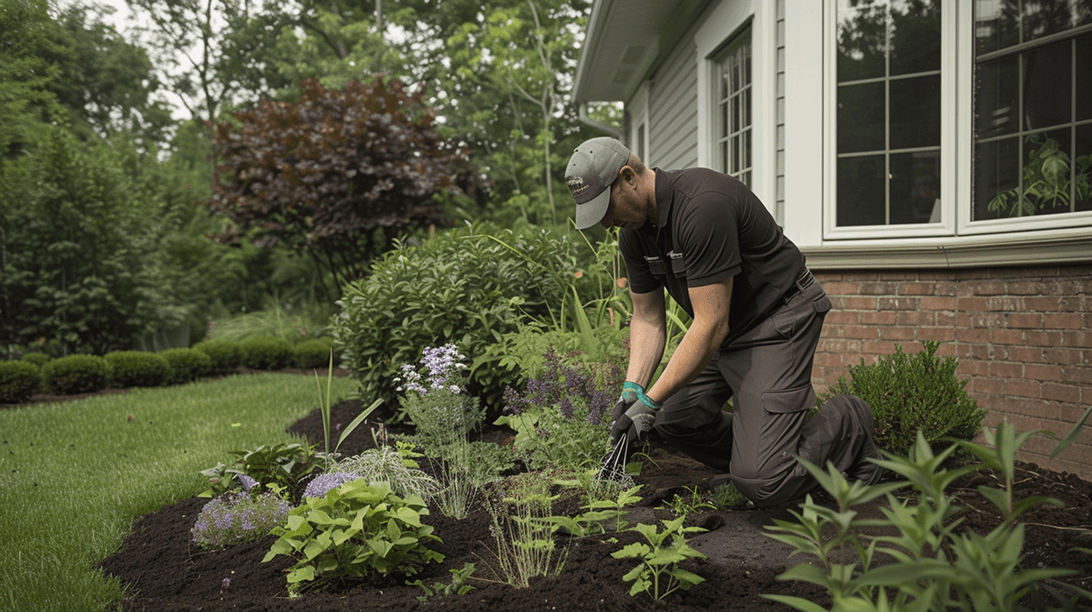
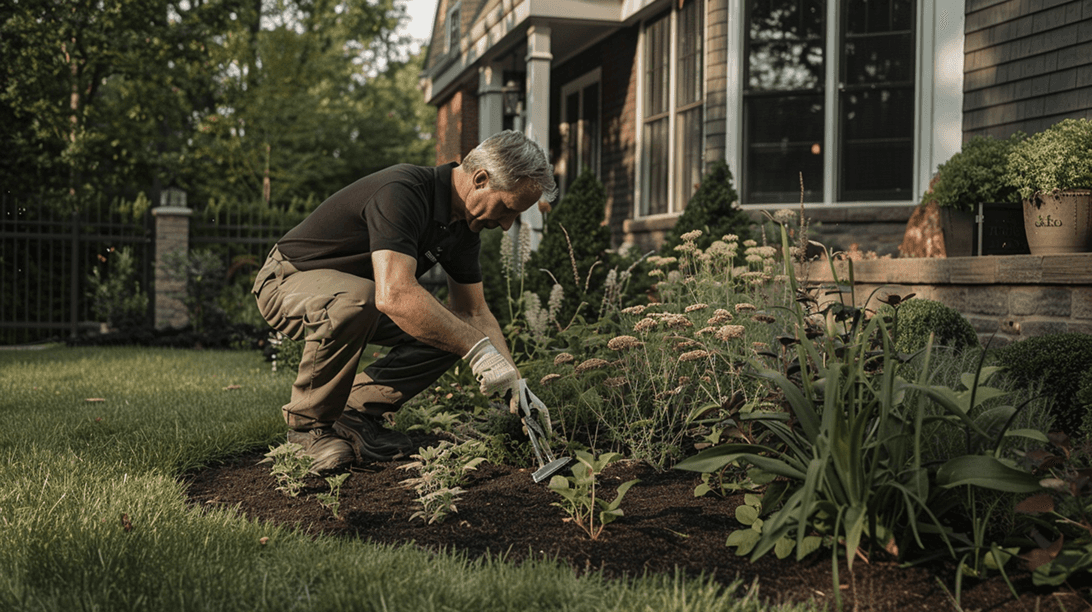
How a Moku Deadheading Visit Runs
Step 1: Walk the beds and assess. Look at what's blooming now, what's spent, what's about to bloom, and what should be left alone (seed-head species). The plan is different every visit because the plants are different week to week.
Step 2: Work through the plants. Annuals and containers first (these need the most attention). Then repeat-blooming perennials. Then any seasonal cutbacks on plants ready for hard pruning between flushes.
Step 3: Pinch, snip, or shear depending on the plant. Right technique for each species. Hand pruners for woody-stemmed plants, snips for delicate stems, hand-pinching for soft annuals.
Step 4: Collect and remove cuttings. All spent material goes into yard waste, not back into the beds (where it can spread fungal disease or pests).
Step 5: Note bloom status. We track which plants are flowering, which are between flushes, and which need to be checked again next visit. The schedule adjusts based on what's happening on the property, not a fixed calendar.