When Mulch or Rock Refreshes a Landscape
An annual spring mulch refresh on existing landscape beds
A new construction or new landscape install that needs mulch finished
Switching from mulch to rock (or vice versa) in beds that aren't working
Drip lines around the foundation that need rock installation
Tree wells that need mulch refreshed and properly depth-set
Bed expansion or new bed creation where ground cover material is part of the install
Replacement of failed or worn-out previous bulk material
Front-yard refresh as part of a property prep for sale or seasonal cleanup
The right ground cover, applied at the right depth, transforms a bed from looking tired to looking deliberate. It's also doing real work for plant health and weed control underneath.
What's On This Page
Why Ground Cover Choice Matters
Mulch vs Rock
Where Each Material Belongs
Our Process
FAQs
Why Ground Cover Choice Matters
Mulch and Rock Are Doing More Work Than You Think
Mulch and decorative rock look decorative, but they're actually doing structural work for the landscape underneath. A bed without ground cover is a bed that dries out faster, weeds heavier, heaves more in winter, and loses soil to erosion. A bed with the right ground cover at the right depth gets free help in all of these areas.
What good ground cover actually does:
Moisture retention. Mulch in particular dramatically reduces soil moisture loss to evaporation. A bed with 3 inches of mulch loses water 50 to 70% slower than a bare bed. In a hot Lincoln summer, this is the difference between thriving plants and plants requiring constant watering.
Weed suppression. A 2 to 3 inch layer of mulch (or rock over fabric) blocks light from reaching weed seeds in the soil. Most weed seeds need light to germinate. Without it, the bed stays clean. Without ground cover, beds become weeding projects every two weeks.
Temperature regulation. Roots are sensitive to temperature swings. Mulch and rock insulate the soil from extreme summer heat (clay can reach 130°F at the surface) and from winter cold (preventing root freeze in shallow-rooted plants). Plants under proper ground cover are dramatically more resilient.
Soil structure. Mulch breaks down into the soil over 1 to 2 years, adding organic matter and improving clay structure. Each year of properly mulched beds means slightly better soil for the year after.
Erosion control. A bare bed loses topsoil with every rain. A mulched or rocked bed holds the soil in place. Especially important on sloped properties and during establishment of new plantings.
Visual definition. A mulched bed is clearly a bed. A bare bed looks like dirt with plants in it. The ground cover is what tells the eye "this is a designed space."
Why most homeowners get this wrong:
The two most common mistakes are applying mulch too thin (under 2 inches, where it doesn't suppress weeds or retain moisture) and "mulch volcanoes" piled against tree trunks (which trap moisture against the bark and cause rot). We apply 2 to 3 inches evenly and keep mulch away from stems and trunks. Done right, mulch and rock multiply the value of every other landscape investment.
Mulch vs Rock
Mulch vs Rock
The choice between mulch and rock isn't aesthetic, it's functional. They do different things, last different amounts of time, and belong in different parts of the property.
Mulch (hardwood, bark, or wood chip).
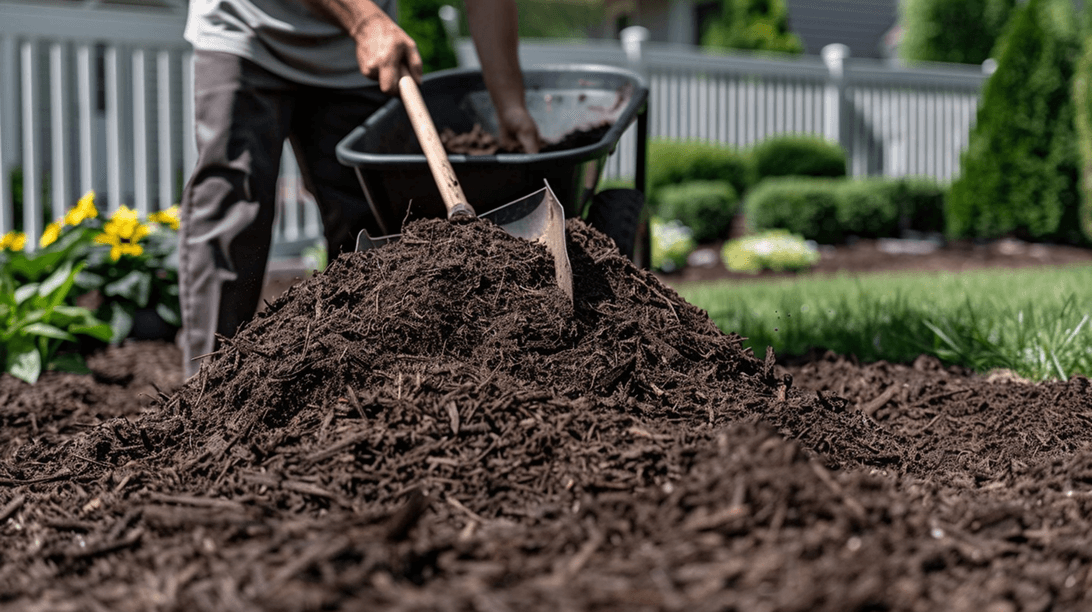
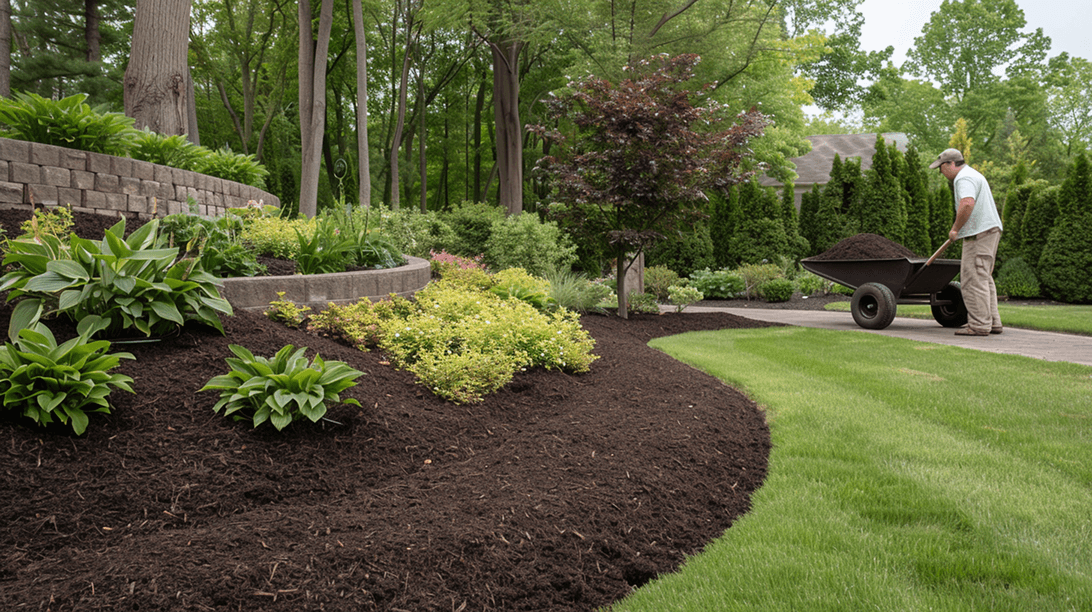
Organic material that breaks down over 1 to 2 years and needs annual refresh. Adds organic matter and nutrients to the soil as it decomposes. Retains moisture exceptionally well. Insulates plant roots from temperature extremes. Looks warm and natural. Best for planting beds, tree wells, and foundation plantings where plants benefit from the organic matter.
Pros: Plant-friendly. Natural look. Decomposes into soil, improving it over time. Suppresses weeds. Holds moisture. Cheaper upfront than rock.
Cons: Needs annual refresh or topping. Can compact and develop fungal growth if applied too thick. Some mulches (red dye) fade fast. Floats in heavy rain.
Rock (decorative landscape stone).
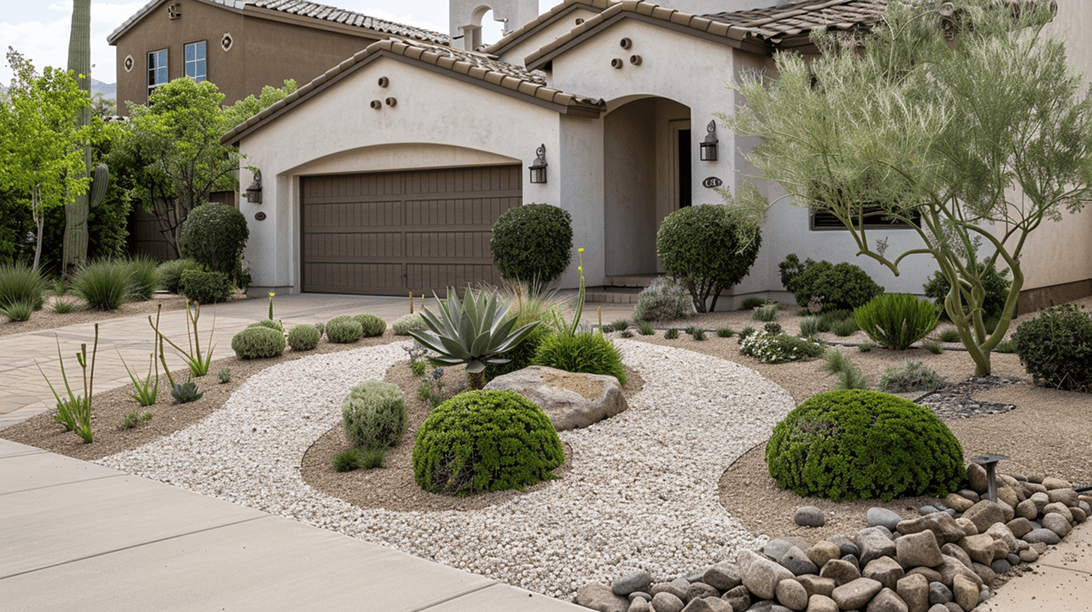
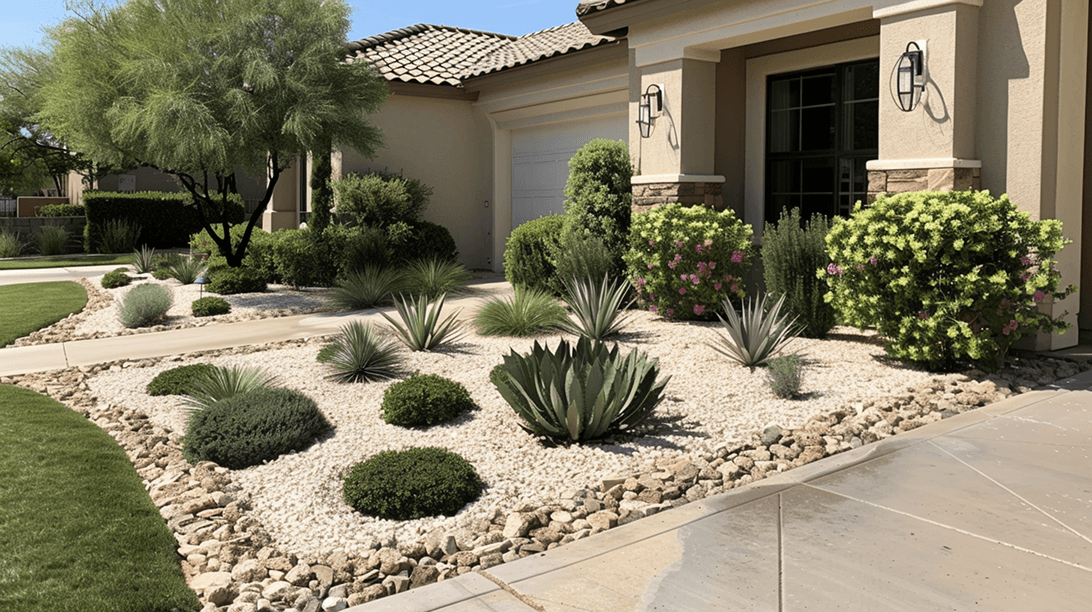
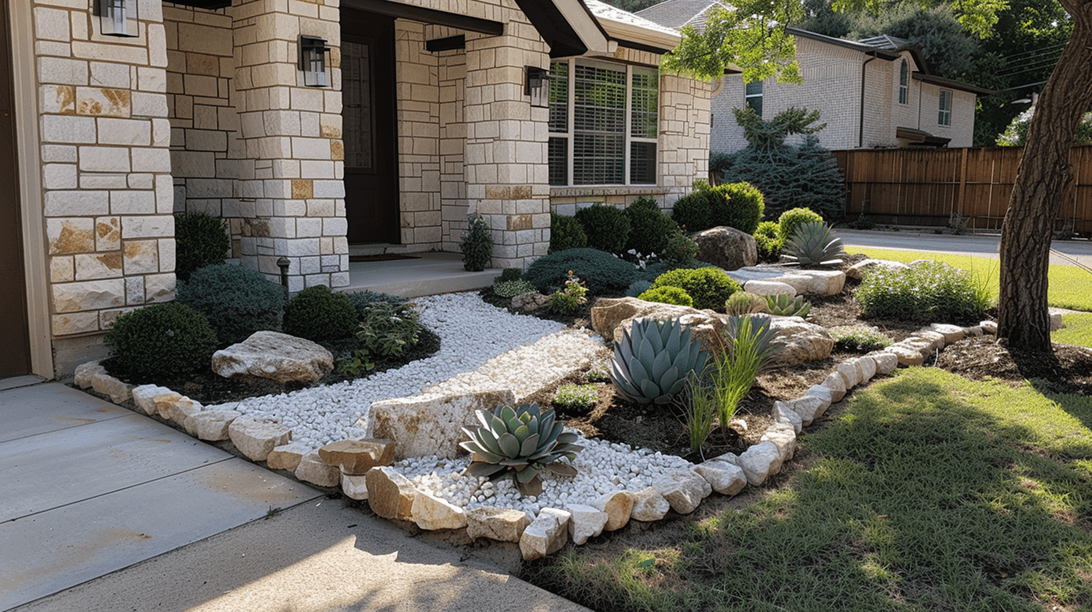
Permanent ground cover that doesn't decompose. Doesn't need annual refresh. Doesn't add organic matter to soil. Most types last 10+ years before any meaningful maintenance. Right for drip lines, drainage areas, low-maintenance beds, and areas around outbuildings.
Pros: Doesn't decompose. Low maintenance. Excellent for drainage areas. Permanent investment.
Cons: Higher upfront cost. Heats up in summer sun (not great near heat-sensitive plants). Doesn't improve soil. Can sink into soil over time without fabric. Hard to remove if you change your mind.
The combination approach. Many properties use both. Mulch in planting beds for plant health. Rock in drip lines, around outbuildings, and in low-maintenance areas. The right material for each zone.
We'll walk through your beds and recommend the right material for each area. Some clients want everything mulched. Others want everything rocked. Most properties benefit from a mix based on use.
Where Each Material Belongs
Where Each Material Works Best
Mulch belongs in:
Planting beds with shrubs and perennials. Improves soil over time, retains moisture, regulates temperature.
Tree wells. Critical for tree health, but applied as a donut around the trunk, never a volcano against it.
Foundation plantings. Warm look that complements the house and benefits the plants.
Vegetable and cutting gardens. Cool soil, holds moisture, breaks down into next year's nutrients.
Slope stabilization on planted areas. Holds soil in place during plant establishment.
Annual flower beds. Cleaner look between plantings, suppresses weeds during the season.
Rock belongs in:
Foundation drip lines. The strip of bed directly against the house. Rock prevents splash erosion from roof runoff and won't decompose in the constant moisture.
Drainage areas. Around catch basins, in dry creek beds, at downspout discharge points. Decorative and functional.
Low-maintenance accent beds. Beds away from the house where you don't want to redo mulch annually.
Around outbuildings. Sheds, detached garages, RV pads, fire pits. Areas where grass is impractical and mulch is too much work.
High-foot-traffic landscape areas. Where kids and pets compress mulch into a mess but rock stays in place.
Around mature trees where you want a permanent ground cover that won't need annual maintenance.
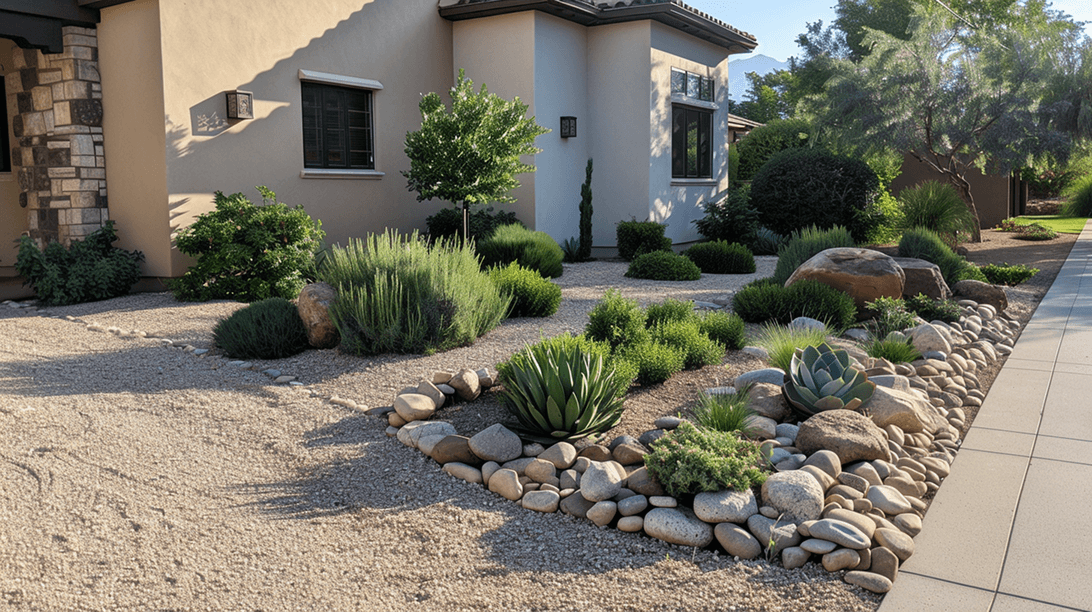
Mixed approach. Most properties end up with both. Mulch in the high-value plant zones (foundation, tree wells, perennial beds). Rock in the functional zones (drip lines, drainage features, around buildings). This is usually the most cost-effective approach for the long term.
We also do material removal and conversion. Tired of mulch? We can pull it out, install fabric, and convert to rock. Tired of rock? We can clear it and convert to mulched beds. Most clients refresh annually but evolve their landscape over time.
Our Process
How a Moku Mulch or Rock Install Runs
Step 1: Walk the property and measure. Calculate the volume of material needed (cubic yards for mulch, tons for rock) based on bed dimensions and target depth. Identify any prep work needed (weeding, edging refresh, fabric installation, removal of old material).
Step 2: Order and schedule delivery. Most material comes by bulk truck delivery to the property. We coordinate the delivery to align with the install date.
Step 3: Prep the beds. Pull weeds, refresh edges where needed, install or refresh landscape fabric for rock installations, remove or rake back any existing material that's being topped or replaced.
Step 4: Spread the material. Use mulch forks, shovels, and skid steer bucket for large areas. Apply to consistent depth (2 to 3 inches for mulch, 3 to 4 inches for rock over fabric). Keep all material several inches back from plant stems and tree trunks.
Step 5: Edge and clean up. Sharpen bed edges with a final pass, sweep adjacent hardscape, and walk the property with you. Most residential mulch and rock projects take 1 to 2 days depending on size.