When a Property Lawn Needs a Real Plan
Most commercial properties on a turf health plan share these characteristics:
An office, retail, or commercial property where the lawn is a key part of curb appeal
A multi-family or HOA property with shared lawn areas that need to look uniformly cared-for
A property where weed pressure (dandelions, crabgrass, clover, broadleaf weeds) is visible
A lawn that has thinned, yellowed, or developed bare patches over the past few years
A property with compacted, clay-heavy soil that needs aeration and amendment
A facility where the lawn's appearance affects client perception (banks, medical, professional services)
A new construction property where the lawn is establishing and needs proactive care
Turf health programs are about turning a struggling or average lawn into a consistently excellent one. The structured approach across seasons is what makes the results possible.
What's On This Page
Why a Coordinated Plan Beats One-Off Treatments
The Annual Treatment Schedule
What's Included in the Program
Our Process
FAQs
Why a Coordinated Plan Beats One-Off Treatments
Why a Coordinated Program Beats One-Off Treatments
Walk through any commercial property in Lincoln and you'll see lawns at every level of quality. The difference between an average commercial lawn and an excellent one isn't usually about money. It's about coordination.
What one-off treatments produce:
An average lawn. Reasonable color in spring. Decent shape through summer. Some weed pressure but not overwhelming. Acceptable but not impressive. The kind of lawn you stop noticing because it's neither bad enough to complain about nor good enough to compliment.
What a coordinated plan produces:
A lawn that gets noticeably better every year. Visiting tenants comment on it. Property managers point at it during showings. Adjacent properties wonder what their landscaper is doing differently. After 2 to 3 years of program execution, the lawn moves from average to one of the best on the street.
The mechanism:
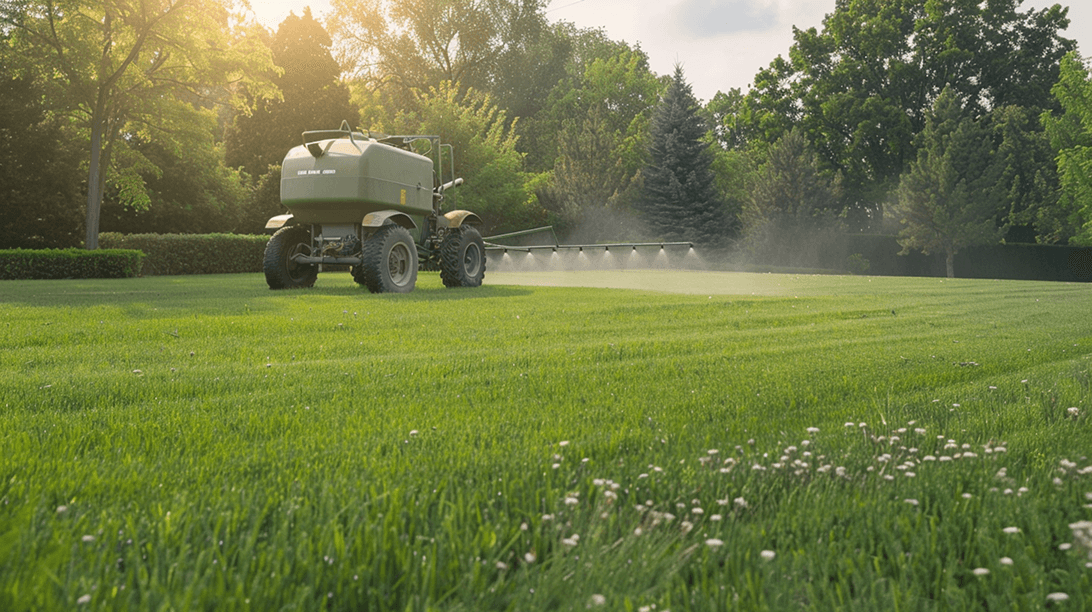
Each treatment in a coordinated plan supports the next. Spring pre-emergent prevents crabgrass before it can germinate. Late-spring weed control hits emerged weeds while they're young and vulnerable. Summer fertilization is reduced and adjusted for heat stress instead of being a one-size-fits-all application. Fall aeration relieves compaction so subsequent treatments can actually reach the root zone. Fall overseeding thickens the lawn before winter dormancy. Winterizer fertilization supports root storage for an explosive spring green-up.
Any one of those treatments done in isolation has modest effect. All of them done in coordination produces a compounding result.
The honest tradeoff:
Turf health plans cost more than scattered one-off applications because they require more visits and more disciplined service. But the cost per result is dramatically lower because the results compound over time. The property that's been on a turf health plan for 5 years has a noticeably better lawn than the property that's spent the same total money on random treatments.
For commercial properties where the lawn is part of the asset value (medical offices, retail centers, professional services, HOAs), the program approach pays back many times over. For properties where the lawn is purely functional and doesn't affect business, one-off treatments may be sufficient. We'll be straight about which makes sense for your property.
The Annual Treatment Schedule
The Annual Turf Health Schedule
Visit 1: Early Spring (Late March to Early April)
Pre-emergent crabgrass control applied before soil temperatures consistently exceed 50°F (the germination threshold for crabgrass). Early-season fertilizer to support root establishment as growth begins. Soil test if it's been more than 2 years since the last one.
Visit 2: Late Spring (Mid-May)
Broadleaf weed control targeting dandelions, clover, and other emerged weeds. Second fertilizer application to support active growth and color. Spot-treatment of any disease or insect issues observed during the visit.
Visit 3: Early Summer (Late June)
Summer fertilizer formulated for heat stress. Surface insect monitoring (chinch bugs, sod webworms). Disease assessment (brown patch, summer patch). Spot-treatments as needed. Adjustments to mowing height recommendations.
Visit 4: Late Summer (Mid-August)
Fall pre-emergent application targeting cool-season weeds (chickweed, henbit). Light fertilization to support recovery from summer stress. Drought stress assessment and watering recommendations.
Visit 5: Early Fall (Mid-September to Early October)
The most important visit of the year. Core aeration to relieve compaction and improve soil oxygen exchange. Overseeding to thicken thin areas and introduce improved grass varieties. Starter fertilizer to support new seed germination. Fall is when the biggest gains in turf quality happen.
Visit 6: Late Fall (Late October to Mid-November)
Winterizer fertilizer application. High-potassium formula that supports root development through dormancy and primes the lawn for strong spring green-up. Final weed spot-treatments. End-of-season property walk with the manager.
Between-visit work (responsive treatments, pest issues, customer service) is included in the program but not on the fixed calendar.
The schedule shifts based on weather. A cold late spring delays Visit 2. A hot dry summer changes the priorities of Visit 4. We work from soil temperature and growth stage data rather than rigid calendar dates.
What's Included in the Program
Turf Health Plan Services
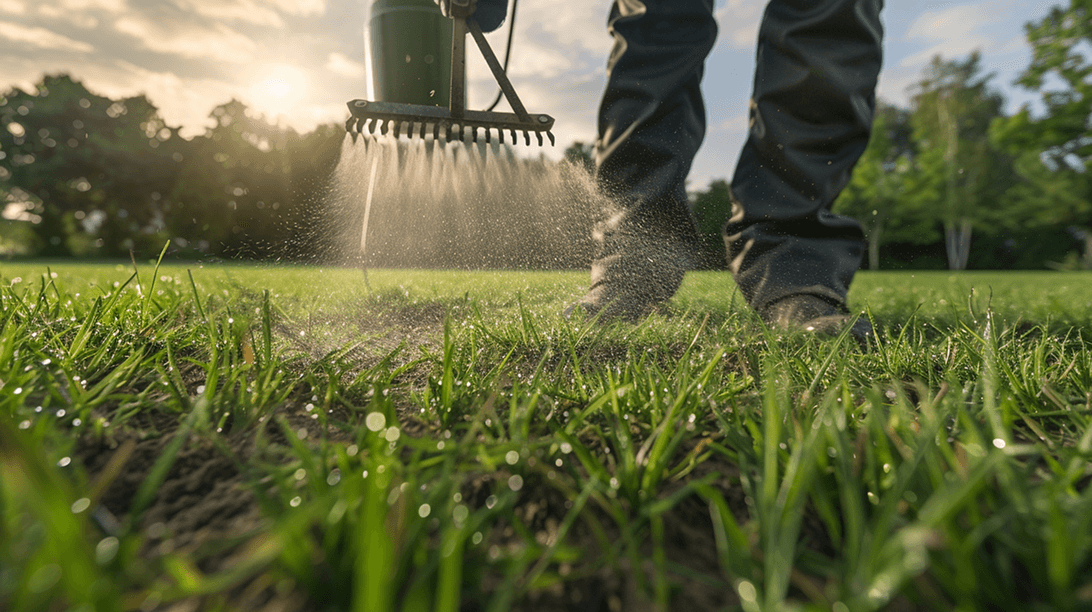
Fertilization (5 to 6 applications per year). Calibrated, season-appropriate fertilizer applications. Spring (root development), late spring (active growth), summer (heat stress recovery), fall (root storage), late fall (winterizer). Each application is rate-adjusted based on soil test data and observed turf condition.
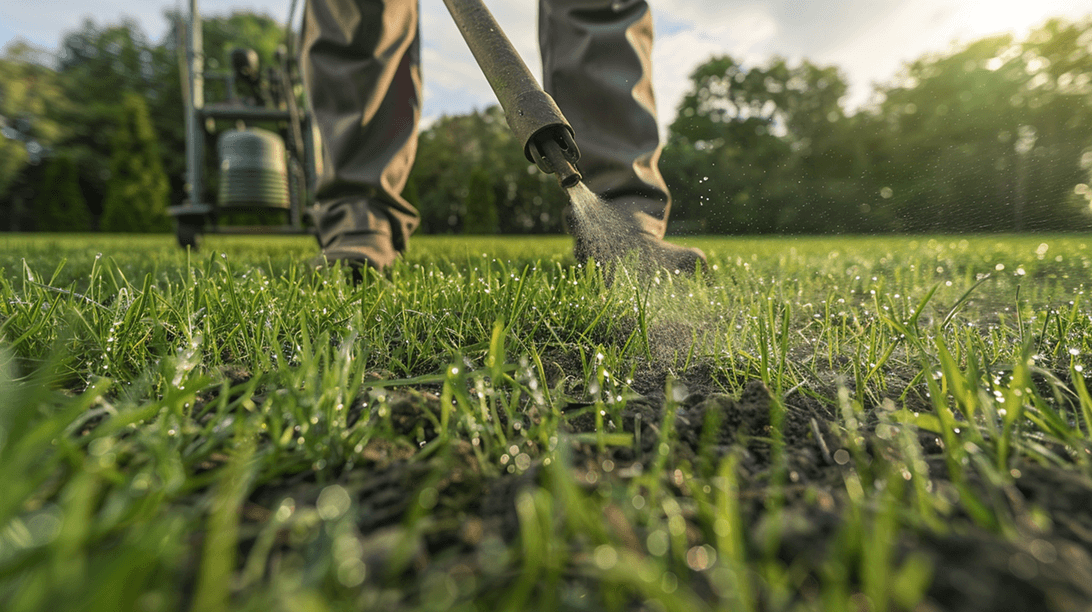
Weed Control. Pre-emergent applications for crabgrass (spring) and cool-season weeds (late summer). Selective broadleaf herbicide for dandelions, clover, and other broadleaf weeds (late spring, and spot-treatments as needed).
Core Aeration (annually, fall). Mechanical core aeration to relieve soil compaction, improve oxygen exchange, and create entry points for water and nutrients. Critical for Lincoln's heavy clay soil.
Overseeding (annually, fall). Seed dropped directly into aeration holes for guaranteed soil contact. Improves turf density and introduces newer, more disease-resistant grass varieties over time. Done immediately after aeration for best results.
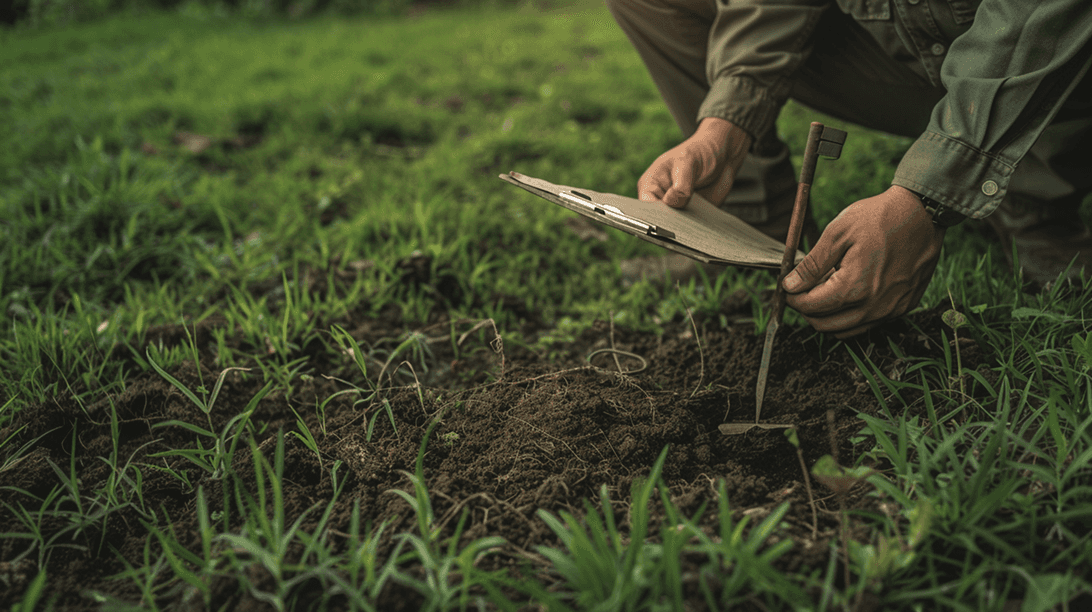
Soil Testing (every 2 years). Laboratory soil analysis showing pH, nutrient levels, and soil texture. Informs fertilizer rates and identifies any amendments needed (lime for acidic soil, sulfur for alkaline soil, calcium amendments for high-sodium soil).
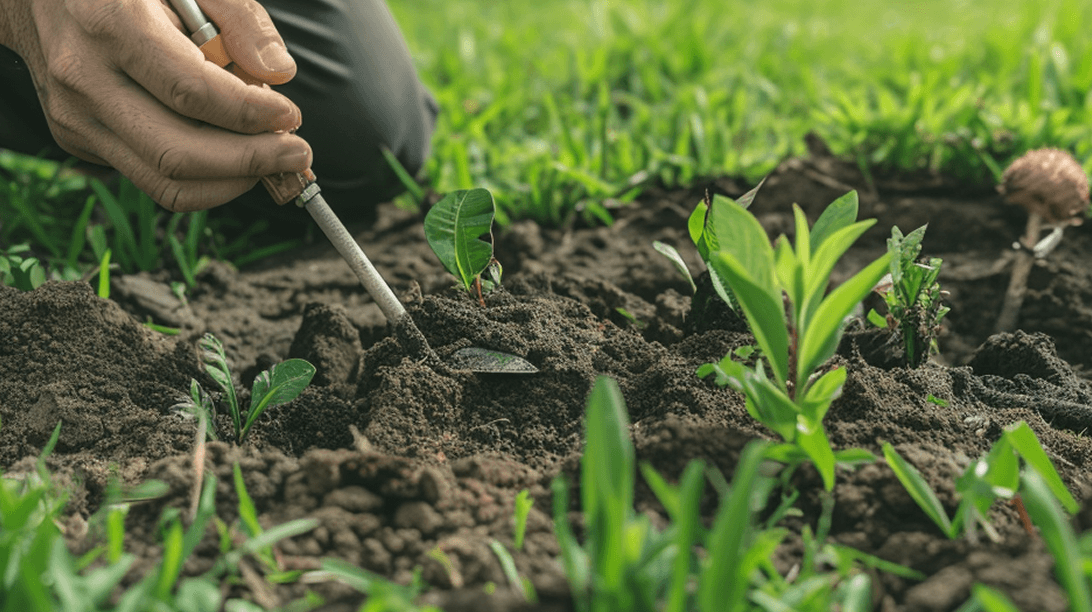
Disease and Insect Monitoring. Active monitoring during every visit. Spot-treatments for observed issues. We don't apply blanket pesticide on schedule, we treat when there's an actual problem and identify the specific cause first.
Watering Guidance and Irrigation Coordination. Recommendations on watering schedule, frequency, and depth. Coordination with property's irrigation contractor if applicable, including system audit recommendations.
End-of-Season Report. Annual report showing program execution, observed conditions across the year, and recommendations for the following year. Includes year-over-year comparison if the program has been running for multiple years.
Add-ons (priced separately): Lawn renovation (full lawn replacement for severely failed lawns), specialty fungicide applications for chronic disease, organic-only program variants, irrigation audits, drainage corrections that affect turf health.
Our Process
How a Moku Turf Health Plan Runs
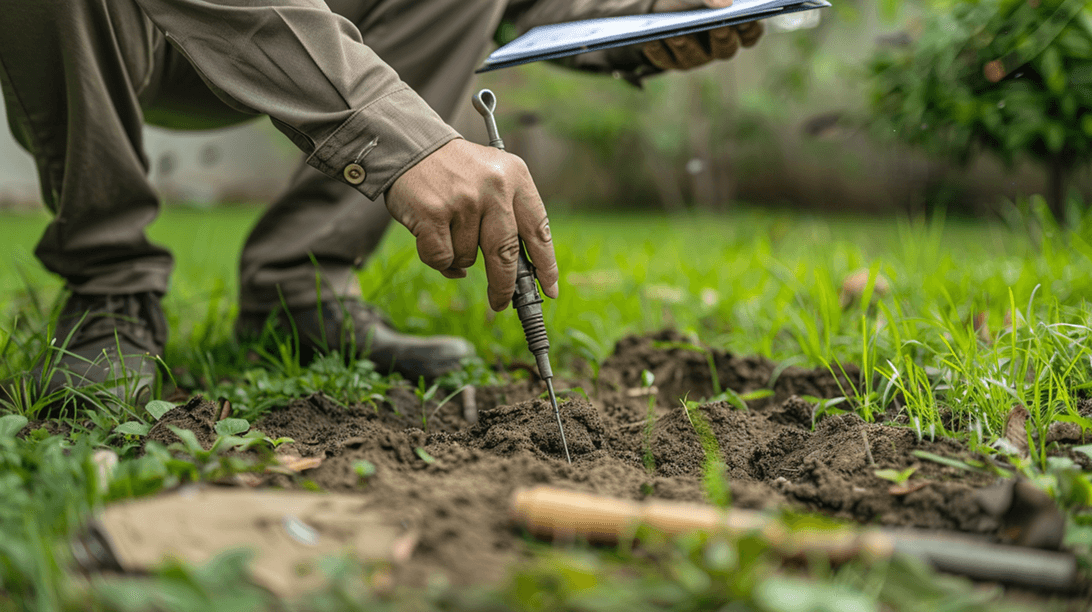
Step 1: Property assessment and baseline. Walk the property, identify current turf condition, note any visible issues (weeds, thinning, disease patterns, compaction), and pull a soil sample for laboratory analysis. Document baseline with photos.
Step 2: Program design and quote. Design the year-long program based on observed conditions and soil test results. Quote includes all 6 visits, products, equipment, and reporting. Most properties sign annual contracts that auto-renew with adjustments based on results.
Step 3: Execute visits on schedule. Each visit has a planned scope based on the time of year and the property's needs. Schedule shifts based on weather (soil temperature, rainfall, growth stage). Communication sent before each visit with timing window.
Step 4: Document and adjust. Every visit produces a service record (work performed, products used, conditions observed, recommendations). Adjustments to the program happen between visits based on what the lawn is doing.
Step 5: Annual review and program continuation. End-of-season report comparing baseline to current condition, identifying gains made, and recommending program adjustments for the next year. Most clients see year-over-year improvement that justifies continuing the program.