When Commercial Grounds Maintenance Pays Off
An office building, medical building, or commercial property where curb appeal directly affects clients and tenants
A retail center, restaurant, or business location where exterior appearance is part of the brand
An HOA, condominium, or multi-family property with shared landscape areas
A bank, dental office, law firm, or professional service property where the grounds set first impressions
An industrial or warehouse property where landscape requirements are basic but consistent
A property management firm coordinating multiple sites needing standardized care
A senior living, daycare, or community facility where safety and accessibility matter as much as appearance
Commercial grounds maintenance is fundamentally about consistency: showing up on schedule, doing the work well, and keeping the property at a presentable state every business day.
What's On This Page
Why Commercial Grounds Care Is About Consistency
Commercial Grounds Work Lives on Consistency
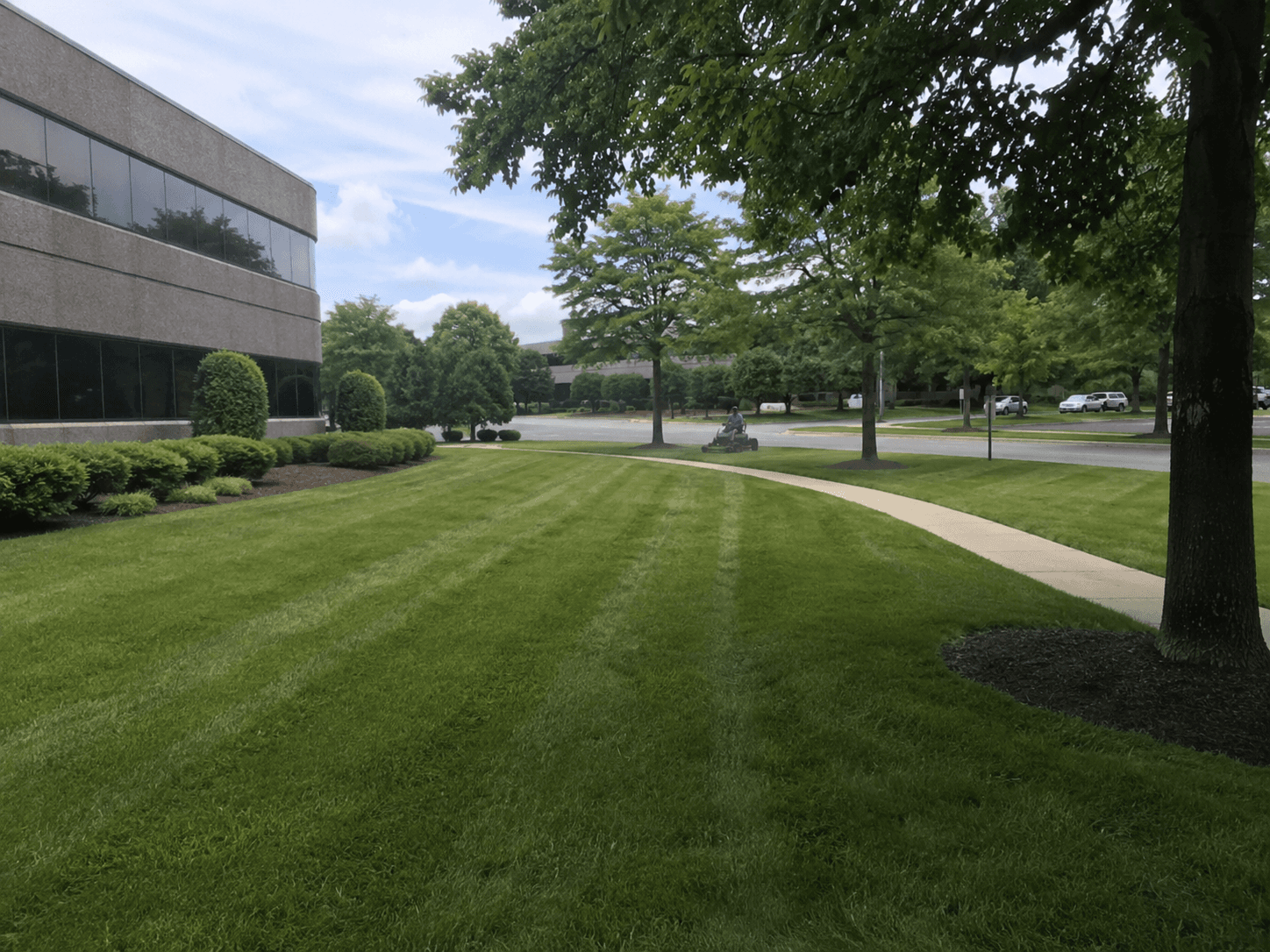
The single most important thing in commercial grounds maintenance is consistency. A property that's mowed perfectly one week and skipped the next looks neglected. A property that's mowed on a predictable schedule every week looks deliberately cared for, even if the actual work is identical week to week.
What consistency actually means in this work:
Predictable service days. A commercial property knows which day each week the crew is on-site. That predictability lets the property plan around it.
Standardized service levels. The crew that visits in May does the same work to the same standard as the crew that visits in October. No skipped weeks.
Documented service history. Every visit is logged. Property managers can pull a service history at any time. Critical for insurance reviews and any disputes about what was or wasn't done.
Clear communication. When something changes (a new pest issue, damage observed, plants needing replacement, irrigation problems), the property manager hears about it immediately.
Adaptation without disruption. Properties change. New tenants, new traffic patterns, new use cases. Good commercial grounds service adapts to these changes without losing the underlying consistency.
Why we don't try to be the cheapest option:
The lowest-cost commercial grounds providers maintain their margins by skipping visits during off-weeks, using minimum equipment, and rotating crews without continuity. The result on the property is exactly what you'd expect: inconsistent appearance, missed details, and surprise quality changes through the season.
We price our commercial work to support consistent, high-quality service across the entire contract period. That means slightly higher base rates than the cheapest options, but dramatically higher value over time.
The Service Schedule Through the Year
The Commercial Service Year
March: Spring Awakening. Walk the property and identify damage from winter. Make a punch list of repairs and improvements. Pre-treat turf if needed.
April: Spring Cleanup. Full cleanup across the property. Remove leaves and debris from beds and lawn. Edge cuts on every bed line. Prune any winter-damaged shrubs. First mow of the season.
May: Active Season Begins. Weekly mowing starts. Mulch refresh on all beds. Bed cleanout and weeding. Irrigation system startup. The property is now in active season presentation mode.
June through August: Peak Maintenance. Weekly mowing. Bed maintenance every 2 weeks. Spot weeding. Mid-summer pruning on flowering shrubs. Seasonal annual flower refresh in high-visibility beds.
September: Late Season Maintenance. Mowing continues weekly through most of the month, dropping to biweekly toward the end. Last pruning pass on summer-blooming shrubs.
October: Fall Cleanup. Leaf removal becomes the main focus. Bed cleanout and prep for winter. Final lawn services. Irrigation system shutdown.
November: Winter Prep and Snow Service Transition. Final cleanup pass. Snow stakes installed. Snow service contracts begin.
December through February: Winter Service and Off-Season. Snow service is the active service during these months. Pre-planning for the next year happens during this period.
What's Included in Grounds Maintenance
Commercial Grounds Service Coverage
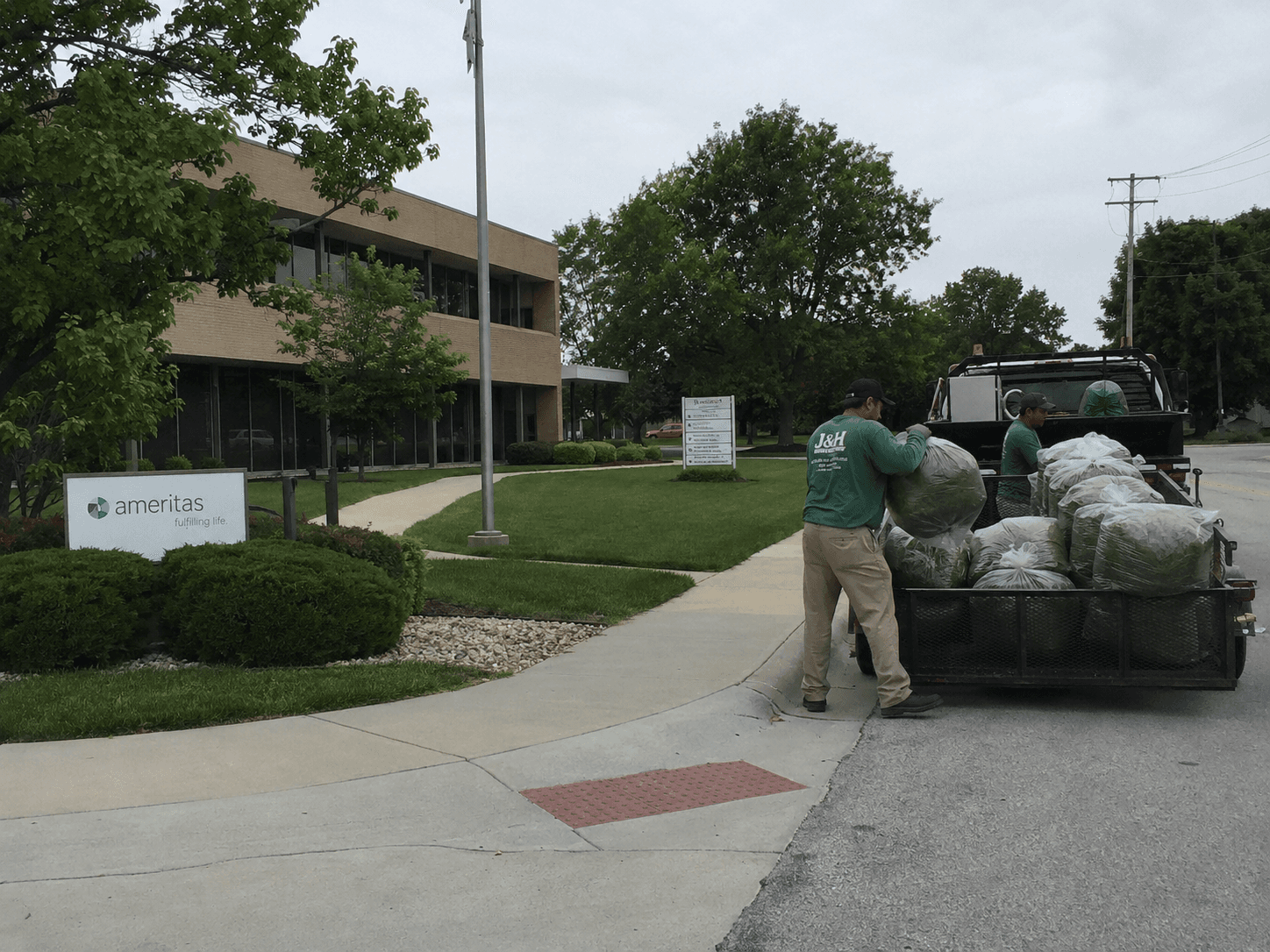
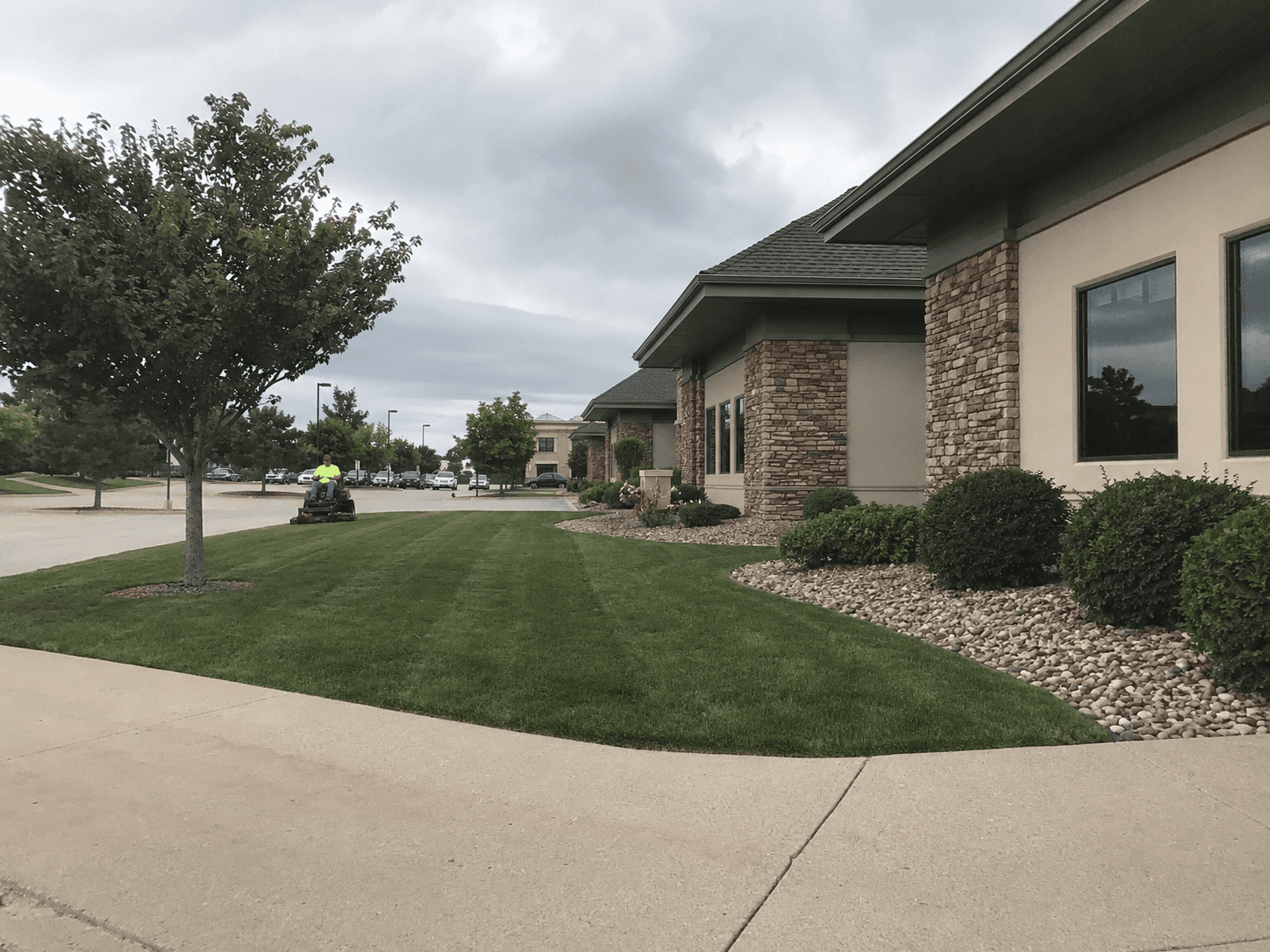
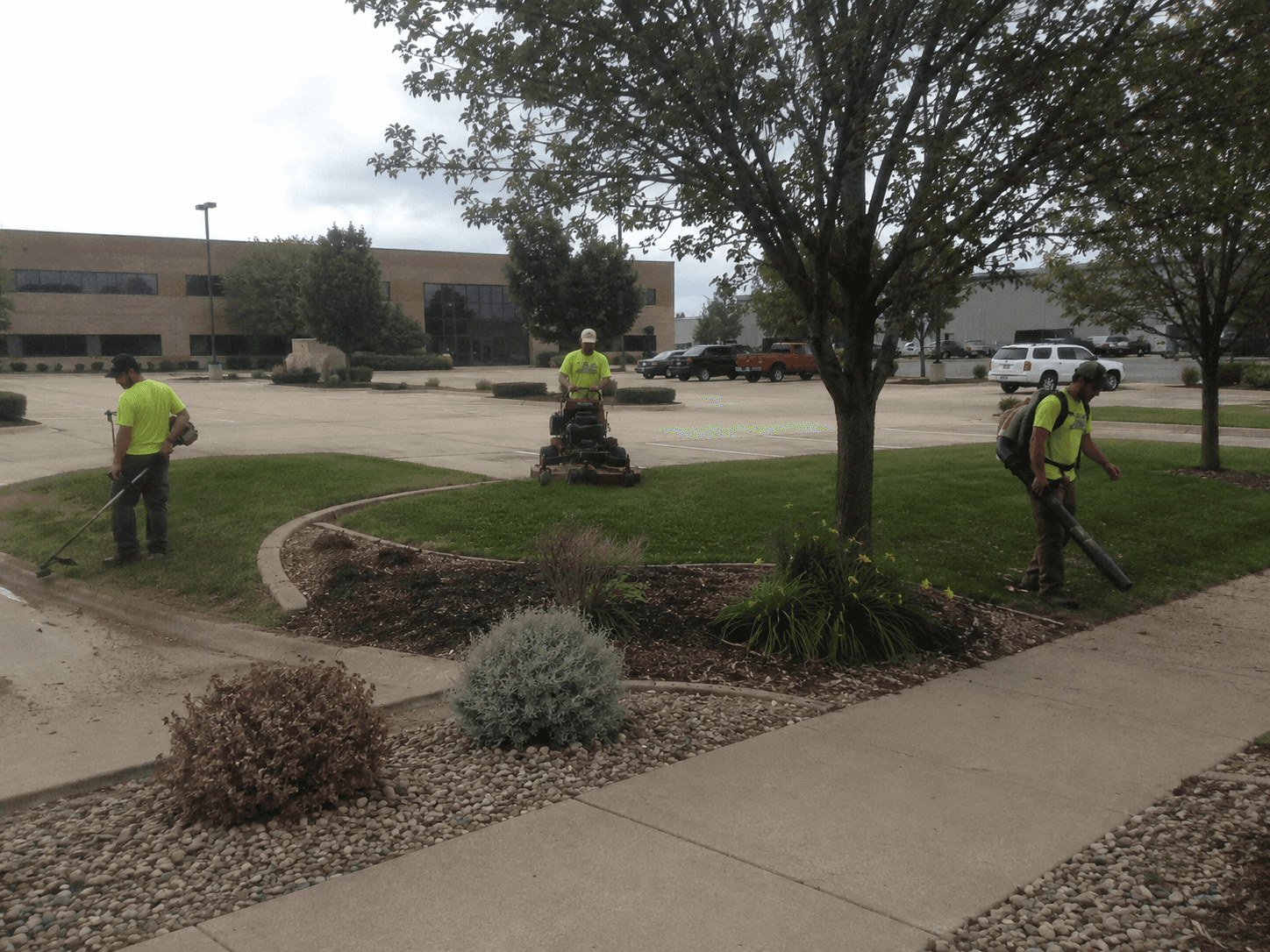
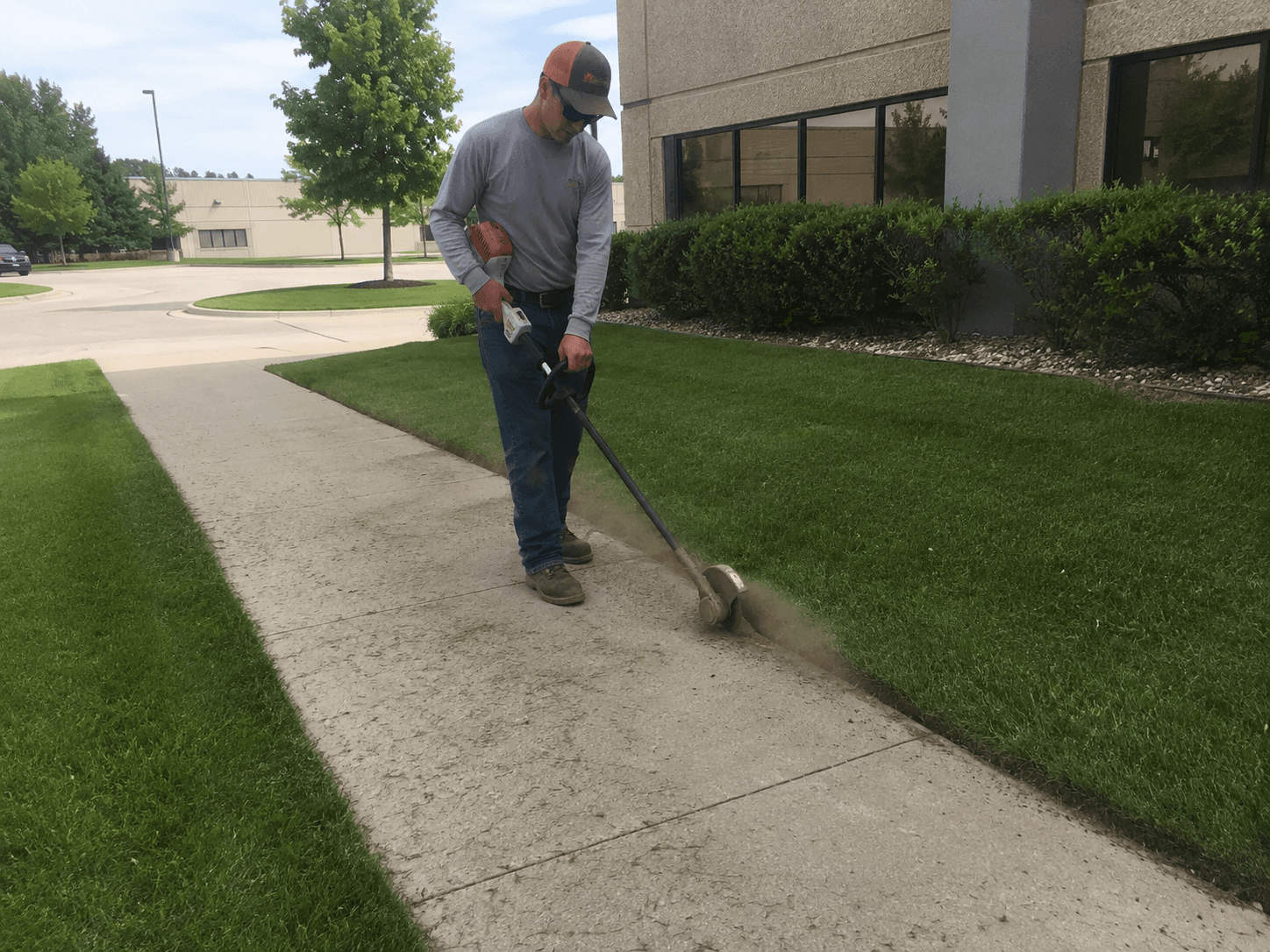
Mowing and turf maintenance. Weekly mowing during growing season. Trimming, edging, and blowing as part of every visit. Bagged or mulched clippings depending on property preference.
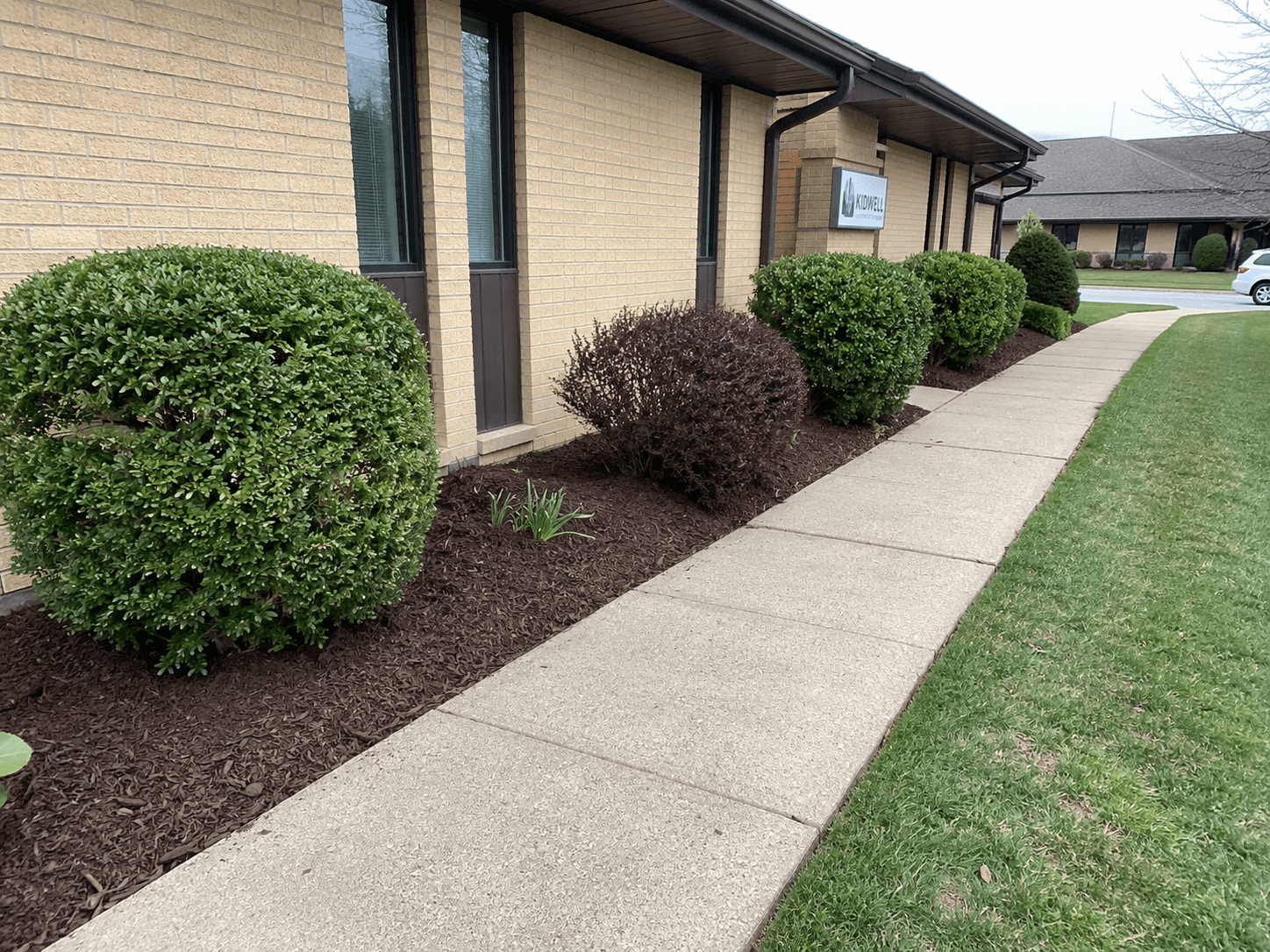
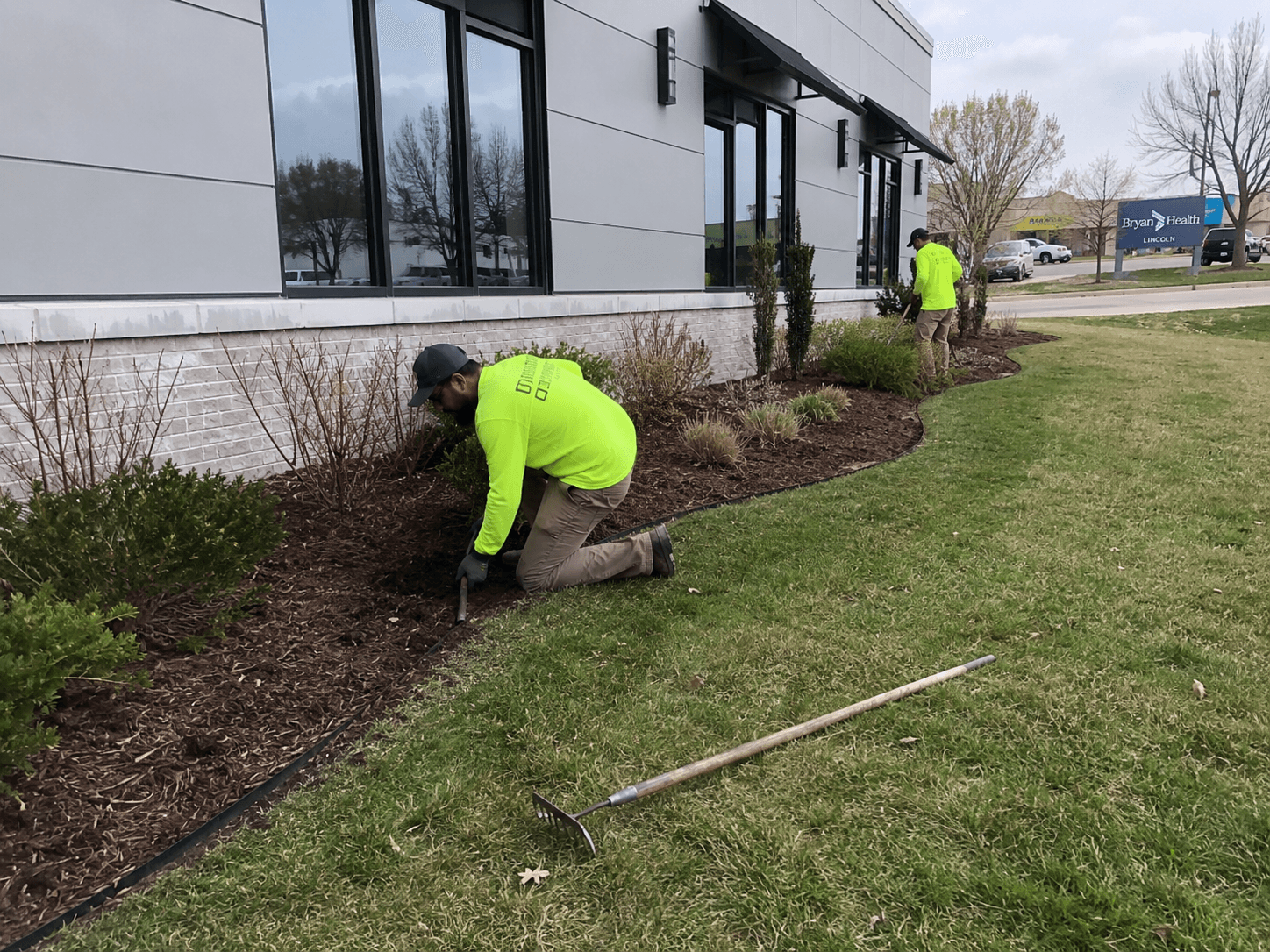
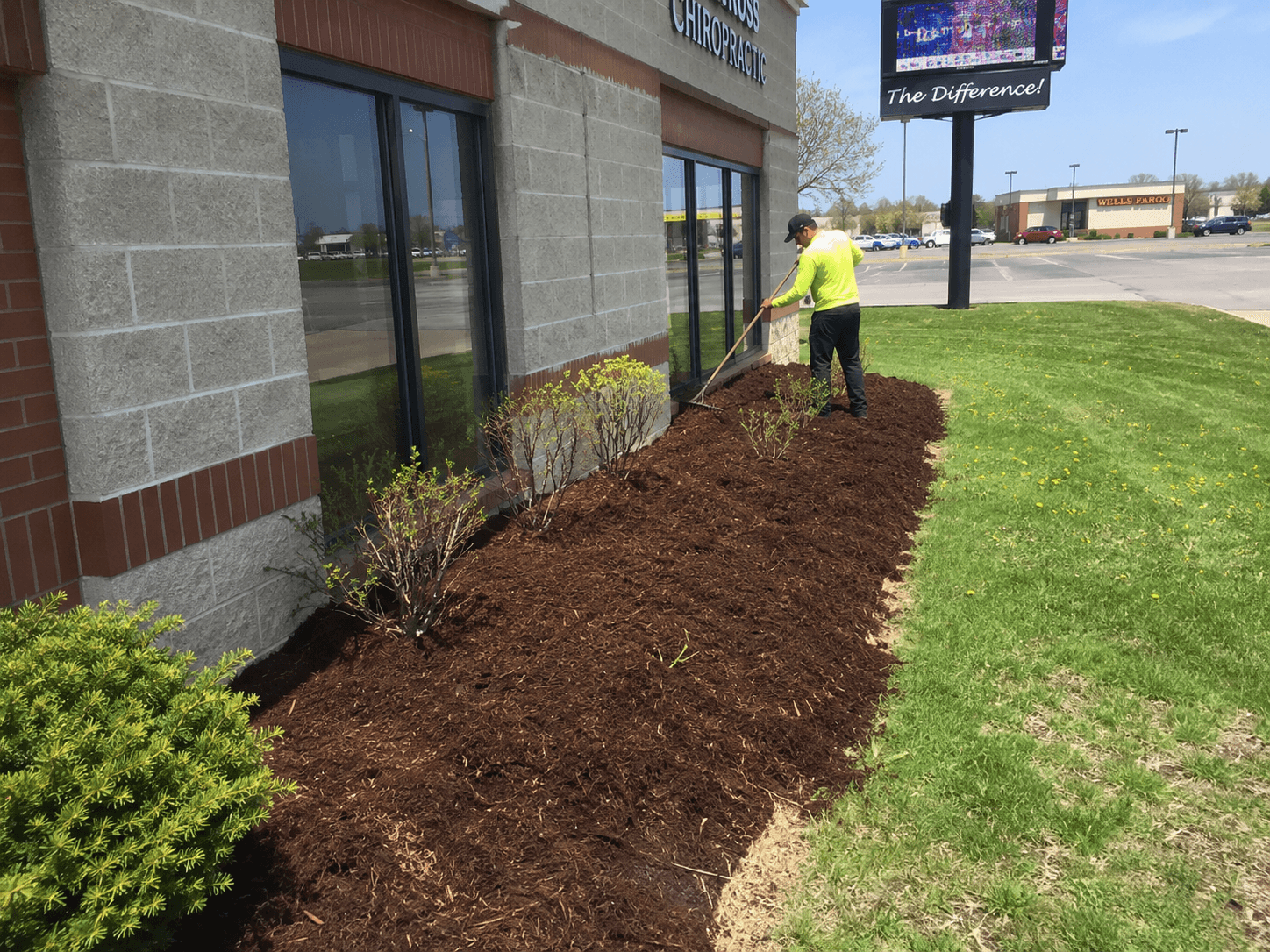
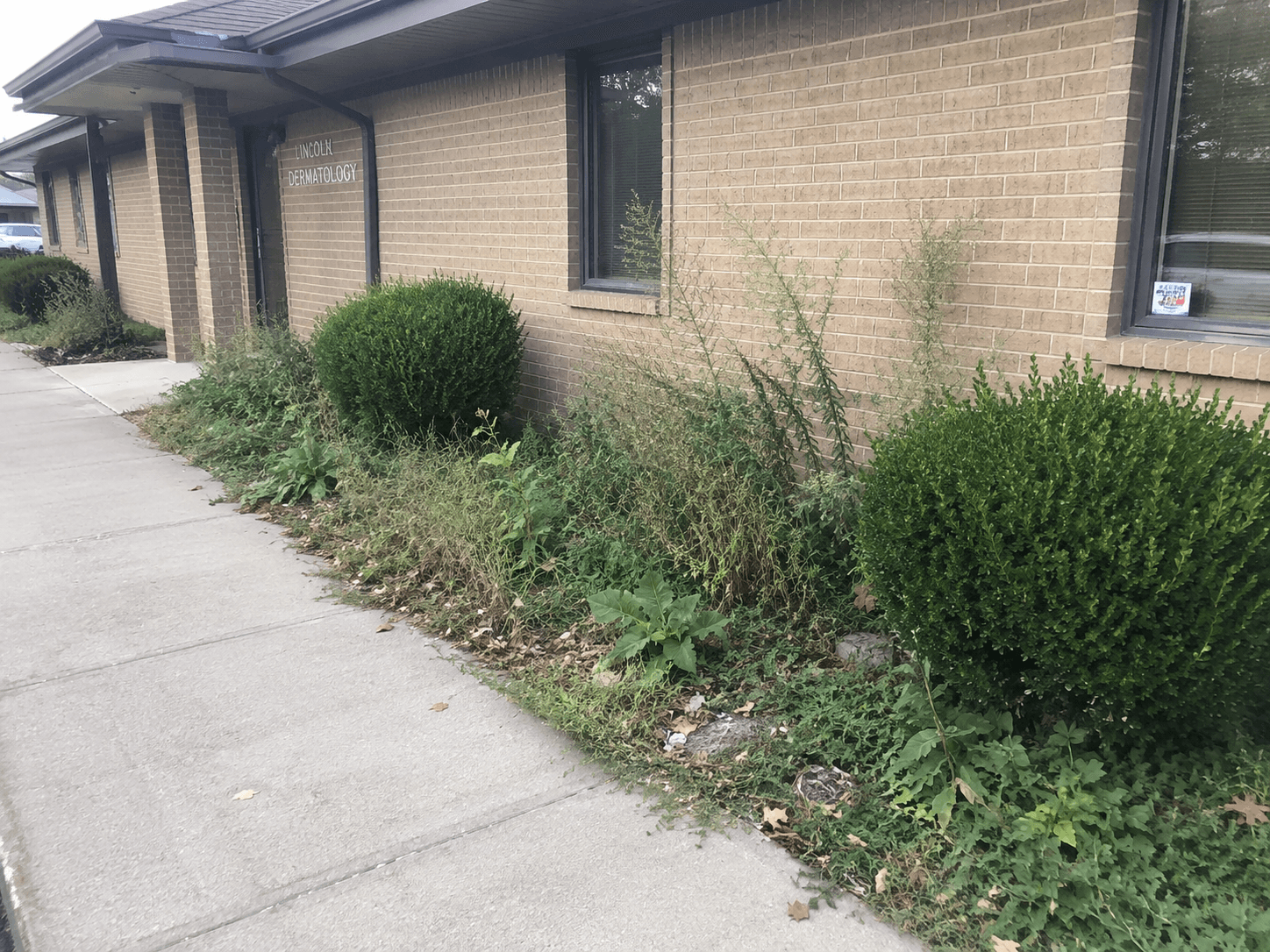
Bed maintenance. Edging, weeding, and bed line maintenance on a 2 to 4 week cycle. Mulch refresh annually (typically spring).
Pruning and trimming. Shrubs, hedges, ornamental grasses, and perennials pruned on species-appropriate timing.
Spring and fall cleanups. Comprehensive seasonal cleanups that reset the property for the active season (spring) and prep it for winter (fall).
Irrigation startup and shutdown. For properties with irrigation systems.
Annual flower planting and refresh. Seasonal annual installations in containers, beds, and entrance areas.
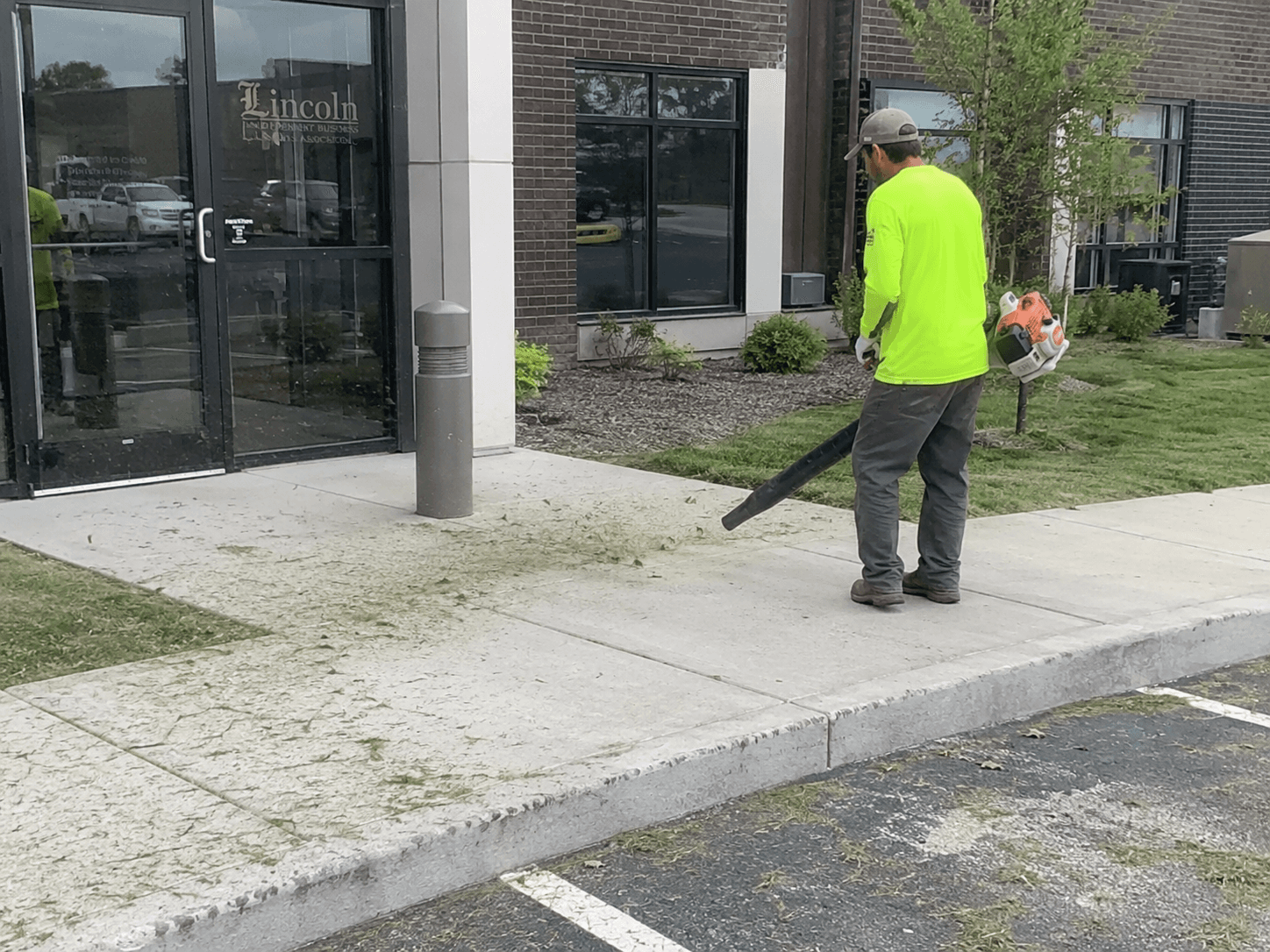
Property appearance management. Pickup of trash and debris during visits. Sweeping of hardscape. Cleaning of entries and high-traffic walkways.
Specialty add-ons (priced separately): Tree work coordination, specialty hardscape repairs, drainage adjustments, pest and disease coordination with chemical applicators.
We can structure commercial contracts in several ways: full-service single-vendor (we handle everything), specific-scope (mowing only, or beds only), or shared with other contractors.
Our Process
How a Moku Commercial Grounds Contract Runs
Step 1: Property assessment and scope. Walk the property with the manager or owner. Identify scope, equipment access, parking arrangements, and any tenant operations to coordinate with.
Step 2: Quote and contract. Detailed scope document showing what's included, what isn't, service frequency, and seasonal milestones. Typically a monthly rate that smooths cost across the year.
Step 3: Crew assignment. Same crew works the property throughout the season.
Step 4: Service execution. Regular visits on the contracted schedule. Each visit is documented. Anything observed gets reported to the property manager immediately.
Step 5: Monthly reporting and seasonal reviews. Monthly summary of services delivered. Quarterly review with the property manager. End-of-year review identifies improvements for next year.