When a Skid Steer Is the Right Tool
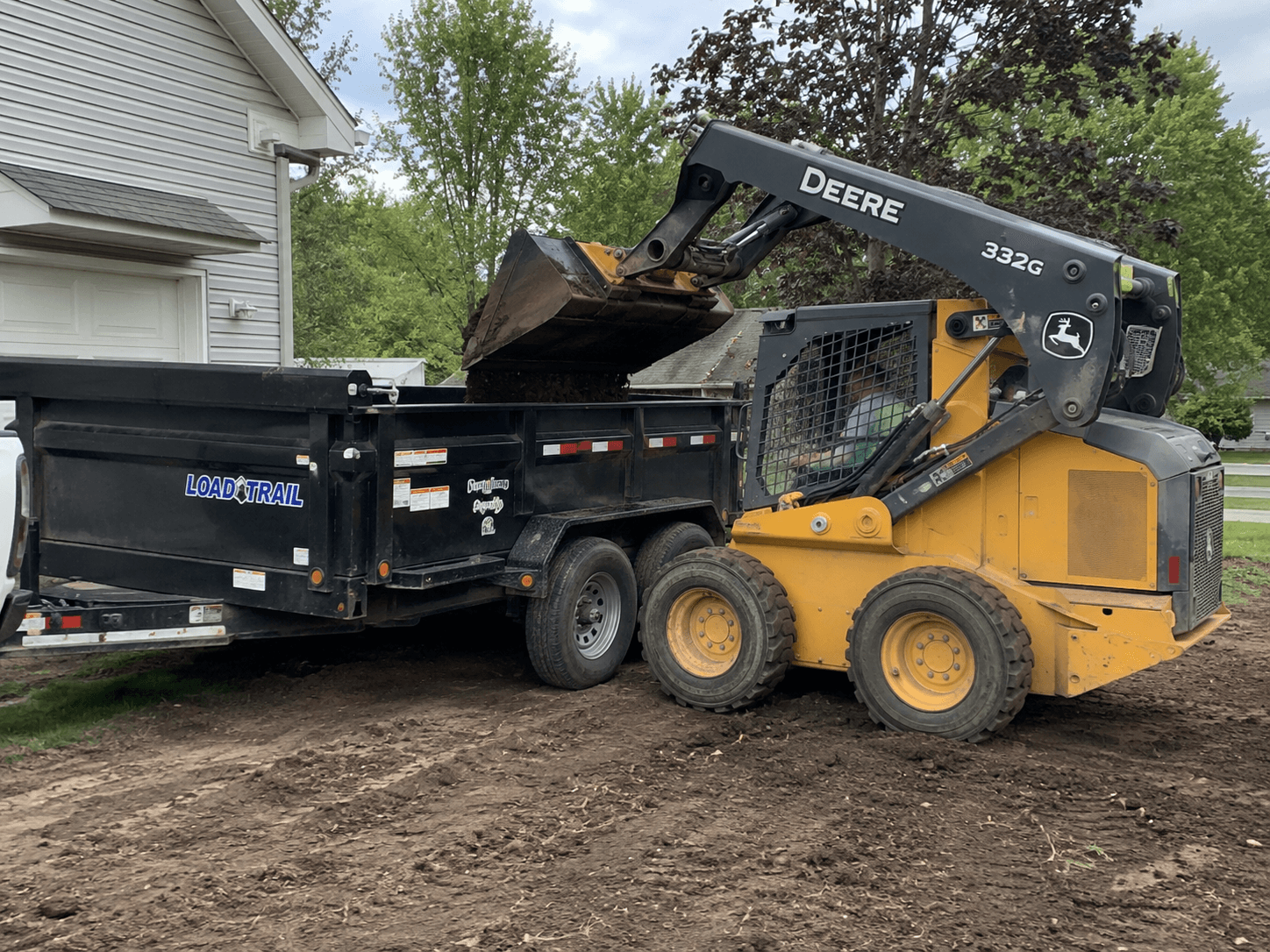
Moving large amounts of soil, mulch, gravel, or rock around a property
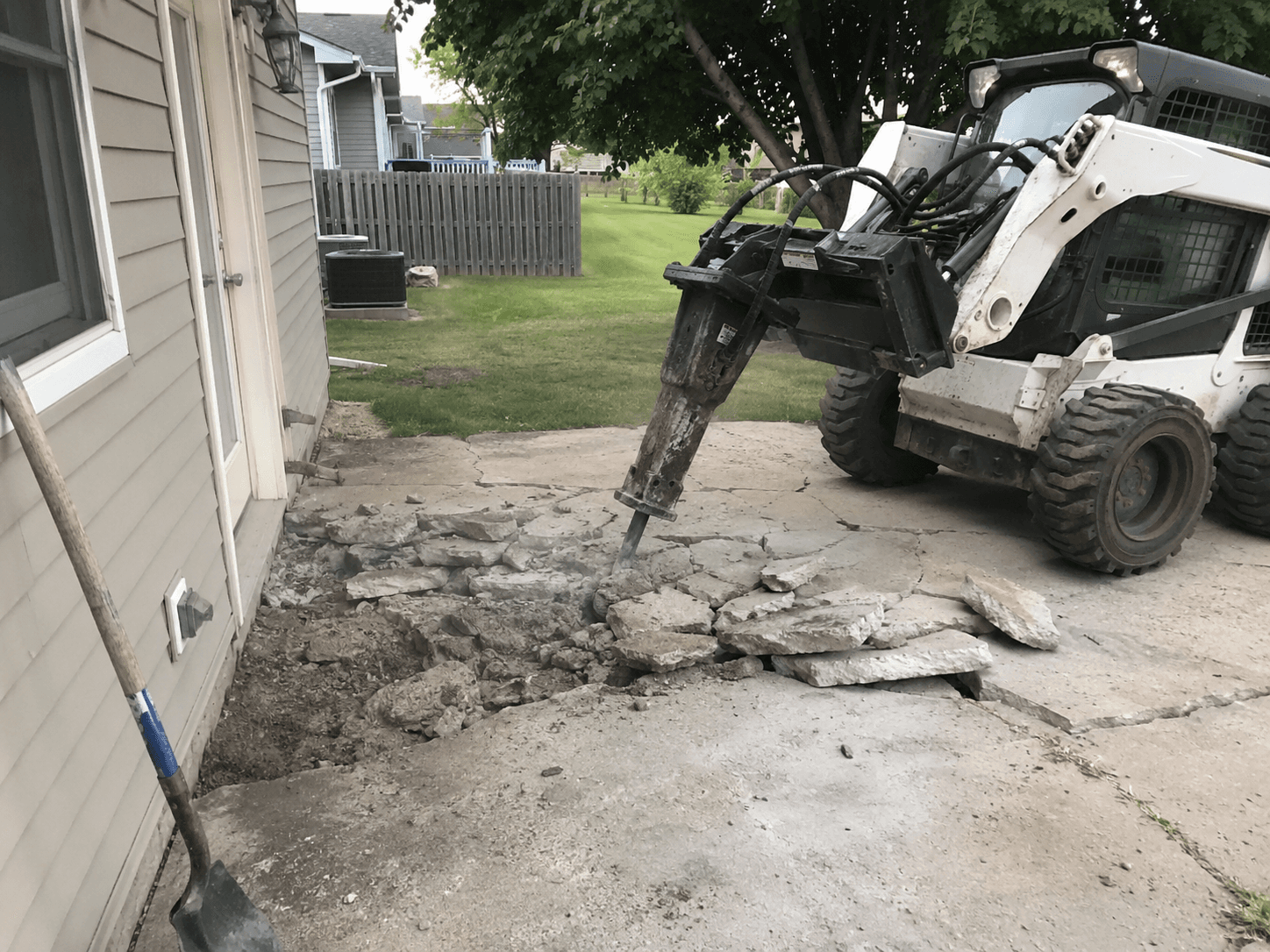
Demolishing a concrete patio, old retaining wall, fence line, or shed
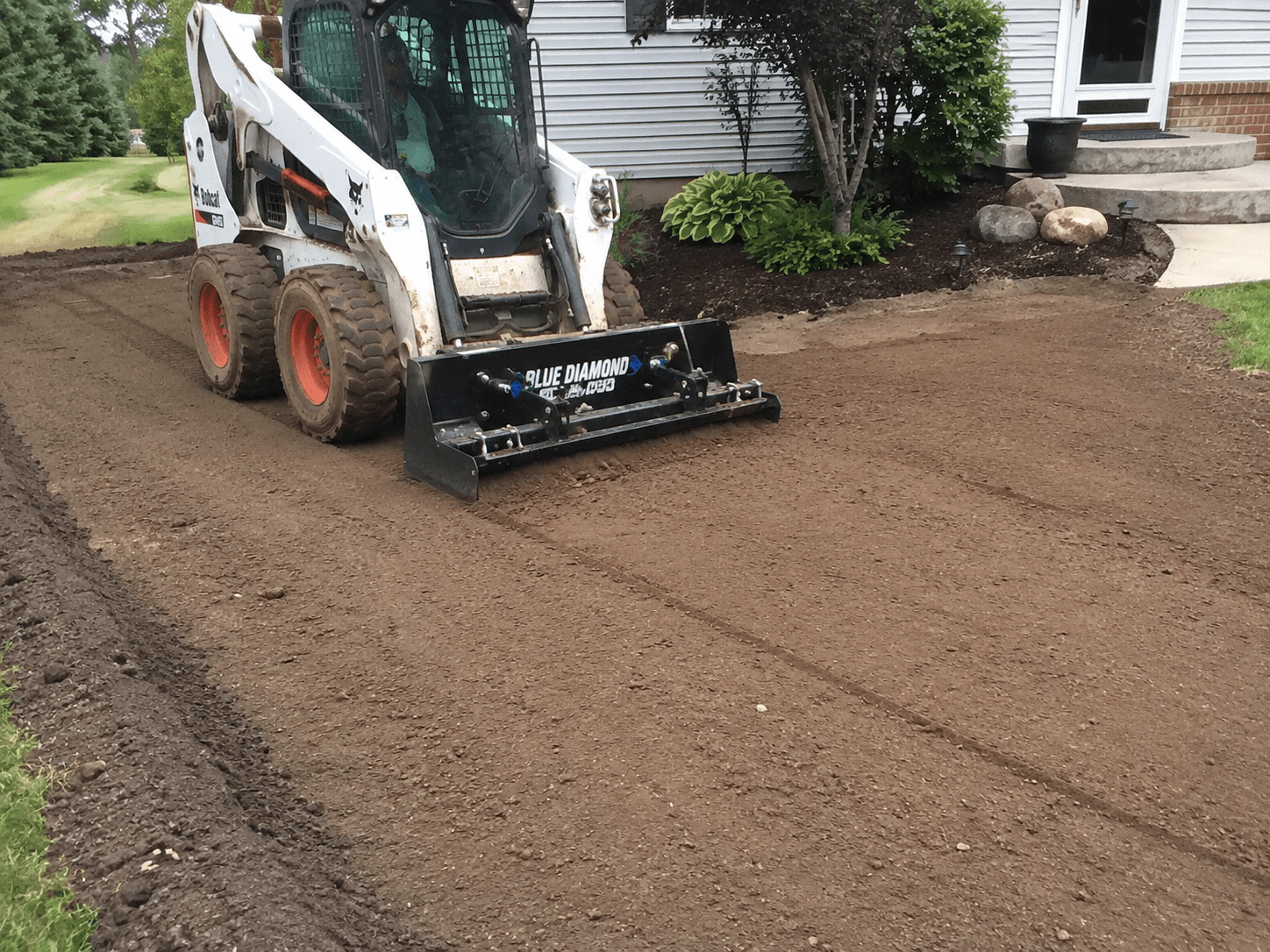
Grading and leveling a yard before sod, seed, or landscape installation
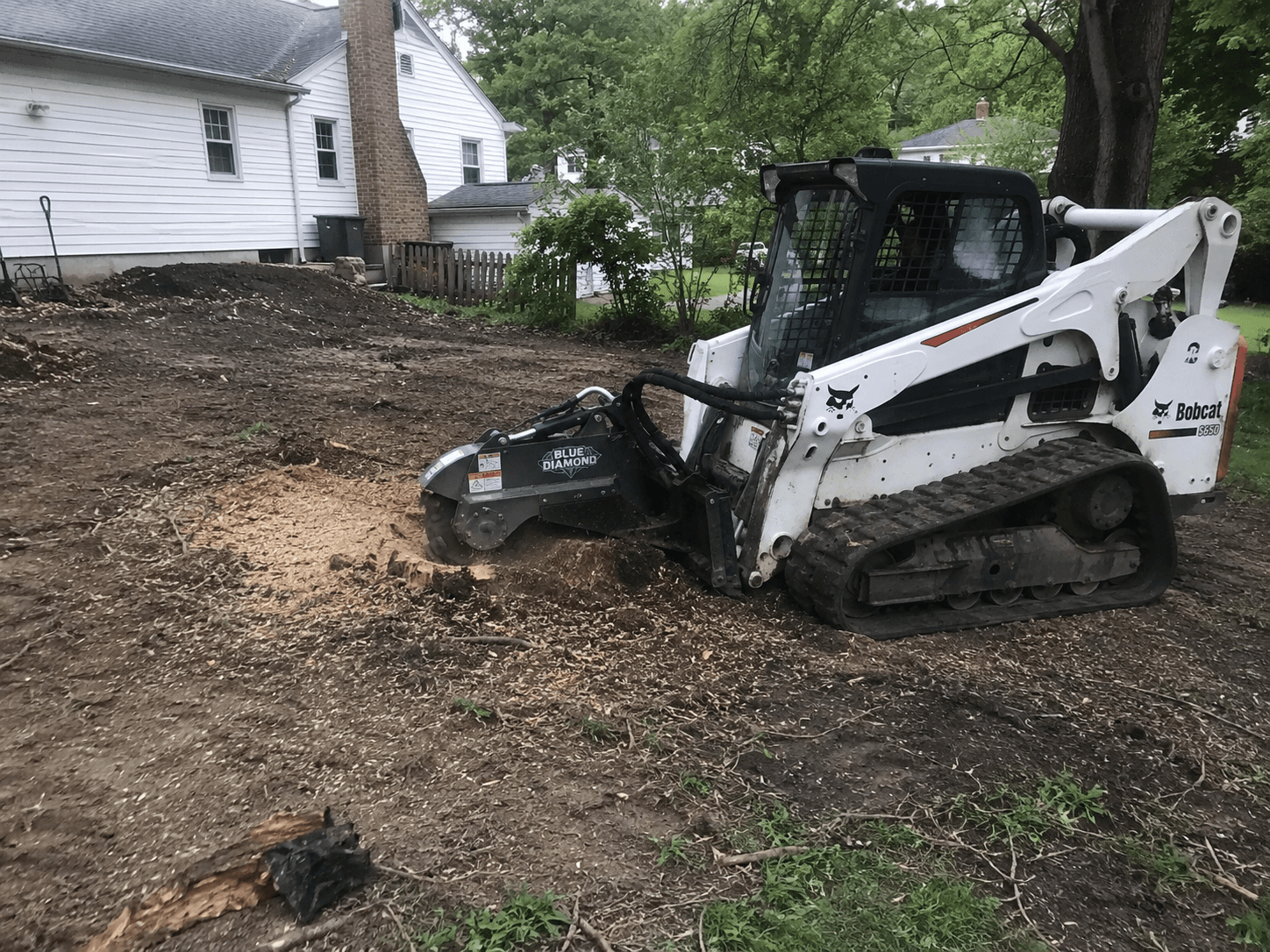
Stump and root ball removal that's too heavy to dig by hand
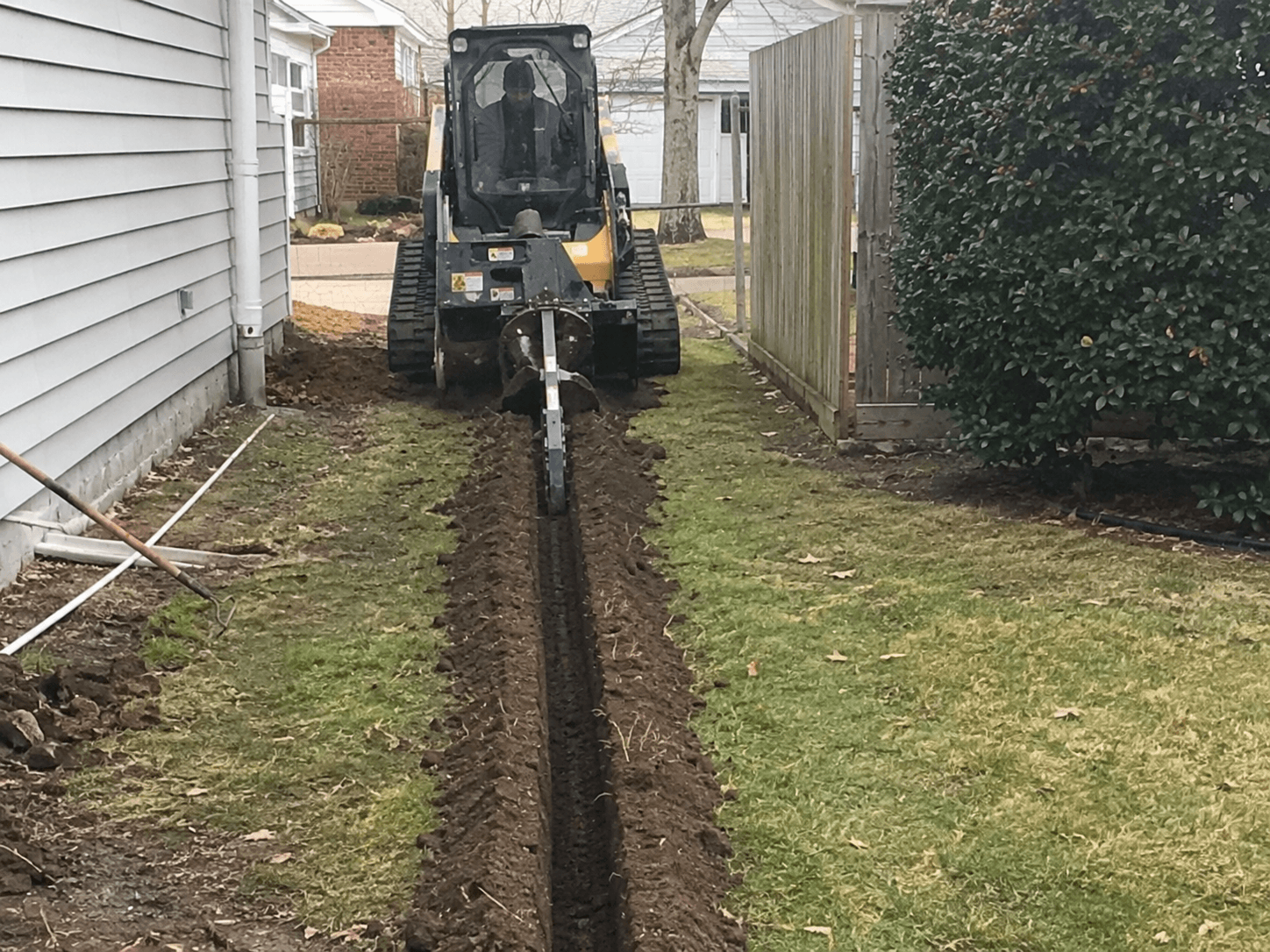
Trenching for drainage, irrigation, or utility lines
Clearing overgrown areas, brush, or invasive vegetation
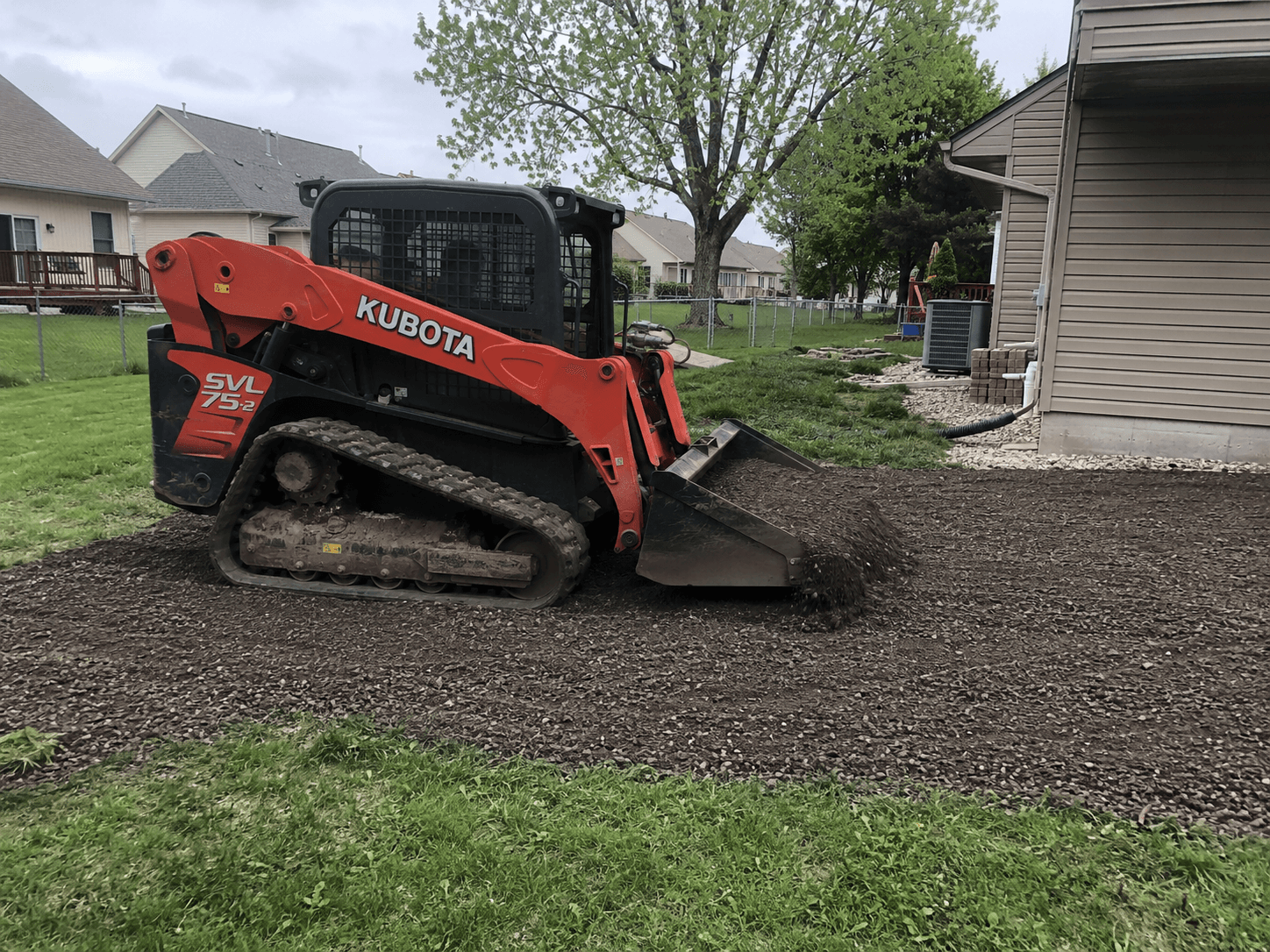
Spreading and leveling material across a large area
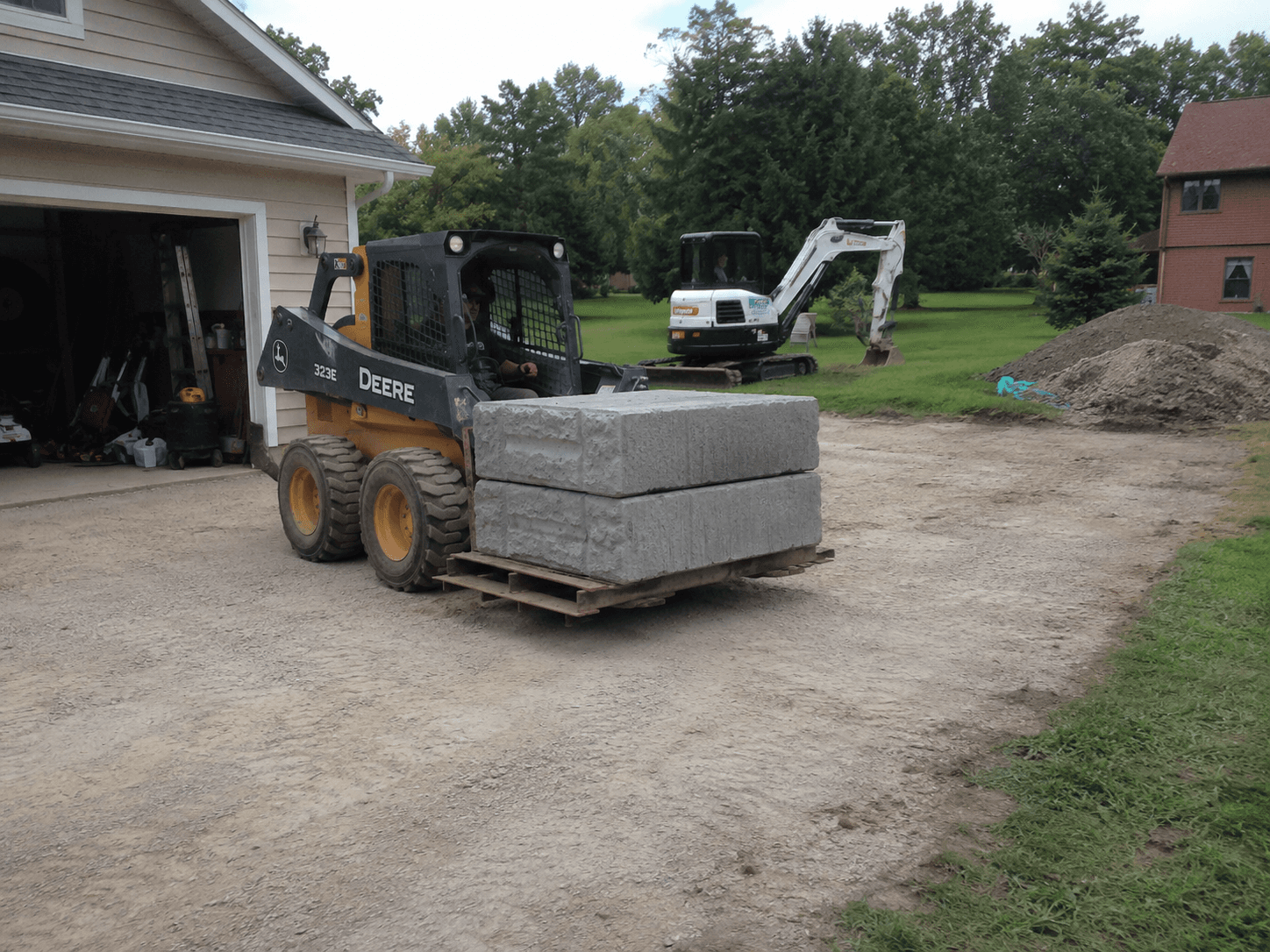
Moving stone, boulders, or precast concrete pieces that can't be lifted by hand
If the answer to "how do we move this much material" is shovels and wheelbarrows, a skid steer turns hours of labor into minutes of equipment time.
What's On This Page
How Skid Steer Work Speeds Up a Project
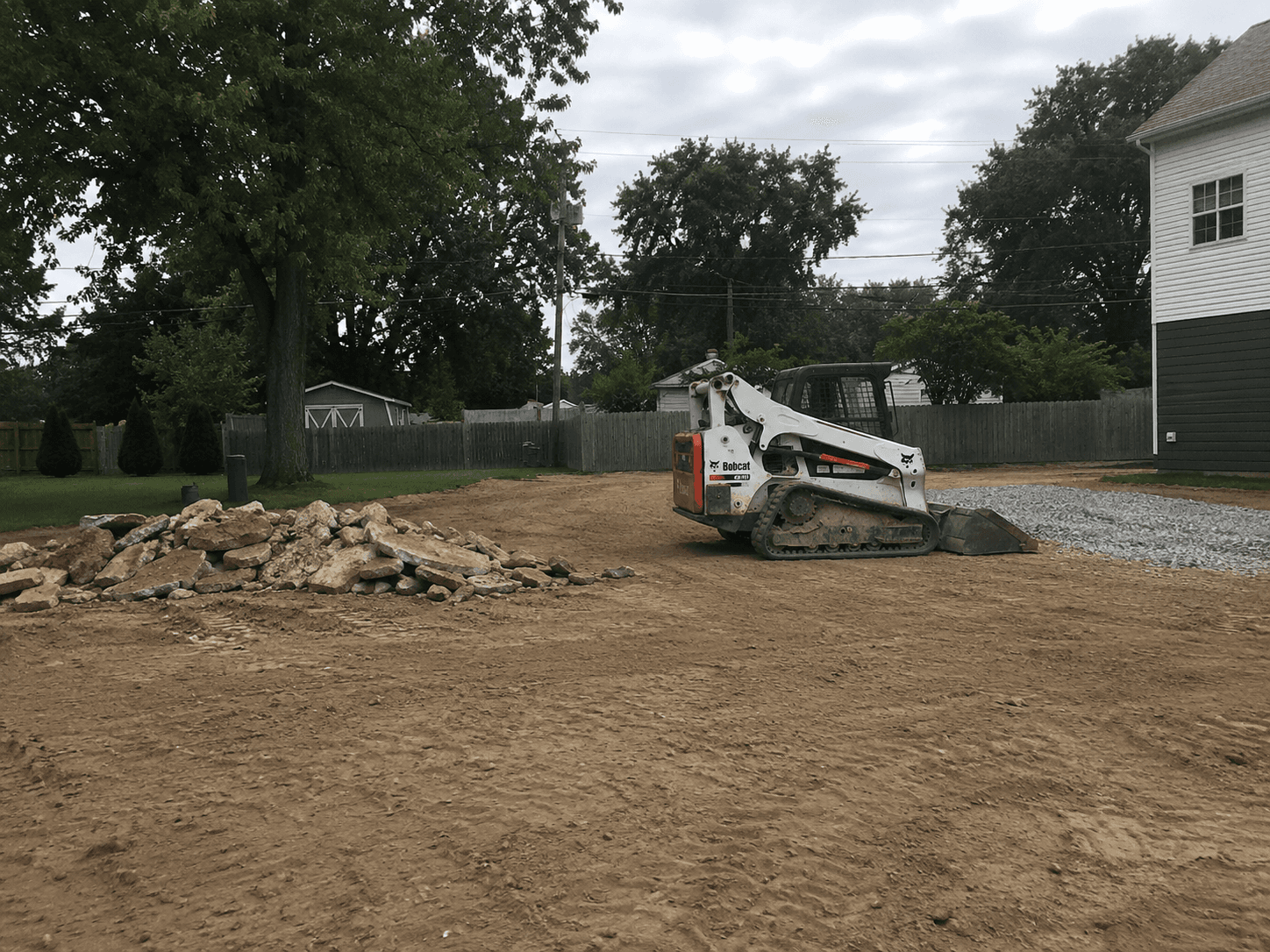
Why a Skid Steer Changes the Math on a Project
A skid steer with a competent operator does the work of six people with shovels and wheelbarrows. That's not an exaggeration, it's the actual production rate difference. A job that would take a small crew two full days of physical labor often gets done in three or four hours of equipment time.
That speed unlocks projects that wouldn't be feasible otherwise. A homeowner with a wet yard who wants drainage installed, regrading done, and new sod laid is looking at a multi-week project if it's all done by hand. With a skid steer, the same scope of work happens in a couple of days.
The other thing skid steers unlock is precision. A bucket on a machine moves material exactly where you want it. A trencher cuts a clean, consistent depth line for drainage pipe. A grading box finishes a surface to a precise grade. Skilled hand work can match this, but it takes much longer, and the consistency is harder to maintain across a large area.
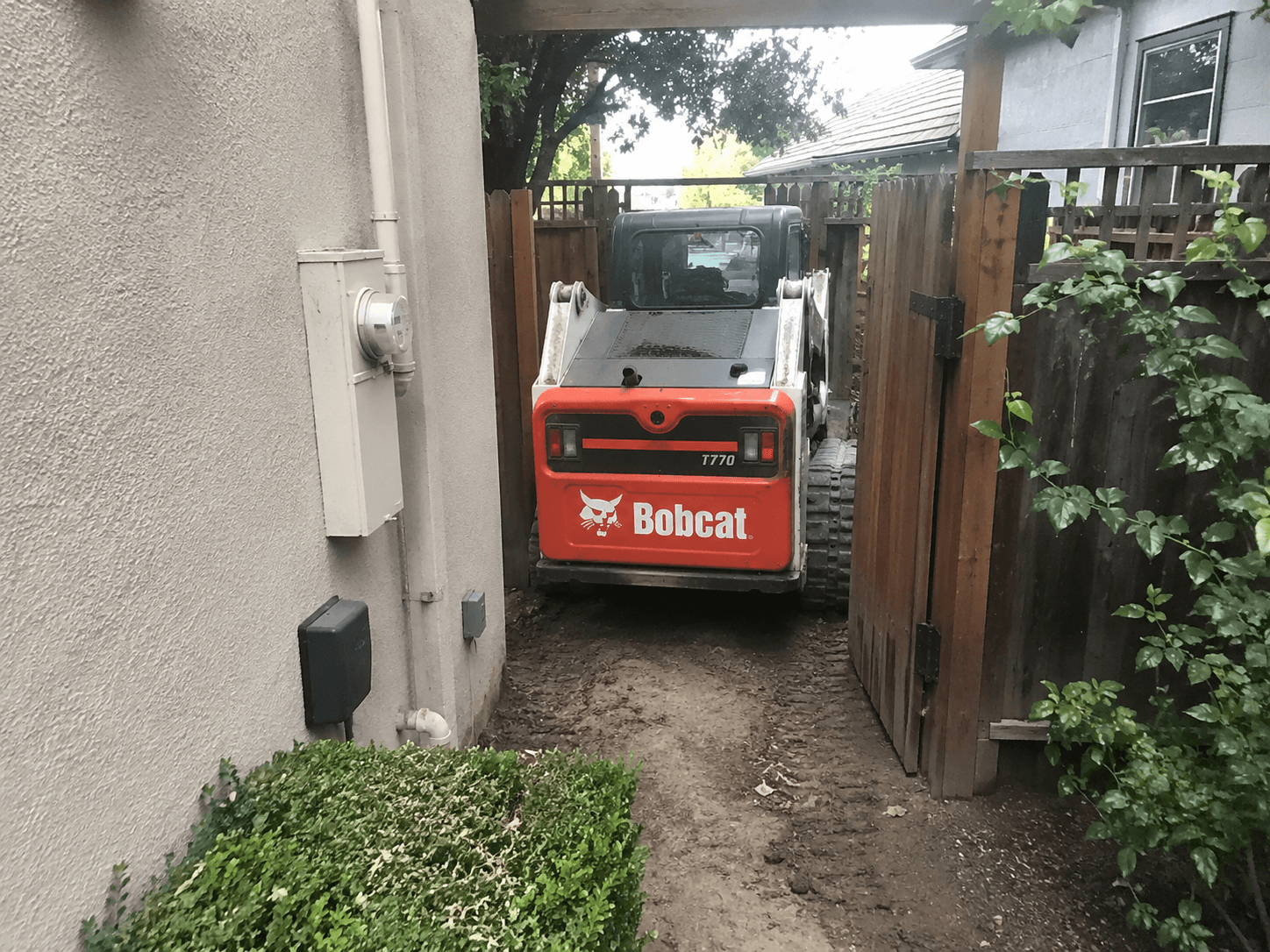
The machines we use are track-style skid steers (technically compact track loaders) with low ground pressure. They work on soft soil, finished turf, and clay without leaving deep ruts the way older wheeled machines would. We can run them on prepared surfaces, around landscaping, and in tight residential spaces where bigger equipment can't go.
Attachments and What They Do
The Attachments That Do the Work
A skid steer is really a platform. The attachment on the front is what determines what the machine actually does. Here's the lineup we use most often on residential jobs:
Bucket. The most common attachment. Used for digging, loading, moving, and spreading dirt, mulch, gravel, sand, rock, and debris. Most jobs use this for at least part of the work.
Pallet forks. Lifts and moves heavy materials, retaining wall blocks, pallets of sod, large stones, precast concrete. Critical for hardscape work where moving material by hand isn't realistic.
Trencher. Cuts clean trenches for drainage pipe, irrigation lines, utility runs, or electrical conduit. Much faster and cleaner than hand digging.
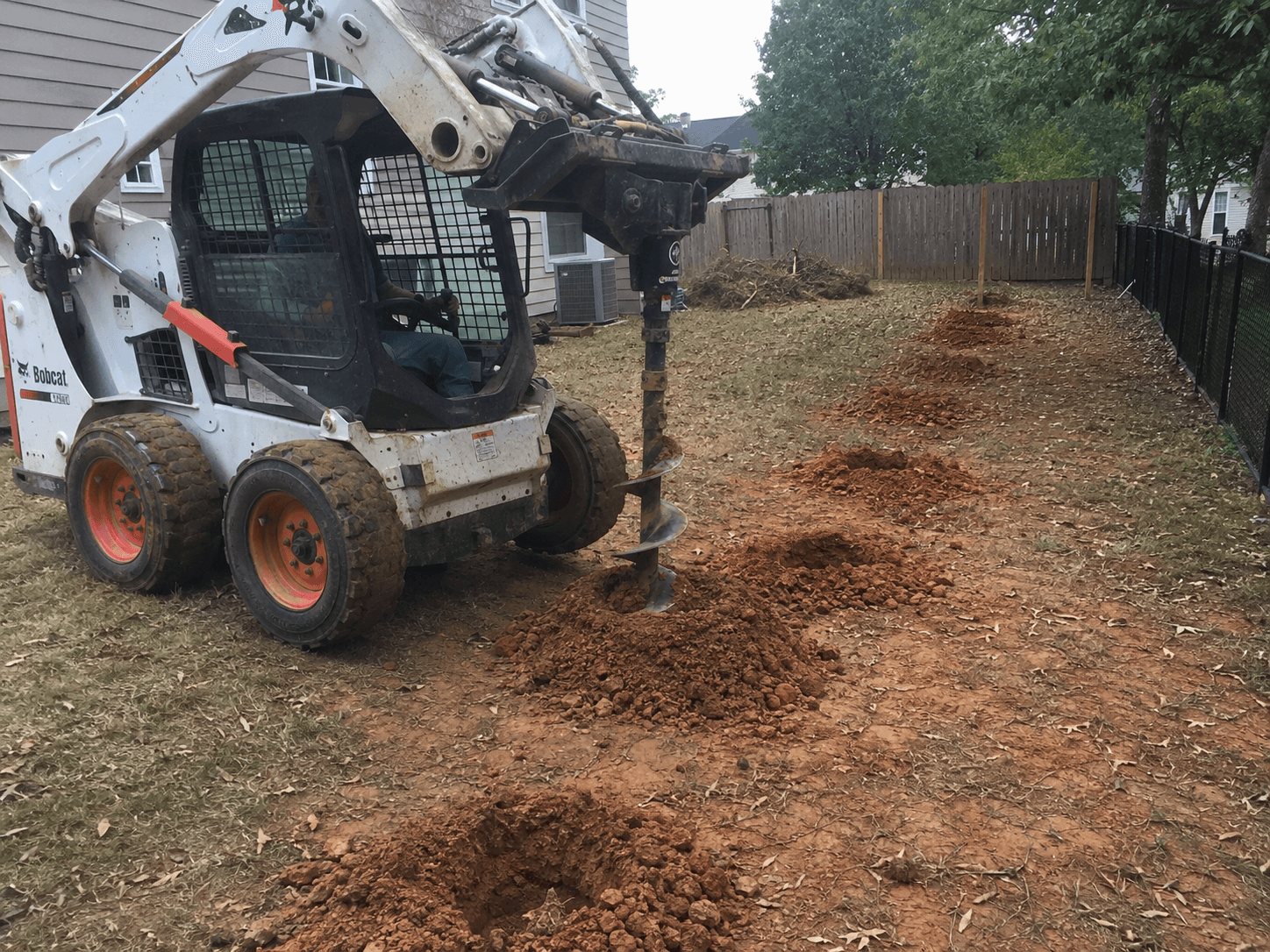
Auger. Drills holes for fence posts, deck footings, tree planting, or pier foundations. Sizes range from a few inches to over a foot in diameter.
Stump grinder. Grinds out tree stumps below grade so you can replant or restore lawn over the spot. Standalone or as part of a larger landscape job.
Grading box. Smooths and grades soil to a consistent surface, used for prepping for sod, seed, or hardscape base. Combines cutting, filling, and smoothing in one pass.
Breaker. Hydraulic hammer for breaking up concrete patios, sidewalks, old foundations, or large rocks. Replaces hours of jackhammer work.
Most residential projects use two or three different attachments. We bring what the job needs and switch between them on site as the work progresses.
Common Skid Steer Jobs
Residential Jobs Where a Skid Steer Earns Its Keep
Yard grading and leveling. Reshaping a property, fixing low spots, prepping for sod or seed. Standard machine work, often paired with our grading and drainage services.
Hardscape demo and prep. Removing old patios, walkways, retaining walls, or driveways. Breaking out the concrete, hauling the rubble, grading the base for new hardscape.
Drainage installation. Trenching for French drains, downspout extensions, or buried pipe. Often combined with bucket work for catch basins, rock placement, and backfill.
Material delivery and spreading. Moving yards of mulch, topsoil, gravel, or rock from a delivery pile to where it actually needs to go. Much faster than wheelbarrowing across a property.
Stump and root removal. Grinding stumps, pulling root balls, clearing problem trees from a property. Often the first step before a new landscape or lawn install.
Brush and overgrown land clearing. Knocking down invasive vegetation, clearing brush, and prepping previously unusable areas for new use. Pairs with our land cleanup services.
Hardscape construction support. Lifting and placing retaining wall blocks, boulders, large stones, and precast pieces. Pallet forks turn impossible lifts into routine work.
Excavation for shed pads, fire pits, or small foundations. Digging out an area to the right depth and grade for a base layer.
If you've got a project that would benefit from machine work, we'll walk the property and tell you whether a skid steer makes sense or whether hand work is the right call.
Our Process
How a Moku Skid Steer Job Runs
Step 1: Walk the property and scope the job. We look at access points, where the machine needs to operate, what attachments the work requires, and where material is coming from or going to. Some jobs are obvious. Some need a 30-minute conversation to plan right.
Step 2: Quote the work. We price by the hour for shorter jobs or by the project for larger scopes. The quote includes operator time, machine cost, and any attachment changes. For full-service projects (skid steer as part of a larger landscape or drainage job), it rolls into the overall project price.
Step 3: Show up and do the work. We arrive with the machine and the attachments the job needs. The operator runs the machine, and a second crew member is usually on site for hand work, cleanup, and material handling.
Step 4: Clean up and wrap. We restore any disturbed areas (turf, mulch, gravel) at the access route, haul off any debris, and walk the finished work with you. If the skid steer was part of a larger project, the rest of the project continues from there.