When a Property Needs Commercial-Grade Snow Service
Most commercial snow clients fall into one of these categories:
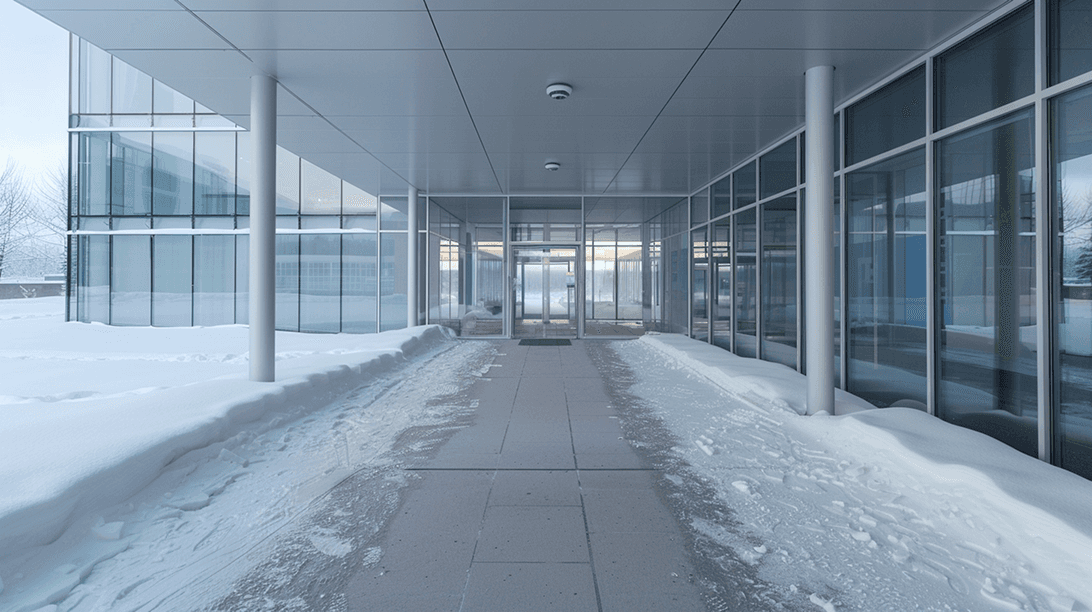
An office building, medical building, or commercial property where employee and customer access can't be compromised
A retail location, restaurant, or business that needs parking lots cleared before opening
A daycare, school, or community facility with strict access and safety requirements
An HOA, condo association, or multi-family property with shared driveways and walkways
A property where slip-and-fall liability exposure makes documented, professional service critical
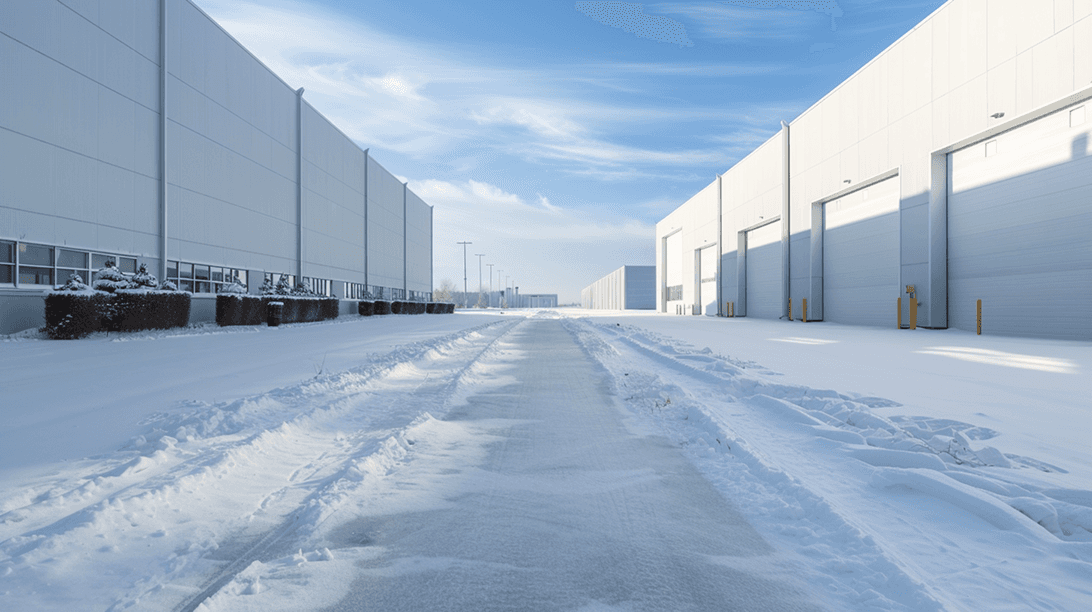
An industrial or warehouse property with loading dock access requirements
A medical facility or pharmacy where 24/7 access matters
Commercial snow service isn't just bigger residential snow service. The trigger thresholds, response times, documentation requirements, and equipment scale are all different. This is what we mean by commercial snow management.
What's On This Page
How Commercial Snow Service Is Different
Pre-Storm Prep, Active Storm, Post-Storm Response
What Commercial Service Includes
Our Process
FAQs
How Commercial Snow Service Is Different
Why Commercial Snow Is a Different Service
From the outside, commercial snow service can look like residential snow service scaled up. In practice, the work is structurally different in several ways that matter.
Tighter trigger thresholds. Residential service typically triggers at 2 inches of accumulation. Commercial service triggers at 1 inch (sometimes lower for properties with high traffic or specific safety requirements). The threshold is lower because the cost of inaction (slip-and-fall, accidents, business disruption) is higher.
Pre-storm preparation matters. For residential, we mostly respond to snow after it falls. For commercial, we pre-treat surfaces with brine or granular salt 4 to 24 hours before forecast storms. The pre-treatment prevents ice from bonding to pavement, which makes post-storm clearing dramatically faster and safer.
During-storm passes. Commercial properties often need clearing during active storms, not just after. We make multiple passes during a major event to keep parking lots accessible, sidewalks clear, and the property operational throughout the storm.
Documentation requirements. Every commercial service visit is logged with timestamp, weather conditions, work performed, equipment used, and treatment applied. This documentation is essential for property management firms, insurance claims, and slip-and-fall defense. We provide service logs monthly and on-demand.
Snow pile management. On a residential driveway, snow gets thrown to the side and we move on. Commercial properties require deliberate snow pile placement, away from sight lines, away from drainage paths, away from entries, and away from traffic patterns. Pile locations are mapped during the pre-season walkthrough.
Specialized equipment. Commercial work uses larger plow trucks (often pickup or dump trucks with 9 to 10 foot plows), salt spreaders (calibrated for accurate application), brine systems (for pre-treatment), and walk-behind blowers for sidewalk crews. Different equipment, different staffing, different operational rhythm.
Liability matters. Commercial snow service is a liability-driven business. We carry the right insurance, document our work, and follow industry best practices. The contractor who skips documentation or insurance saves money on themselves but creates exposure for the property owner. Worth knowing before signing a contract.
Pre-Storm Prep, Active Storm, Post-Storm Response
The Three Phases of Commercial Snow Service
Commercial work is structured around three operational phases. Each phase has its own equipment, crew composition, and decision triggers.
Phase 1: Pre-Storm Preparation
Starting 24 to 48 hours before forecast snow events, we shift into pre-storm mode. Equipment is staged at properties or near them. Pre-treatment (brine for liquid, granular ice melt for surfaces) is applied 4 to 12 hours before snowfall begins. Pre-treatment prevents ice bonding to pavement, which makes the entire post-storm clearing process faster and safer.
Property managers receive a pre-storm communication identifying expected service timing and crew assignments. For major storms, we hold a quick coordination call with property contacts the morning of.
Phase 2: Active Storm Response
During active snowfall, we make passes based on accumulation thresholds (typically every 2 to 3 inches for commercial properties, more frequently for high-priority sites like medical or daycare). The goal during active storms is keeping accumulation manageable rather than clearing to bare pavement (which is impossible while it's still snowing).
Crews rotate through routes continuously. Equipment is staged so trucks aren't dead-heading between sites. Communication updates flow to property contacts on a clear schedule.
Phase 3: Post-Storm Clearing and Treatment
Within 2 to 4 hours of snowfall ending (target time, varies with storm severity), we make a full final pass on every property. This includes:
Parking lots cleared to bare pavement or to a workable surface
Snow piles pushed to designated storage zones (mapped during the pre-season walkthrough)
Sidewalks shoveled or blown clear
Steps, entries, and high-traffic walkways treated with ice melt
Drainage paths cleared so melt water doesn't pool
Documentation logged for the storm event
For major storms (8+ inches, ice events, back-to-back storms), the post-storm phase extends to 8 to 12 hours and may include multiple passes.
What Commercial Service Includes
Commercial Service Coverage
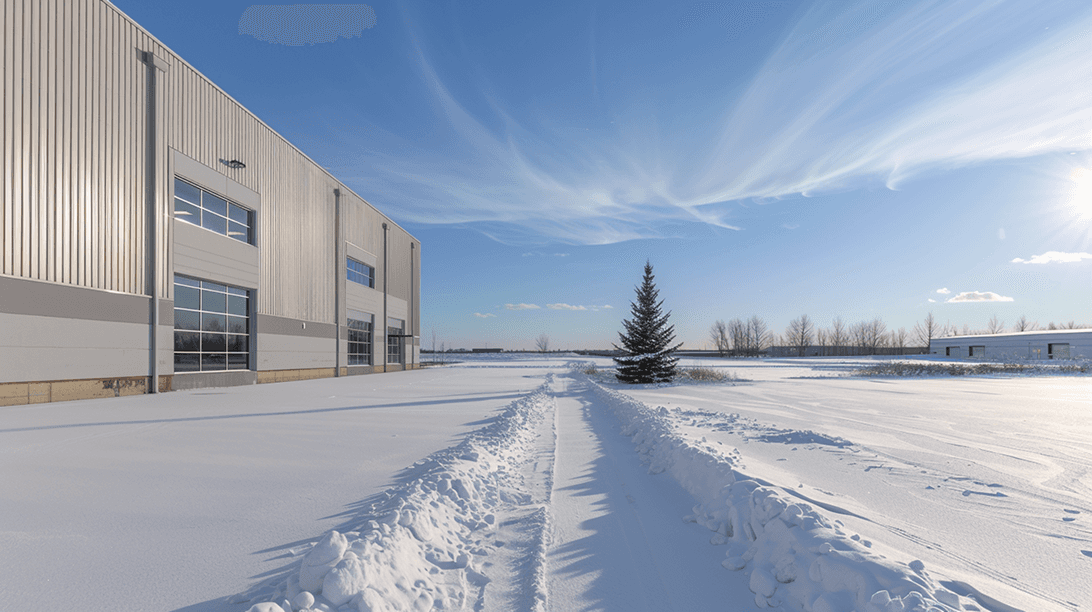
Parking lot clearing. Plowed to bare pavement or workable surface. Strip-by-strip systematic clearing to minimize re-handling of snow. Designated pile zones to keep visibility, drainage, and traffic patterns intact.
Sidewalk and walkway clearing. Hand-shoveled or walk-behind blower depending on width. Edge-to-edge cleared, never just a narrow path. Required for ADA compliance and basic safety on commercial properties.
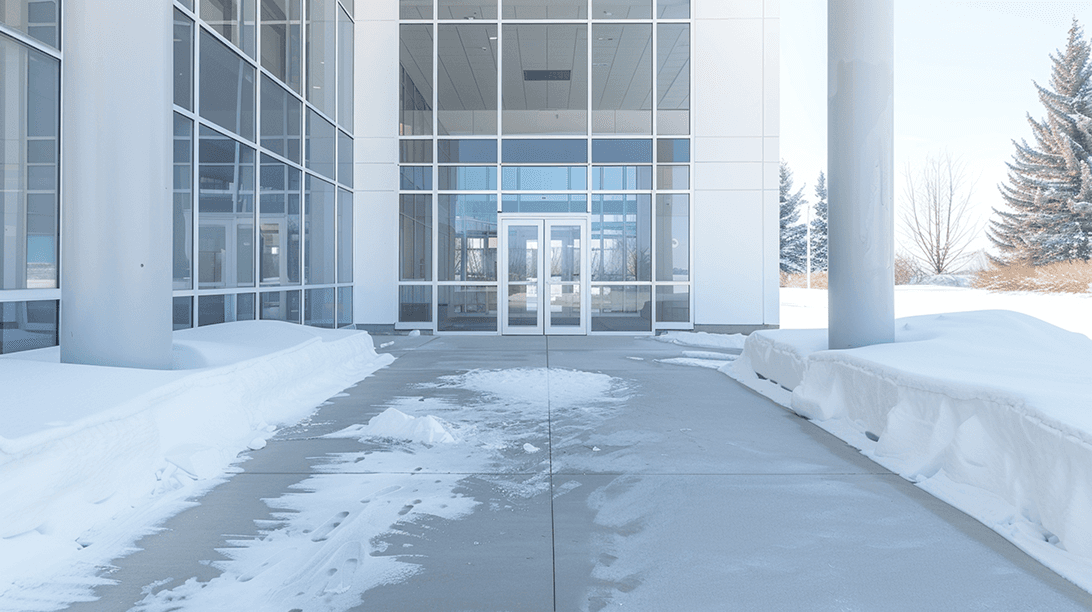
Entry and step treatment. Ice melt or sand applied at every entry point, every step, and every high-traffic area. Re-treated as needed during storms. The entries are the highest slip-and-fall risk zones and they get the most attention.
Pre-treatment (brine and granular). Applied before forecast storms to prevent ice bonding. Salt-brine is liquid pre-treatment for parking lots. Granular ice melt is used on surfaces where brine isn't appropriate.
Loading dock and service area access. For warehouse, industrial, or back-of-house commercial properties, the service entries and loading zones get cleared to functional condition, not just curb appeal.
Drainage path clearing. Snow piles are placed away from storm drains and drainage paths. Critical for melt-day flooding prevention.
Documentation and reporting. Every service visit is time-stamped, weather-documented, and recorded. Monthly service reports and on-demand pulls for insurance reviews.
Storm communication. Pre-storm advisories, mid-storm updates for major events, post-storm completion notification. Property managers know what's happening, when crews are on-site, and when service is complete.
On-call extras (charged separately): Ice dam removal coordination, parking lot striping repaint after winter damage, salt damage assessment and recommendations, drainage cleanup after melt events.
Most commercial contracts are seasonal (November 1 through March 31) at a fixed monthly rate that covers all service visits within the season. We also do per-event commercial work for specialty cases but most clients prefer the predictability of seasonal contracts.
Our Process
How Commercial Snow Service Runs
Step 1: Pre-season walkthrough and contract. Walk the property with the manager or owner. Identify zones, mark obstacles, locate hydrants and storm drains, designate snow pile placement, review specific needs (medical access, retail opening times, restaurant deliveries, etc.). Quote and sign a seasonal contract.
Step 2: Property mapping and crew assignment. Create a service map for the crew including pile locations, ADA-required walkway paths, entry priority order, and any specific equipment needs. Assign a consistent crew to the property for the season.
Step 3: Storm monitoring. Continuous National Weather Service tracking through winter. Pre-storm planning calls for any forecast of 2+ inches. Equipment staged 24 to 48 hours before storm onset.
Step 4: Pre-treatment. Brine or granular pre-treatment applied 4 to 24 hours before storm. Reduces ice bonding, speeds post-storm clearing, lowers total salt usage over the season.
Step 5: Active and post-storm service. Multiple passes during the storm if needed, then full clearing within target time after snow ends. Documentation logged for every visit. Communication sent to property contact when service is complete.
Step 6: Monthly reporting and end-of-season review. Monthly service report showing every visit, weather data, work performed, and any property issues observed. End-of-season review identifies any property improvements that would help next winter (better lighting, drainage, accessible storage, etc.).